
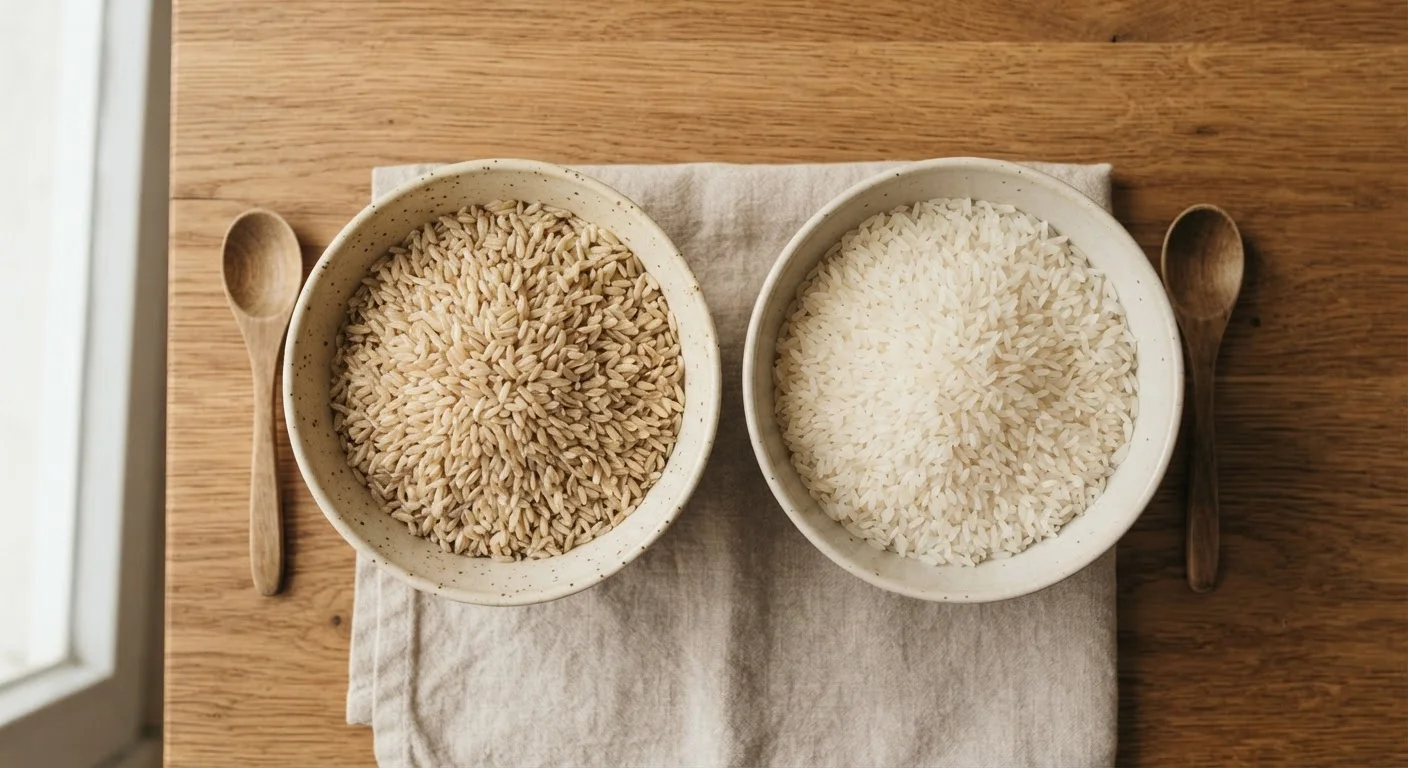
What Makes a Grain 'Whole'
Every grain kernel is made up of three parts: the bran (the fiber-rich outer layer), the germ (the nutrient-dense core that can sprout), and the endosperm (the starchy middle that makes up most of the kernel's volume). A grain is considered whole when all three parts remain intact - or are recombined in their original proportions - after processing.
Refining strips away the bran and germ, leaving only the endosperm. That produces a smoother texture and longer shelf life, but also removes the majority of the fiber, vitamin E, B vitamins (such as thiamine, folate, and niacin), and minerals like iron and magnesium that were concentrated in the outer layers.
Many refined grain products - white flour, white bread, white rice - are enriched after milling, meaning manufacturers add back some of the B vitamins and iron that were lost. Enrichment improves the nutritional profile, but it doesn't restore everything. Fiber, for example, is not added back, and several phytonutrients (plant compounds with potential health benefits) are also left out.
| Criterion | Whole Grains | Refined Grains |
|---|---|---|
| Parts retained | Bran, germ, and endosperm | Endosperm only |
| Fiber content | Significantly higher | Low (mostly removed) |
| B vitamins & minerals | Naturally present | Partially restored via enrichment |
| Shelf life | Shorter (oils in germ can go rancid) | Longer and more stable |
| Texture & flavor | Chewier, nuttier | Softer, milder |
| Cooking time | Generally longer | Generally shorter |
| Common examples | Brown rice, oats, whole-wheat bread | White rice, white bread, white pasta |
What This Means on Your Plate
The practical impact of grain choice is most visible in fiber. Fiber supports digestive health, helps you feel fuller between meals, and plays a role in blood sugar regulation. The average American adult consumes well below the general dietary guidance for daily fiber - and grains are one of the easiest places to close that gap. For a deeper look at why fiber matters, see our guide to dietary fiber for families.
Beyond fiber, switching to whole grains also delivers a broader package of nutrients in a single ingredient. A serving of rolled oats, for instance, provides beta-glucan (a type of soluble fiber), manganese, phosphorus, and small amounts of protein - all from one ingredient. A comparable serving of instant white rice, even enriched, offers a narrower nutritional profile.
That said, grain choice is just one piece of a meal. A dish of refined pasta loaded with vegetables, legumes, and olive oil will typically offer more nutritional value than a plate of whole-grain crackers with highly processed toppings. Context across the whole meal - and the whole day - matters.
~5%
U.S. adults meeting whole-grain recommendations
Research published in nutrition journals has consistently found that only a small fraction of American adults consume the amount of whole grains generally recommended by federal dietary guidelines.
25-28g
Daily fiber goal for most adult women (U.S. dietary guidelines)
The Dietary Guidelines for Americans suggest daily fiber targets that vary by age and sex; most adults fall significantly short of these amounts regardless of grain choice.
3x
More fiber in whole wheat vs. white flour (approx.)
Nutritional data from the USDA FoodData Central indicates that whole-wheat flour contains roughly three times the fiber of unenriched white all-purpose flour per comparable serving.
Navigating Labels and Marketing Language
One of the most confusing aspects of buying grain products is that packaging language doesn't always mean what it seems. Terms like multigrain, wheat bread, or made with whole grains are not guarantees that a product is predominantly whole grain.
- Multigrain simply means the product contains more than one type of grain - those grains may all be refined.
- Wheat bread often refers to color or flavor, not grain integrity - unless it says whole wheat.
- Made with whole grains can legally appear on a product where whole grains are a minor ingredient by weight.
The clearest indicator is the ingredient list. Look for words like "whole wheat," "whole oats," "whole grain corn," or "brown rice" listed first or early in the ingredients. Our guide to food packaging claims breaks down these terms in more detail.
If a product lists "enriched wheat flour" first, it's predominantly refined - regardless of what the front of the package suggests.
Making the Shift Without Overhauling Your Kitchen
Changing grain habits doesn't have to mean a complete pantry overhaul. Small, sustainable substitutions tend to stick better than wholesale changes - and they're easier to work around family preferences and budget.
Some straightforward places to start:
- Swap white rice for brown rice, or try farro, barley, or quinoa as an occasional alternative.
- Choose oatmeal (rolled or steel-cut) over instant sweetened cereals for breakfast a few days a week.
- Look for bread where "whole wheat" or another whole grain is listed as the first ingredient.
- Mix whole-grain pasta half-and-half with regular pasta to ease the texture transition for reluctant eaters.
Whole-grain products can sometimes cost slightly more, though staples like brown rice, oats, and whole-wheat flour are widely available at comparable price points to their refined counterparts. Healthy eating looks different in every household, and grain choices are just one adjustable variable in that picture.
This article is for general informational and educational purposes only and is not a substitute for professional medical or dietary advice. Consult a qualified healthcare provider or registered dietitian for guidance specific to your health needs.