
Why the Nutrition Facts Label Exists
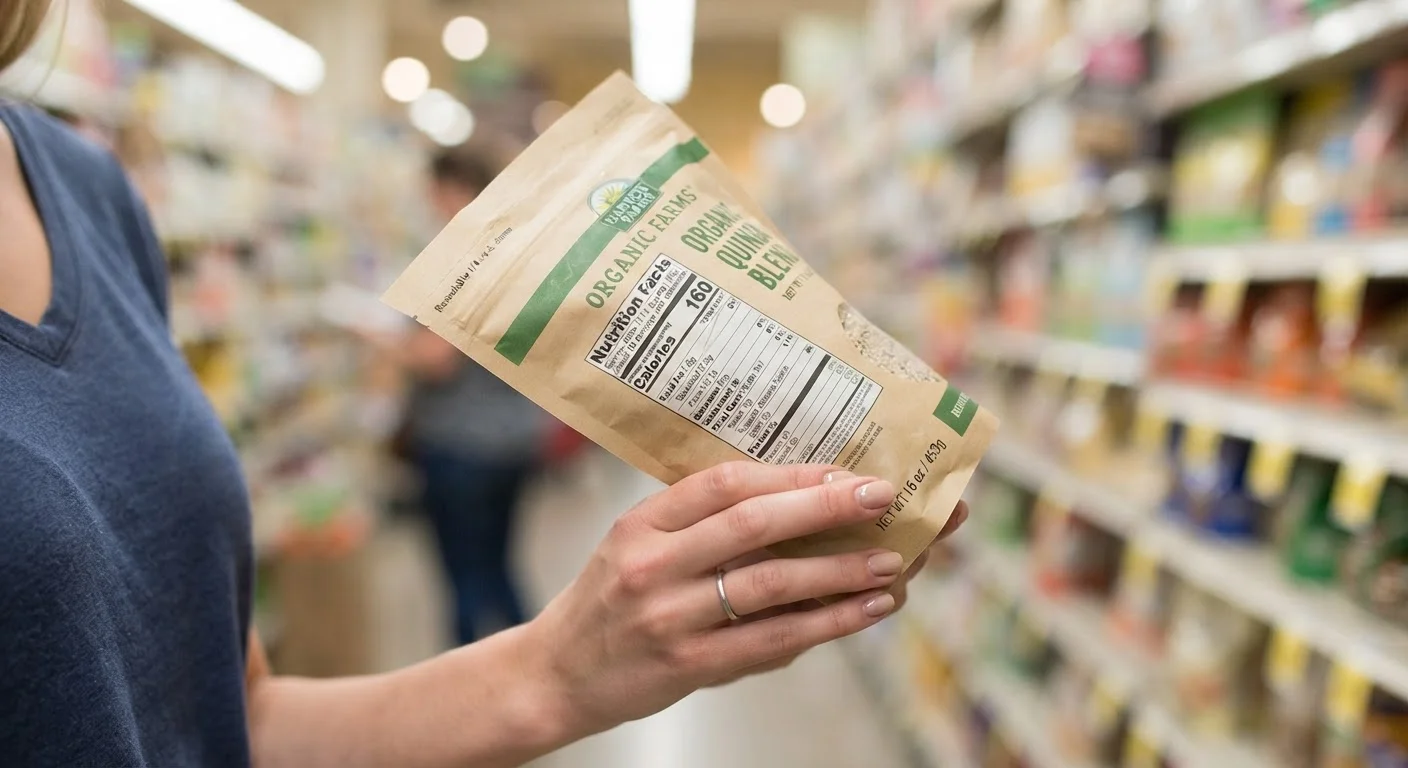
The Nutrition Facts panel is a federally standardized tool regulated by the U.S. Food and Drug Administration (FDA). It was redesigned in 2016 - with full compliance required by 2020 - to reflect updated nutritional science and make key information easier to find at a glance. Every packaged food sold in the U.S. must include one, giving shoppers a consistent, comparable source of nutritional data no matter the brand.
Unlike front-of-package claims such as "multigrain" or "low-fat" - which are regulated differently than most people assume (see what those claims actually mean) - the Nutrition Facts panel follows strict formatting rules. That consistency is what makes it genuinely useful.
| Label Redesign Year | 2016 (full compliance required by 2020) (U.S. Food and Drug Administration) |
| Governing Agency | U.S. Food and Drug Administration (FDA) |
| %DV 'Low' Threshold | 5% DV or less per serving (FDA guidance) |
| %DV 'High' Threshold | 20% DV or more per serving (FDA guidance) |
| Reference Calorie Basis | 2,000 calories per day (FDA standard for %DV calculations) |
| Required Micronutrients Listed | Vitamin D, Calcium, Iron, Potassium (FDA 2016 redesign requirements) |
The Label, Section by Section
Serving Size
Everything on the label is calculated per serving, so serving size is the first number to check. The FDA now requires that serving sizes reflect amounts people typically eat, not idealized portions. If a bag of chips lists a serving as 1 oz but you typically eat 2 oz, all the numbers on the label effectively double for your use.
Calories
Calories tell you the total energy one serving provides. The large, bold font introduced in the 2016 redesign reflects how central this figure is for general dietary awareness.
Nutrients to Limit
Saturated fat, sodium, and added sugars appear prominently because most Americans consume more of these than current dietary guidance suggests is ideal. Added sugars now have their own dedicated line - separate from total sugars - so you can distinguish sugars naturally present in food from those introduced during processing. For a deeper look at why that distinction matters, see the difference between added and natural sugar.
Nutrients to Get Enough Of
Dietary fiber, vitamin D, calcium, iron, and potassium are listed because they tend to be under-consumed in typical American diets. The label includes both the milligram (or gram) amount and a % Daily Value. If you want to understand why fiber in particular deserves attention, this primer on dietary fiber covers the basics well.
% Daily Value (%DV)
The %DV column shows how much of a nutrient one serving contributes toward a general daily reference intake, based on a 2,000-calorie-per-day diet. A quick rule of thumb: 5% DV or less is generally considered low; 20% DV or more is considered high. This scale applies to both nutrients you may want to limit and those you want to get enough of.
Serving Size
The standardized amount of food the label's nutrition information is based on. The FDA requires serving sizes to reflect amounts people typically consume, not recommended portions.
% Daily Value (%DV)
A percentage showing how much of a nutrient one serving contributes toward a general daily reference intake, based on a 2,000-calorie diet. It provides a quick way to gauge whether a food is high or low in a given nutrient.
Added Sugars
Sugars and syrups that are added to a food during processing or preparation, distinct from sugars naturally present in ingredients like fruit or milk. Listed separately on the label since the 2016 FDA redesign.
Saturated Fat
A type of dietary fat found mainly in animal products and some tropical oils. It appears on the label as a nutrient to be mindful of because most Americans consume it in amounts above current dietary guidance.
Dietary Fiber
The indigestible portion of plant foods that supports digestive health and other body functions. It is listed as a nutrient to get enough of because average American intake is generally below recommended levels.
Daily Value (DV)
The reference amount of a nutrient used to calculate %DV on food labels. Daily Values are established by the FDA and are based on a 2,000-calorie daily diet for the general adult population.
Practical Tips for Using the Label While Shopping
The label becomes most useful when you compare products side by side. Since servings sizes can differ between similar items, always check that you are comparing equivalent amounts before drawing conclusions about calorie or nutrient content.
- Check servings per container first. A product that looks low in sodium per serving may contain three or four servings in a single package.
- Use %DV as a quick scanner. Instead of doing math in the aisle, let the %DV column tell you quickly whether a nutrient is high or low relative to daily reference amounts.
- Look at the whole nutrient picture. A food high in saturated fat might also be high in calcium; context matters more than any single number.
- Cross-reference the ingredients list. The label tells you how much; the ingredients list tells you what. Both together give you a fuller picture.
Pairing label-reading habits with a structured grocery planning checklist can help your household shop more efficiently without feeling overwhelmed by decisions in the moment.
For vitamins and minerals specifically, the label lists only a subset of micronutrients. Our micronutrients overview explains the broader landscape of essential vitamins and minerals and which foods deliver them reliably.
This article is for general informational and educational purposes only and does not constitute medical or dietary advice. Consult a registered dietitian or qualified healthcare professional for guidance tailored to your individual health needs.