
Why Front-of-Package Claims Deserve Skepticism
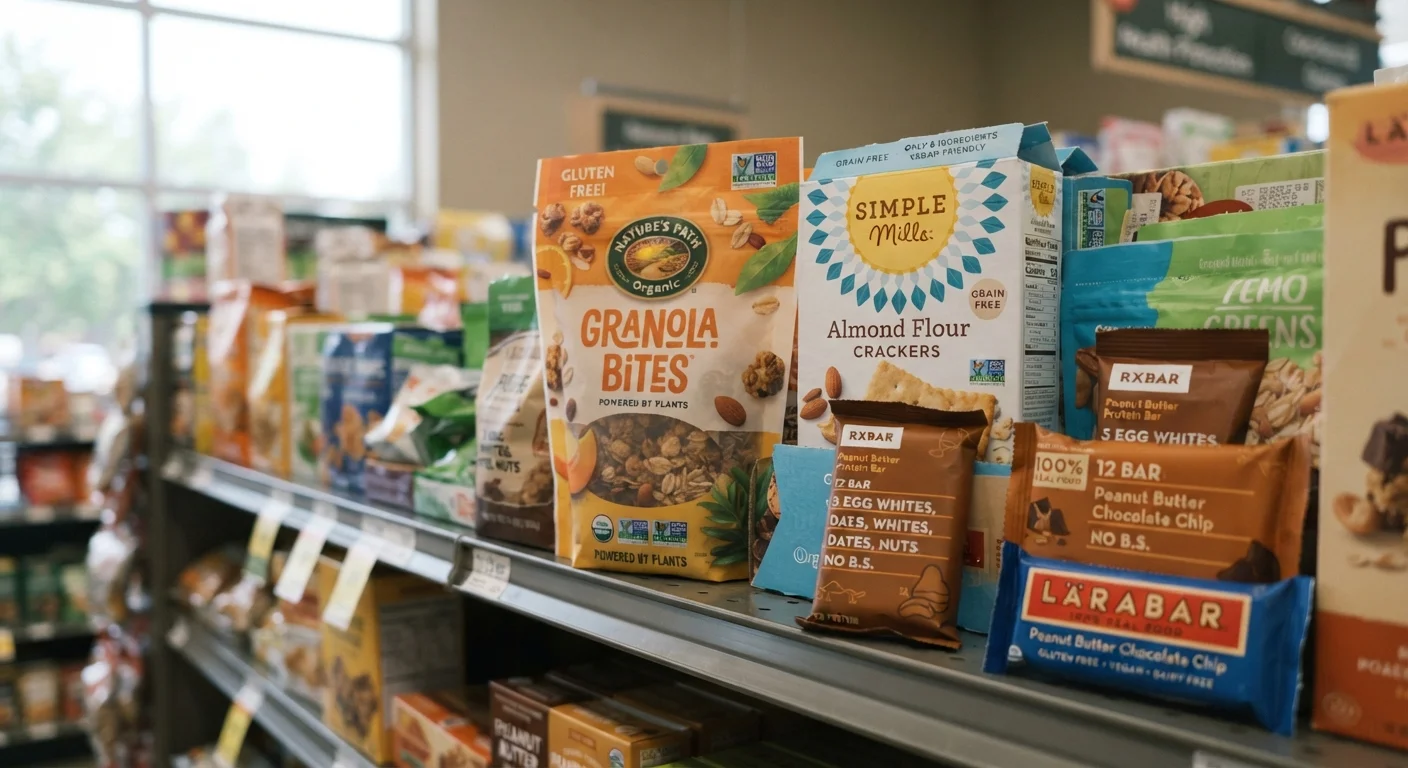
The front of a food package is prime real estate, and manufacturers invest significantly in the words and imagery displayed there. Terms like 'wholesome,' 'clean,' 'simple,' and 'guilt-free' are entirely unregulated - they carry no legal definition and no enforceable nutritional standard. Even terms that sound more official are often less tightly controlled than shoppers assume.
This doesn't mean every packaging claim is deceptive. Many regulated terms do have meaningful definitions. The challenge is knowing which claims are backed by enforceable rules and which are essentially aspirational branding. The myth-and-fact pairs below address the most common sources of confusion.
Front Labels Are Marketing, Not Nutrition Guidance
Claims printed on the front of a food package are designed to attract attention, not to give a complete nutritional picture. Manufacturers choose which claims to highlight. Always cross-reference front-of-package language with the Nutrition Facts panel and the ingredients list before drawing conclusions about a product's overall nutritional value.
Common Claims - What They Mean and What They Don't
The following myths cover some of the most frequently misread terms on grocery packaging. For each one, the regulatory reality differs from what most shoppers intuitively expect.
Myth
'Natural' on a food label means the product is minimally processed and free from artificial additives.
Fact
The FDA has not established a formal regulatory definition for 'natural,' meaning manufacturers use it with significant latitude.
The FDA has stated informally that it considers 'natural' to mean nothing artificial or synthetic has been added - but this is guidance, not a binding standard with consistent enforcement. Foods labeled 'natural' may still contain high-fructose corn syrup, added sugars, or heavily processed components, depending on how a manufacturer interprets the term. Until a firm regulatory definition exists, 'natural' on a package is best treated as a marketing phrase rather than a nutrition guarantee.
Myth
'Multigrain' bread or cereal is a good source of whole grains.
Fact
'Multigrain' only confirms that more than one type of grain is present - none of them need to be whole grains.
'Multigrain' describes variety, not quality. A product can contain several refined grains and still carry the label. To confirm whole grain content, check the ingredients list: the first ingredient should read something like 'whole wheat,' 'whole oats,' or 'whole grain corn.' The difference between whole and refined grains is meaningful nutritionally - whole grains retain the bran and germ, where most fiber and micronutrients reside.
Myth
Choosing 'low-fat' versions of foods is always a healthier move.
Fact
Low-fat foods often contain more added sugar or sodium to compensate for the flavor lost when fat is reduced.
Fat carries flavor, and when it's removed, something else typically replaces it. The FDA allows the 'low-fat' claim when a product contains 3 grams or less of total fat per serving - but that says nothing about sugar, sodium, or calorie content. A low-fat yogurt, for example, may contain significantly more added sugar than its full-fat counterpart. Understanding added sugars is especially useful when evaluating these trade-offs.
Myth
'Made with real fruit' means a product contains a meaningful amount of fruit.
Fact
This phrase has no minimum quantity requirement under FDA rules - a product may contain only trace amounts of fruit.
Manufacturers are not required to specify what percentage of a product consists of the featured ingredient when making a 'made with' claim. A fruit snack, bar, or beverage could derive the majority of its sweetness from added sugars while technically containing enough fruit concentrate to make the claim. The ingredients list, where components are ordered by weight, is the most reliable way to assess how much of a highlighted ingredient is actually present. For a thorough breakdown of how to use that panel, see our guide to the Nutrition Facts label.
Myth
'Organic' automatically means a food is more nutritious than its conventional counterpart.
Fact
USDA Organic certification relates to farming and production practices, not to nutritional content or health outcomes.
The USDA Organic seal indicates that a product was grown or produced without synthetic pesticides, synthetic fertilizers, or genetically modified organisms, and meets specific livestock standards. It does not mean the product is lower in calories, higher in fiber, or nutritionally superior. An organic cookie is still a cookie. Choosing organic is a legitimate personal preference - particularly regarding pesticide exposure - but it is a separate decision from evaluating a food's nutritional profile.
Understanding these distinctions doesn't require memorizing complex rules. In most cases, a habit as simple as flipping the package over and spending 30 seconds on the Nutrition Facts panel will give you far more useful information than any front-of-package claim. If you'd like a structured way to approach that panel, our field guide to the Nutrition Facts label walks through every section clearly.
Building a Practical Grocery Strategy
The goal isn't to distrust every product on the shelf - it's to locate information where it's actually reliable. A few habits help:
- Start with the ingredients list. Ingredients are listed by weight, so the first few entries tell you what the product is primarily made of.
- Use the Nutrition Facts panel for comparison. When choosing between two similar products, the panel gives you consistent, regulated data points - serving size, calories, sodium, fiber, and added sugars - that front labels don't.
- Treat front-of-package claims as a starting point, not a conclusion. A claim like 'high in fiber' or 'good source of calcium' does have an FDA definition - but it still only describes one nutrient in isolation.
Don't Swap One Nutrient Concern for Another
Products marketed as 'low-fat,' 'sugar-free,' or 'reduced sodium' frequently compensate with higher amounts of another ingredient - sugar, fat, or salt respectively - to preserve taste. Checking the full Nutrition Facts panel rather than relying on a single front-of-package claim helps you avoid unintentional trade-offs.
What 'eating well' looks like varies from household to household. If you're thinking about how these principles fit your family's actual patterns, why healthy eating looks different for every household offers a grounded perspective on budget, access, and preference. For a broader framework on what nutritional balance involves day-to-day, see what 'balanced diet' actually means.
This article is for general informational and educational purposes only and is not a substitute for advice from a qualified nutrition or healthcare professional. Nutritional needs vary by individual; consult a registered dietitian or your healthcare provider for personalized guidance.