
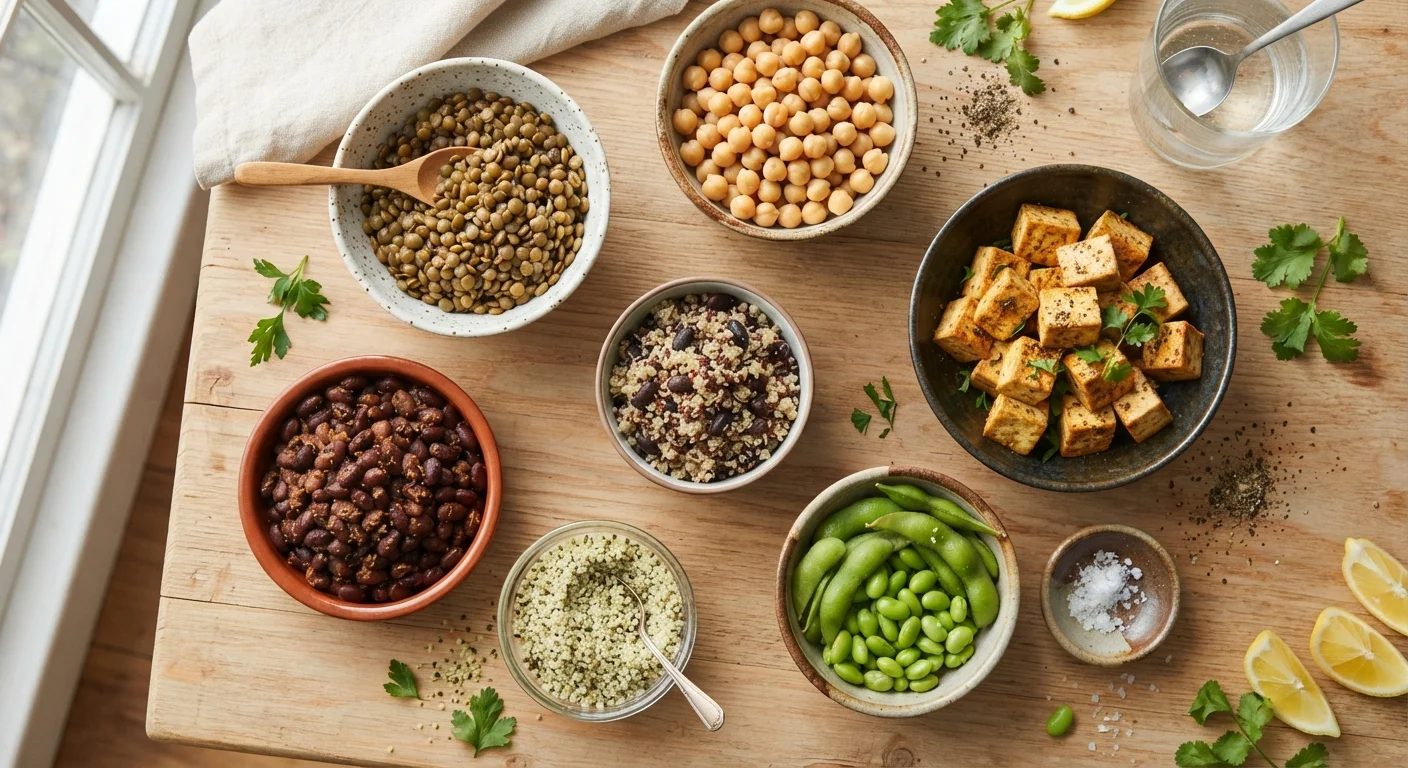
Why Omnivore Households Should Care About Plant Protein
You don't need to be vegetarian or vegan to benefit from knowing your plant proteins. For most American households that regularly eat meat, dairy, and eggs, the question isn't about replacing animal foods - it's about rounding out the plate. Plant proteins typically travel with fiber, unsaturated fats, and micronutrients that animal proteins don't deliver in the same way. See our practical plate-building guide for frameworks that make this easier without obsessive tracking.
Adding plant proteins also tends to benefit the grocery budget. Dry lentils, canned chickpeas, and firm tofu are generally among the more affordable protein sources per gram - a point covered further in our guide to eating well for less.
This article is general nutrition information and is not a substitute for personalized advice from a registered dietitian or qualified healthcare provider.
The Main Plant Protein Categories Compared
Plant proteins span several food categories, each with distinct strengths. The comparison below covers the most practical options for everyday cooking.
| Lentils / Beans | Tofu | Tempeh | Edamame | Hemp Seeds | |
|---|---|---|---|---|---|
| Protein per serving | 15-18g per cooked cup | ~10g per 3 oz | ~16g per 3 oz | ~17g per cooked cup | ~10g per 3 tbsp |
| Complete protein? | No (combine sources) | Yes | Yes | Yes | Near-complete |
| Fiber content | Very high | Low | Moderate | High | Moderate |
| Prep effort | Low (canned) to moderate | Low to moderate | Moderate | Very low (frozen) | Virtually none |
| Flavor profile | Earthy, neutral | Very mild, adaptable | Earthy, nutty | Mild, slightly sweet | Nutty, mild |
| General cost level | Very low | Low | Low to moderate | Low | Moderate |
A note on protein completeness: animal proteins contain all nine essential amino acids in proportions the body uses well. Most plant proteins are lower in one or more essential amino acids - but eating a variety of plant foods across the day naturally fills those gaps. You don't need to combine specific foods at every single meal.
Legumes: The Workhorse of Plant Protein
Beans, lentils, chickpeas, and split peas are the most accessible plant proteins for most households. They're sold dried or canned, hold well in the pantry, and work in soups, stews, salads, tacos, and grain bowls. Lentils in particular require no soaking and cook in about 20-25 minutes, making them one of the more weeknight-friendly options.
Beyond protein, legumes are standout sources of dietary fiber - particularly soluble fiber, which supports digestive health. If your household is trying to eat more fiber, legumes are one of the most efficient ways to do it. Learn more in our overview of fiber and why most families fall short.
Make Legumes Easier to Digest
Some people experience gas or bloating when first increasing legume intake, typically due to certain fermentable carbohydrates. Starting with smaller portions and increasing gradually allows the gut to adapt. Rinsing canned beans thoroughly and cooking dried beans fully also helps. If digestive discomfort persists, a registered dietitian can offer individualized guidance.
Canned beans are nutritionally comparable to home-cooked. Rinsing canned beans reduces sodium content by roughly 40%, according to general food science guidance - a useful habit if sodium is a consideration for your household.
Soy Foods: Tofu, Tempeh, and Edamame
Soy is one of the few plant foods considered a complete protein - it contains all essential amino acids in substantial amounts. This makes soy-based foods particularly useful for households reducing their meat intake.
- Tofu has a mild flavor that absorbs marinades and seasonings readily. Firm tofu holds up well when sautéed, baked, or added to stir-fries; silken tofu blends smoothly into sauces or smoothies.
- Tempeh is made from fermented whole soybeans, giving it a firmer texture and earthier flavor. Because it's less processed and fermented, it also contains some beneficial compounds associated with fermented foods, though research on specific benefits continues to evolve.
- Edamame - immature soybeans - can be served as a snack or added to grain bowls and salads. They deliver around 17 grams of protein per cooked cup, making them one of the most protein-dense options in this category.
Seeds, Nuts, and Whole Grains
Seeds often fly under the radar as protein contributors, but they're an easy addition to meals that are already part of your routine. Hemp seeds provide roughly 10 grams of protein per three tablespoons and can be stirred into oatmeal, yogurt, or salad dressings without changing the dish's flavor profile. Pumpkin seeds (pepitas) deliver about 9 grams per ounce and work well as a salad topper or snack.
Whole grains like quinoa, farro, and amaranth also contribute protein alongside complex carbohydrates and minerals. Quinoa is another complete protein source, containing all essential amino acids - useful context when planning meals that rely heavily on grains as a base. For a broader look at the vitamins and minerals these foods provide, see our micronutrients overview.
Nuts contribute protein but are also calorie-dense, so they're best thought of as a complement to a meal rather than a primary protein source.
Practical Ways to Work Plant Proteins Into Your Household Routine
The most sustainable approach isn't a dramatic diet overhaul - it's incremental substitution and addition. A few strategies that work for busy households:
- Replace half the meat in familiar recipes. In a taco filling, chili, or pasta sauce, swapping half the ground meat for cooked lentils or black beans maintains texture while reducing cost and adding fiber.
- Use legumes as a side rather than a center. A scoop of seasoned chickpeas or white beans alongside your usual protein adds variety without requiring a recipe change.
- Batch-cook once, use all week. A large pot of lentils or a sheet pan of baked tofu can anchor lunches and dinners for several days.
- Seed-boost existing dishes. Hemp seeds, pumpkin seeds, or sunflower seeds sprinkled on salads, grain bowls, or soups require zero prep.
For help structuring a weekly shopping list that covers key food groups including plant proteins, our nutrition-minded grocery checklist is a useful starting point.