
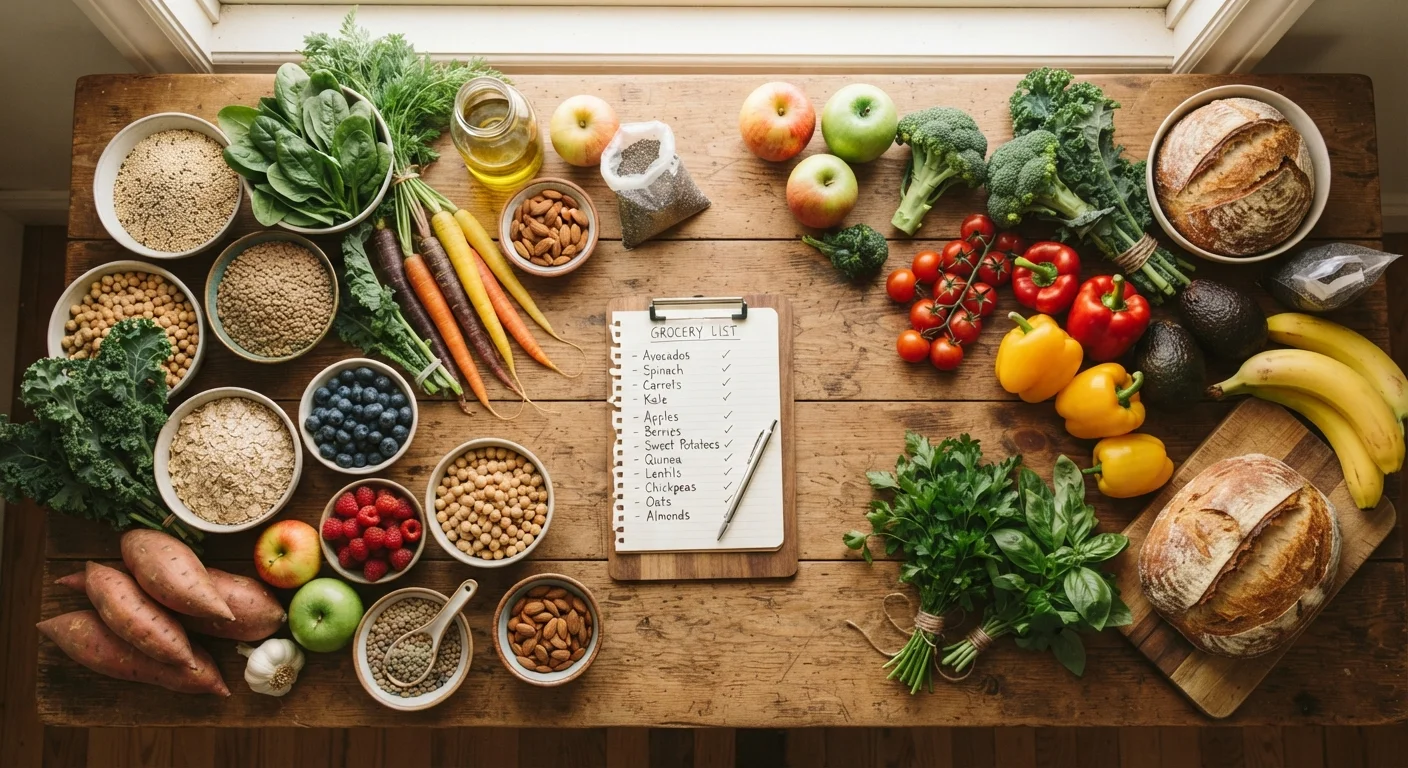
Why a Nutrition-Minded Grocery Plan Matters
Most families don't struggle with healthy eating at the dinner table - they struggle at the grocery store. What comes home is what gets eaten. When the cart fills up without a clear plan, it's easy to end up with gaps in key food groups and an oversupply of packaged snacks and convenience items.
This checklist is designed to help you approach your weekly grocery run with nutritional balance in mind - not as a rigid prescription, but as a practical framework you can adapt to your household's tastes and budget. It won't tell you exactly what to eat; that's a conversation for your healthcare provider. What it will do is prompt you to think through the major categories before you walk through the door.
If you want to go deeper on reading product labels once you're in the aisle, our Nutrition Facts label field guide breaks down every section of the panel in plain language. And for a broader look at how to structure meals without obsessive tracking, see Building a Balanced Plate Without Counting Every Calorie.
Printed or Digital Grocery List
Captures your planned purchases by category so you don't shop from memory.
Pantry and Fridge Inventory
A quick scan of what you already have prevents duplicate purchases and reduces food waste.
Nutrition Facts Label Reference
Helps you compare sodium, added sugar, and fiber content across similar packaged products.
Seasonal Produce Guide
Identifies which fruits and vegetables are typically in season, often more affordable and flavorful.
How to Use This Checklist
Run through this list once a week before you shop - ideally after a quick look at what's already in your refrigerator and pantry. The goal is to identify gaps, not to buy everything listed. Households vary in size, preference, and dietary needs, so treat each category as a prompt rather than a mandate.
Items marked must represent the core food groups that most nutrition guidance consistently emphasizes. Items marked should are strongly recommended additions that support variety and key nutrients. Nice-to-have items are helpful but genuinely optional enhancements.
This Checklist Is Not Medical or Dietary Advice
The guidance here is general and educational. Individual nutrition needs vary based on age, health status, activity level, and medical conditions. If anyone in your household has a chronic condition, food allergy, or specific dietary requirement, please work with a registered dietitian or qualified healthcare provider for personalized recommendations.
Once you've worked through the produce and protein sections, it's worth a moment to consider fiber - a nutrient many American households fall short on. Our article on dietary fiber for families explains which foods deliver it reliably and how to weave more of it in. For households exploring more plant-forward meals, plant-based protein sources is a useful companion. And if you want to know which vitamins and minerals to look for on labels, see Micronutrients 101.
Before You Shop
Vegetables and Fruits
Protein Sources
Grains and Starches
Dairy and Calcium Sources
Pantry and Fridge Management
Final Check at the Register
Avoid Letting a List Become a Source of Stress
A grocery checklist is a helpful prompt - not a pass/fail test. No single shopping trip needs to be perfect, and rigid adherence to any food framework can sometimes do more harm than good. If you notice that food planning feels anxiety-inducing rather than helpful, consider speaking with a healthcare professional or registered dietitian.
This article is for general informational and educational purposes only. It is not a substitute for personalized nutrition or medical advice. Consult a qualified healthcare professional or registered dietitian for guidance tailored to your individual health needs.