Why Common Organization Advice Can Backfire
Home organization advice is everywhere - on social media, in weekend supplements, in well-meaning conversations with neighbors. The problem is that much of it is repeated so often it gets accepted as fact, even when it actively works against the goal of a less cluttered home. Some of the most widely shared tips skip a critical first step, set unrealistic standards, or treat symptoms rather than causes.
The good news: once you can identify which advice is genuinely helpful versus which is quietly keeping your home cluttered, you can stop spinning your wheels and build systems that actually hold up over time.
Myth
You need to buy storage containers and bins before you can start organizing.
Fact
Purchasing containers before decluttering almost always results in buying the wrong sizes - or storing items you don't actually need.
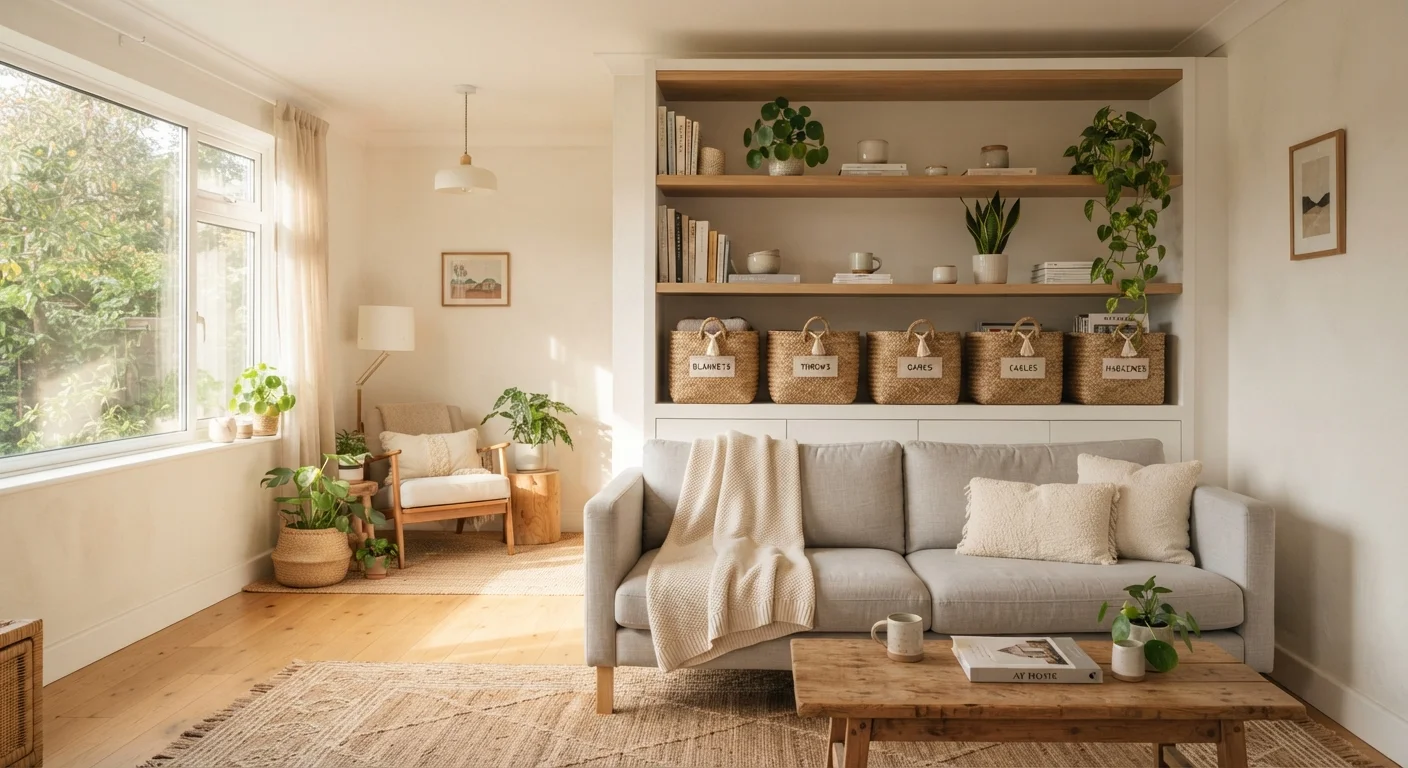
It's tempting to head to the store before tackling a cluttered room, but containers bought in advance often end up unused or mismatched. The correct order is: sort and declutter first, measure your remaining items, then shop. This prevents you from spending money on solutions that don't fit your actual space or belongings. Many effective organizers - magazine holders, drawer dividers, repurposed shoeboxes - cost very little or nothing at all.
Myth
An organized home should look perfectly tidy and Instagram-worthy at all times.
Fact
Visual perfection is neither realistic nor the goal - a functional system that reduces daily stress is what organization is actually for.
The pressure to maintain a showroom-style home leads many people to abandon their organization efforts entirely when life gets busy. A genuinely useful system is one where every item has a designated home and can be put away quickly - not one that looks like a design shoot. If your kitchen junk drawer is organized by your own logic and you can find what you need in 10 seconds, that drawer is doing its job. Households with multiple adults especially benefit from realistic, low-maintenance systems over aspirational ones.
Myth
Organizing your home once is enough to keep it clutter-free.
Fact
Without regular maintenance habits, any organized space will return to clutter within weeks.
A single deep-organization session creates a fresh start, but it doesn't address the daily habits that allow clutter to accumulate. Clutter is often the result of deferred decisions - mail left on the counter, items not returned to their designated spots. Short, consistent habits (a five-minute reset each evening, for example) are far more effective long-term than marathon organization sessions. See maintenance habits that keep clutter away for practical daily and weekly routines.
Myth
Keeping items 'just in case' is smart and saves money.
Fact
Holding onto things you rarely use 'just in case' is one of the leading causes of chronic home clutter.
The 'just in case' mindset feels financially prudent, but it has real costs: wasted space, difficulty finding things you actually use regularly, and the mental load of managing excess. A useful test is to ask how likely you are to need the item, how easy it would be to replace, and how much space it currently takes up. If something hasn't been used in over a year and is inexpensive or easily borrowed, it's a strong candidate for donation or disposal. Common decluttering pitfalls often center on exactly this kind of accumulation.
Myth
Sentimental items should be kept because throwing them away means losing the memory.
Fact
Memories are not stored in objects - you can honor sentimental items without keeping every physical piece.
Guilt over sentimental clutter keeps many homeowners stuck. In reality, most people can recall a meaningful event without having the physical item. Practical alternatives include photographing items before donating them, keeping a single representative piece from a collection, or passing heirlooms on to family members who will use them. This approach respects sentiment without letting it take over storage space you need for everyday living.
Myth
More storage space solves a clutter problem.
Fact
Adding storage without reducing items typically just relocates the clutter and delays the real work.
Extra shelving, a larger garage, or additional closet space can feel like the obvious answer - but if the volume of items isn't addressed first, the new space fills up quickly. Organization experts broadly agree that the problem is usually excess, not insufficient storage. Before investing in built-ins or renovations, work through a room-by-room decluttering approach to establish what you genuinely need to store. You may find you need far less space than you assumed.
Building an Honest, Sustainable System Instead
The through-line in every myth above is the same: sustainable organization is about honest habits and realistic systems, not aesthetics, accumulation, or one-time effort. A few principles that hold up across every room and household type:
- Declutter before you organize - always sort and reduce before buying any storage solution.
- Design for real life - if a system requires daily effort you won't realistically do, it won't stick.
- Address paper separately - paper clutter follows its own logic. A dedicated filing approach, such as the one outlined in a realistic paper management system, prevents one of the most common clutter relapses.
- Maintain in small doses - brief, regular resets prevent the need for another full overhaul.
No single system works for every household, but correcting these foundational myths puts you in a far better position to find what does.
Avoid Organizing During Emotional Highs
Starting a major declutter right after reading an inspiring article or watching an organization show can lead to hasty decisions you later regret - especially with sentimental or high-value items. Give yourself a 'maybe' box for anything you're uncertain about and revisit it after a few weeks before making a final call. Rushed decisions create their own kind of regret and can undermine motivation for future efforts.