Why pH Controls What Your Plants Can Eat
Think of soil pH as a gatekeeper between your plants and the nutrients in the ground. Even well-fertilized soil can leave plants starving if the pH is off, because many essential nutrients - including iron, manganese, and phosphorus - become chemically bound and unavailable outside a certain pH window.
At the root zone, soil chemistry is constantly interacting with water, organic matter, and mineral particles. pH determines whether those interactions release nutrients into the soil solution (where roots can absorb them) or lock them away. This is why two gardens side by side can look completely different despite receiving identical care - soil pH is often the invisible culprit.
For most edible and ornamental plants, the sweet spot is a pH between 6.0 and 7.0. In that range, nitrogen, phosphorus, potassium, and most micronutrients are simultaneously available. Stray significantly in either direction and you create deficiencies that no amount of fertilizer will fully fix.
Understanding your soil's full profile - not just pH but also texture and organic matter - helps put these chemistry principles into practical context.
6.0-7.0
Optimal pH range for most garden plants
This range is widely cited by horticultural extension programs as the window where the broadest spectrum of plant nutrients remain available in the soil.
10x
Change in acidity per pH unit on the scale
Because pH is a logarithmic scale, a soil at pH 5.0 is ten times more acidic than soil at pH 6.0 - small numerical differences represent large chemical shifts.
3-6 months
Typical timeframe for lime to fully shift pH
Agricultural extension guides commonly note that lime amendments require several months to fully react in the soil, making advance planning essential.
How to Test Your Soil pH
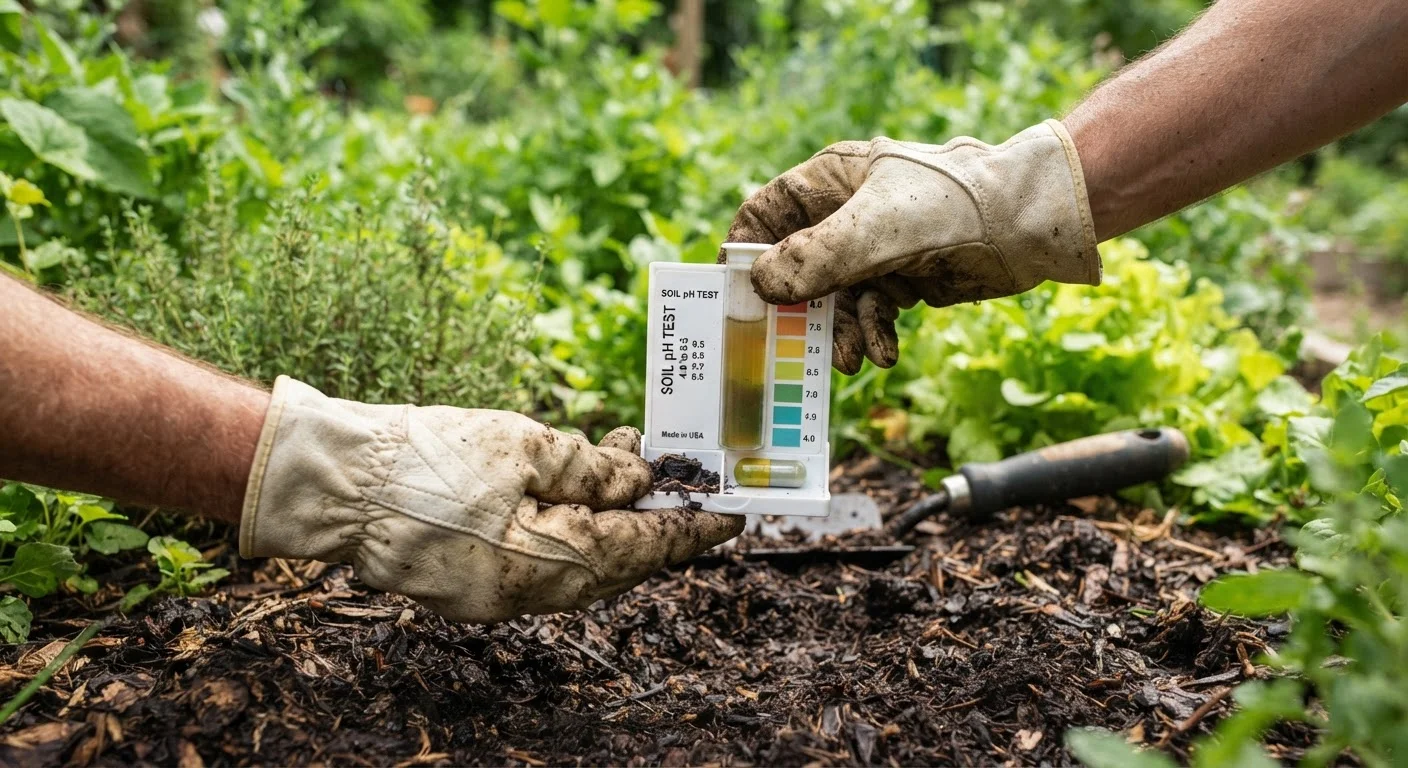
You can't judge pH by looking at your soil. Testing is the only reliable approach, and fortunately it's straightforward and inexpensive.
Home Test Kits
Available at most garden centers, these kits use color-indicator chemistry or digital meters to give a general reading. They're useful for a quick check but can vary in precision, especially at the edges of the scale. Follow kit instructions carefully, as the soil-to-water ratio affects results.
Cooperative Extension Lab Tests
Your state's land-grant university cooperative extension service typically offers soil analysis for a modest fee. You mail in a small sample; they return a detailed report including pH, nutrient levels, and specific amendment recommendations for your region and intended plants. This is the most reliable option for serious garden planning.
Collecting a Good Sample
Collect soil from several spots in the area you plan to plant, digging down 4-6 inches. Mix the samples together and let the composite sample dry before testing. This blended approach reflects average conditions across your planting zone rather than a single anomalous spot.
Test Before You Amend, Not After
Adding lime or sulfur without knowing your baseline pH is guesswork that can worsen your soil rather than improve it. Even a basic home test kit gives you a starting point. If you're planning a new bed, invest in a cooperative extension lab test - the detailed results are worth far more than the modest cost.
How to Raise or Lower Soil pH
Once you have a test result, correction is a matter of choosing the right amendment and applying it at the right rate - patience required.
Raising pH (Making Soil Less Acidic)
Agricultural lime - typically ground limestone - is the standard amendment for acidic soils. Calcitic lime adds calcium; dolomitic lime adds both calcium and magnesium. The rate needed depends on how far off your pH is and your soil type: clay soils need more amendment than sandy soils to achieve the same shift. Till lime into the top 6-8 inches and water it in. Expect meaningful change over several months, not days.
Lowering pH (Making Soil Less Alkaline)
Elemental sulfur is the most common choice for acidifying soil. Soil bacteria convert it into sulfuric acid over time, gradually lowering pH. Like lime, sulfur works slowly - plan months ahead of planting, especially in cool climates where bacterial activity is reduced. Acidifying fertilizers and organic materials like pine needles or peat moss can provide modest, slower-acting pH reduction over seasons.
Apply Amendments Before Planting
Correcting pH around established plants is difficult and risks damaging roots. Work amendments into your bed before the first plant goes in. After correction, periodic retesting keeps you ahead of drift before problems appear.