
What Soil Actually Does for Plants
Most gardeners focus on what grows above ground, but the real action happens below it. Soil performs four essential jobs simultaneously: it anchors roots, supplies water, delivers nutrients, and provides oxygen. Fail at any one of these and plants struggle - regardless of how much you water or fertilise.
Roots need oxygen as much as water. In compacted or waterlogged soil, air pockets disappear and roots essentially suffocate. This is why plants in heavy clay often look overwatered even during dry spells - the structure itself is the problem, not the amount of water applied. Understanding this distinction saves a lot of unnecessary intervention.
Nutrients in soil are not simply present or absent. They are cycled, released, and made available through biological activity. Minerals bound in organic matter only become accessible to plants after bacteria and fungi break them down. Without that biological layer, even nutrient-rich soil can leave plants deficient.
Don't Confuse Soil Amendments with Fertilisers
Fertilisers supply specific nutrients (nitrogen, phosphorus, potassium) directly to plants but do little or nothing for soil structure or biology. Amendments like compost, aged manure, or gypsum change the physical or biological properties of the soil itself. Both have their place, but amendments address root causes while fertilisers treat symptoms. A soil test helps you decide which - if either - is actually needed.
The Three Soil Types and What They Mean for Your Garden
Most garden soils fall somewhere on a spectrum between clay, sand, and silt - with loam (a balanced mixture of all three) considered ideal. Knowing what you're working with helps you amend efficiently rather than guessing.
- Clay soil holds nutrients and moisture well but compacts easily, drains slowly, and can become brick-hard when dry. It warms slowly in spring and can suffocate roots.
- Sandy soil drains rapidly and warms quickly, but water and nutrients pass through before roots can absorb them. It requires more frequent watering and amendment.
- Silty soil sits in the middle - reasonably fertile and moisture-retentive - but can crust on the surface and compact under foot traffic.
The good news: organic matter improves all three. Adding compost to clay opens up air channels; adding it to sand increases moisture retention. It is the universal amendment, and you can make it yourself. See our guide to composting at home for a practical starting point.
~95%
Food production that depends on healthy soil
The Food and Agriculture Organization of the United Nations estimates that approximately 95% of the world's food is produced either directly or indirectly from soil.
1 billion+
Bacteria in a teaspoon of healthy soil
Soil ecologists estimate that a single teaspoon of productive garden soil can contain over one billion individual bacteria from thousands of different species.
5%
Organic matter in ideal garden soil
Soil scientists generally consider 5% organic matter by volume a hallmark of productive garden loam, yet many suburban soils fall well below this level.
Soil Biology: The Invisible Workforce
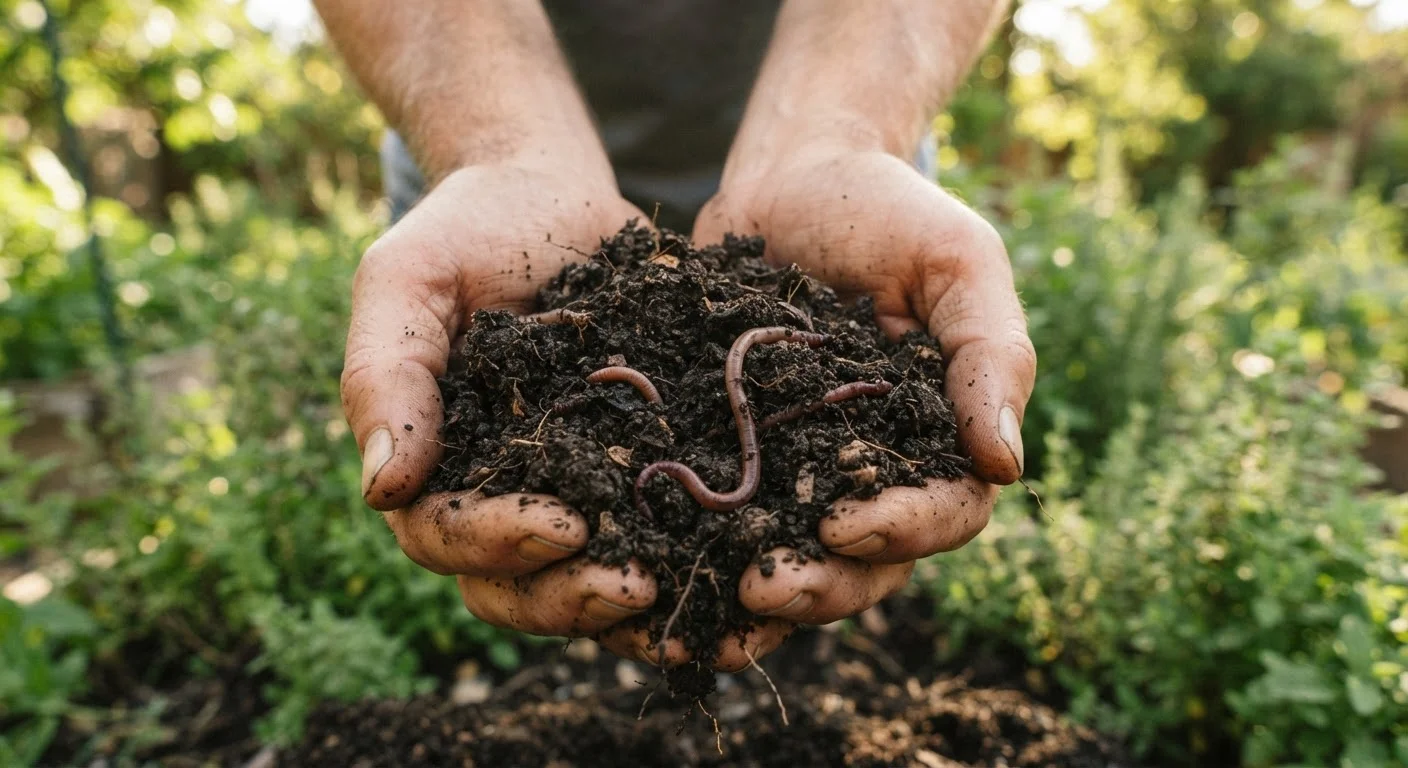
A single teaspoon of healthy garden soil can contain millions of bacteria, thousands of fungal threads, and a surprising diversity of protozoa, nematodes, and arthropods. These organisms are not incidental - they are the engine of soil fertility.
Mycorrhizal fungi, for instance, form networks around plant roots that dramatically extend their reach, improving both water and phosphorus uptake. Earthworms digest organic debris and leave behind castings that are extraordinarily rich in plant-available nutrients. Bacteria fix atmospheric nitrogen into forms plants can use. Collectively, this biological community does work that no fertiliser can replicate.
Practices that harm soil biology - over-tilling, heavy pesticide use, leaving soil bare and exposed - cost gardeners more than they realize. Keeping soil covered with mulch or cover crops, minimizing unnecessary disturbance, and feeding the system with organic matter keeps this workforce thriving.
“Soil is not simply dirt. It is a living system, and when we treat it as such, it rewards us with a fertility we could not manufacture on our own.”
— Elaine Ingham, Soil biologist and founder of the Soil Food Web School
Practical Steps to Build Better Soil
Building healthy soil is a gradual process, but a handful of consistent habits make a significant difference over one or two seasons.
- Test before you amend. A basic soil test - available through many university extension services - tells you your pH and major nutrient levels. This prevents guesswork and wasted money on amendments you don't need. For a deeper look at one critical measurement, our article on soil pH explains what it means and how to adjust it.
- Add organic matter every season. Two to three inches of compost worked into beds annually is the single most consistent soil-building habit. It improves structure, biology, and fertility simultaneously.
- Protect the surface. Bare soil loses moisture, erodes, and overheats. Mulch with wood chips, straw, or shredded leaves to moderate temperature, suppress weeds, and feed biology as it breaks down.
- Avoid unnecessary compaction. Never work wet soil and minimize foot traffic on beds. Compaction undoes structure that took seasons to build.
- Water thoughtfully. How you water affects soil structure over time. Our guide to smarter garden watering covers methods that protect soil while improving plant health.
Once you have these fundamentals in place, you are ready to plan what to grow. Our guide to starting a vegetable garden from scratch walks through the next steps from plot selection to first harvest.