Why Cats Fear Carriers in the First Place
For most cats, the carrier only appears right before something stressful - a vet visit, a move, or a boarding stay. Over time, the sight or smell of the carrier alone becomes a reliable cue that something unpleasant is about to happen. This kind of learned association is well-documented in animal behavior research and explains why many cats hide or become aggressive the moment the carrier comes out of the closet.
The goal of carrier training isn't to trick your cat - it's to break that negative association entirely by making the carrier a neutral or even pleasant part of your home. This process requires consistency and low pressure. Rushing it typically backfires, reinforcing fear rather than dissolving it.
If you're still in the early stages of building trust with a new cat, see our guide to bringing a cat home for the first time for foundational advice on establishing routines and a sense of safety.
What you will need
Step-by-Step: Building a Positive Carrier Association
Follow these steps at your cat's pace - some cats may move through them in a week, others may need several weeks. Never advance a step if your cat is still showing avoidance or stress at the current stage.
Place the carrier in a low-traffic area of your home
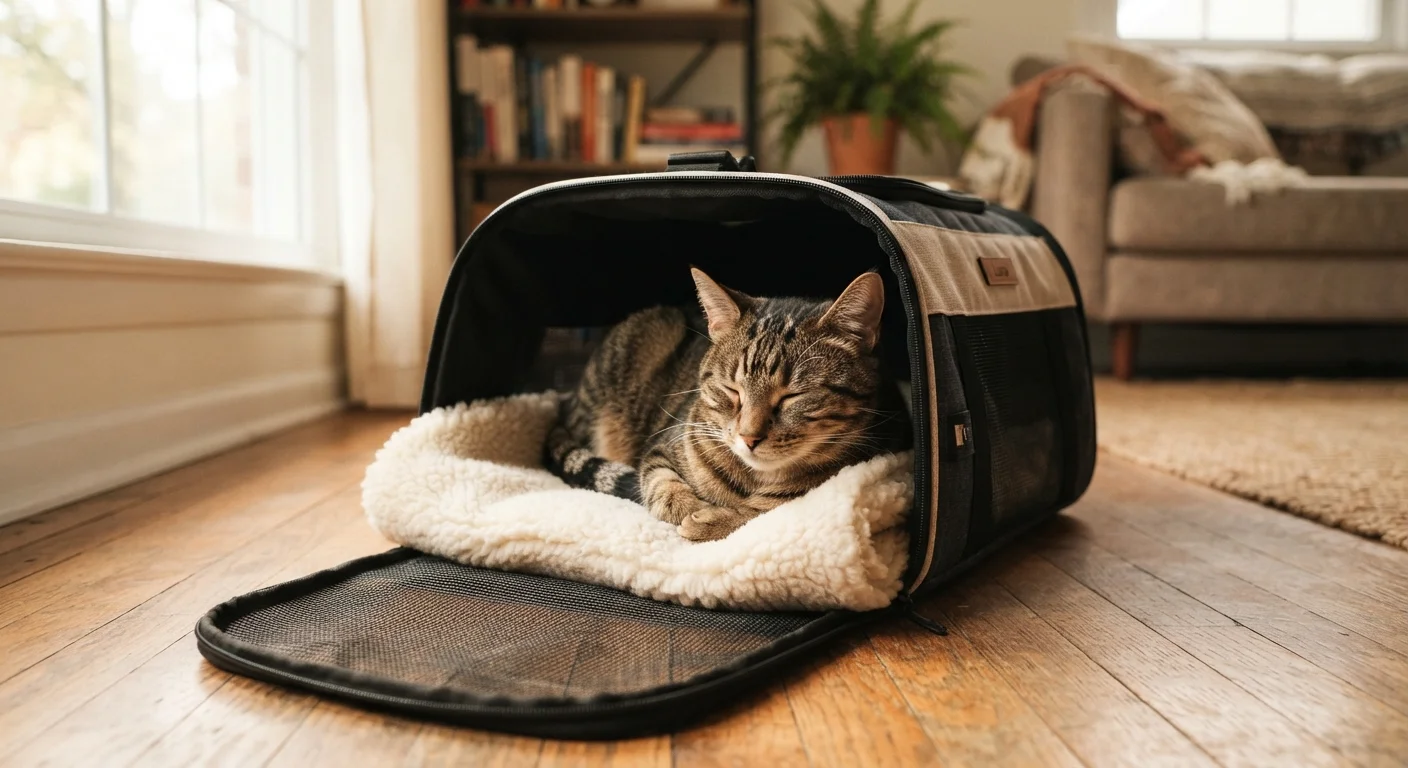
Set the carrier on the floor in a room your cat uses regularly. Remove the door if it's removable, or prop it open securely. Drape a light blanket or towel over the top and back to make the interior feel more den-like. Do nothing else at this stage - simply let your cat notice the carrier exists.
Add familiar scents inside the carrier
Place a piece of worn clothing or a blanket your cat already sleeps on inside the carrier. Familiar scents are one of the most effective ways to signal safety to a cat. You can also spray a synthetic feline facial pheromone product (available from veterinarians and pet supply stores) on the interior bedding about 30 minutes before your cat interacts with the carrier.
Feed meals and treats near, then inside, the carrier
Start by placing your cat's food bowl or high-value treats a foot away from the carrier entrance. Over several sessions, gradually move the food closer to the opening, then just inside the threshold, and eventually further inside. Let your cat set the pace - if they stop eating or walk away, you've moved too fast.
Encourage your cat to rest inside without closing the door
Once your cat enters the carrier voluntarily to eat, begin leaving treats or a favored toy inside during the day so they associate the space with good things even outside of mealtime. If your cat chooses to nap in the carrier on their own, that's a strong sign the association is shifting positively. Do not close the door yet.
Practice closing and opening the door briefly
Once your cat is comfortably entering the carrier, gently close the door for a few seconds while offering a treat through the door, then open it again. Gradually increase the duration over multiple sessions - from a few seconds to a minute, then longer. Stay calm and avoid hovering, which can increase your cat's alertness.
Carry the carrier short distances inside your home
With your cat inside and the door closed, lift the carrier and walk slowly to another room, then set it back down and open the door. This introduces movement without the added stimulus of a car or unfamiliar environment. Repeat until your cat appears relaxed during the carry.
Take short car trips with no stressful destination
Place the carrier on the back seat secured with a seatbelt or on the floor, and drive around the block or to the end of the street. Return home, open the carrier, and reward your cat calmly. Gradually extend the duration of these neutral trips. By the time a vet appointment arrives, car travel will be a familiar, non-threatening experience rather than a novel one.
Timing Matters More Than Frequency
Short, positive sessions of two to five minutes work better than long, infrequent ones. Cats habituate to new things most efficiently when exposure is brief and consistently pleasant. Aim for one or two low-key interactions per day rather than extended training marathons.
Maintaining Comfort Between Trips
Once your cat is comfortable entering and resting in the carrier, the most important thing you can do is keep it accessible year-round. Storing the carrier in a closet between uses resets much of the progress you've made. Cats that have continuous access to their carrier are generally calmer on travel days because the carrier remains an ordinary part of their environment.
Periodically refresh the bedding with a worn piece of your clothing, and replace treats every few weeks so they remain enticing. A short "practice ride" around the block every month or two - with no destination - can further normalize the experience of being in a moving car.
Grooming routines follow a similar gradual-desensitization logic. Our guide to grooming your cat at home walks through the same low-pressure approach for brushing, nail trimming, and ear cleaning.
This article provides general educational information about cat care and is not a substitute for advice from a licensed veterinarian. If your cat shows extreme fear responses, please consult your vet or a certified animal behaviorist.