When Does a Dog Become a Senior?
The age-seven milestone is a useful general guideline, but it's not a hard rule. Large and giant breeds - think Great Danes or Bernese Mountain Dogs - often show signs of aging closer to age five or six, while small breeds like Chihuahuas or miniature poodles may not enter their senior phase until age nine or ten. Your veterinarian can help you identify where your individual dog sits on that spectrum based on breed, body condition, and health history.
What matters practically is recognizing that the transition into the senior phase is gradual, not sudden. Organ function, metabolism, immune response, and joint health all shift incrementally. The care adjustments described below aren't meant to happen all at once - they're a framework for staying ahead of those changes rather than reacting after problems appear.
Preventive Veterinary Care: More Frequent, More Focused
Annual wellness visits are a reasonable baseline for younger dogs, but most veterinarians recommend moving to twice-yearly checkups once a dog reaches senior status. This frequency matters because age-related conditions - kidney disease, thyroid dysfunction, heart murmurs, early-stage arthritis - can progress significantly within six months, and earlier detection gives you more treatment options.
A senior wellness visit typically includes a physical exam, bloodwork (to assess organ function), urinalysis, blood pressure measurement, and often a conversation about weight, mobility, and behavior changes you've noticed at home. See our annual vet visit checklist for a practical guide to preparing for these appointments and making the most of each one.
Prepare a symptom list before each vet visit
Senior dogs often develop subtle changes that are easy to forget by the time you're in the exam room. Keep a running note on your phone of anything unusual - changes in thirst, sleep, appetite, mobility, or behavior - and bring it to each appointment. Veterinarians find these lists genuinely useful and often more informative than a general 'she seems a bit off.'
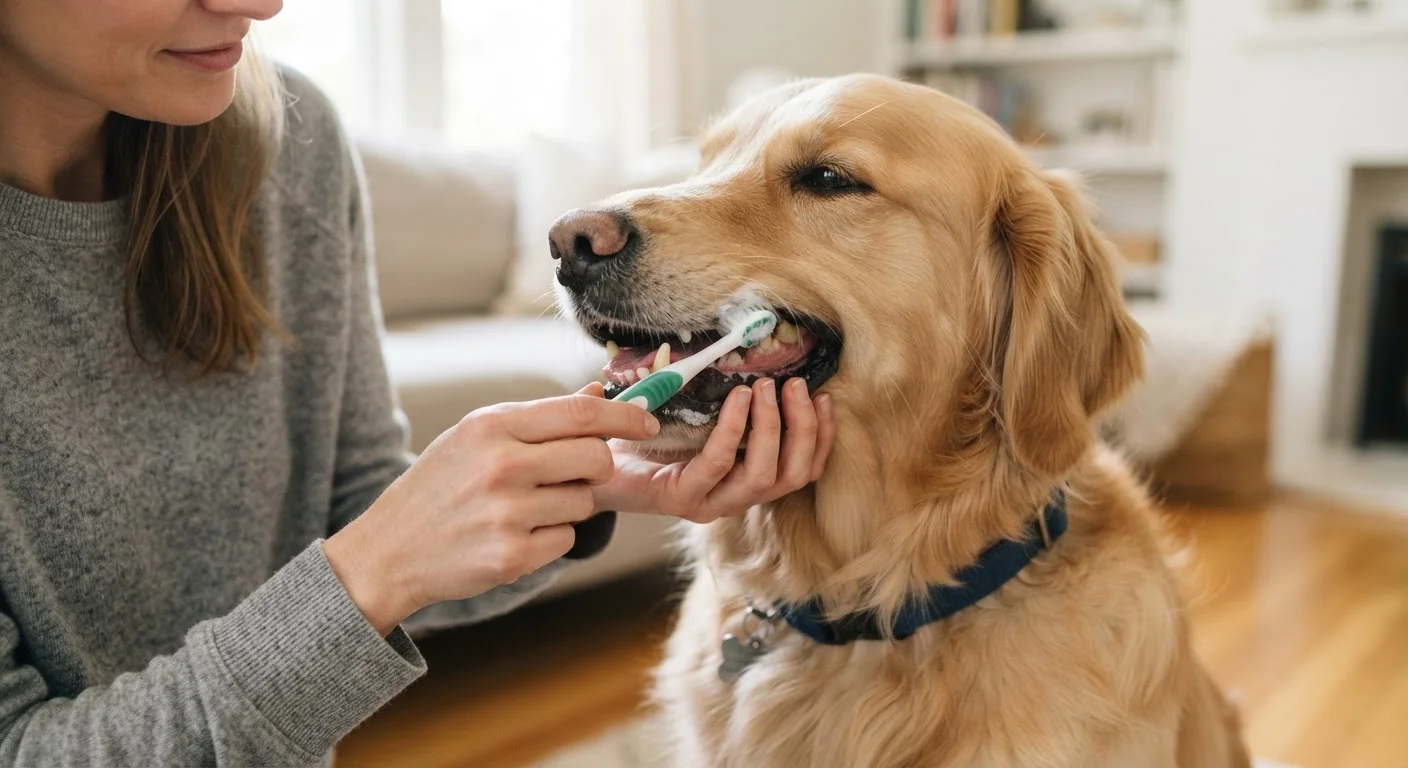
Dental health also intensifies in importance at this life stage. Periodontal disease - infection and inflammation of the gums and jaw structures - affects a large proportion of adult dogs and can have systemic effects. Our guide to dog dental health covers what owners most commonly miss. Discuss professional dental cleanings with your vet as part of your senior dog's care plan.
This article is for general informational purposes only and is not a substitute for professional veterinary advice. Always consult your veterinarian for guidance specific to your dog's health needs.
Nutrition: Adjusting for a Slower Metabolism
Senior dogs typically burn fewer calories than they did in their prime, making weight gain a common and serious concern - excess body weight accelerates joint deterioration and strains the cardiovascular system. At the same time, some older dogs lose muscle mass and may need targeted protein support to maintain lean body condition. These are genuinely opposing needs, and the right balance depends on your specific dog.
Many commercial diets are formulated for senior dogs, with adjusted calorie density, higher-quality protein sources, and added joint-supportive ingredients such as glucosamine and omega-3 fatty acids. Whether to switch to one of these formulas, adjust portions of your dog's current food, or explore other options is a conversation worth having with your vet. For a broader understanding of how different diet formats compare nutritionally, our article on dry food, wet food, and raw diets explains the core trade-offs.
Supplement caution: consult your vet first
Joint supplements such as glucosamine and omega-3 fatty acids are widely marketed for senior dogs and have some supporting evidence, but the quality and quantity of research varies. Some supplements also interact with medications or are contraindicated in dogs with certain health conditions. Before adding any supplement to your senior dog's routine, discuss it with your veterinarian to assess whether it's appropriate and unlikely to interfere with existing treatments.
Exercise and Mobility: Keep Moving, but Adapt
Senior dogs still need regular physical activity - it supports cardiovascular health, maintains muscle mass, helps manage weight, and provides mental stimulation. But the nature of that exercise should evolve. High-impact activities like prolonged fetching, jumping, or running on hard surfaces can aggravate arthritic joints. Shorter, more frequent walks on softer terrain are often more appropriate than longer, intense outings.
Watch for signs of overexertion during or after activity: lagging behind on walks, stiffness after rest, reluctance to climb stairs, or unusual vocalization. These can all signal that your current routine is exceeding your dog's comfort threshold. Hydrotherapy - walking in a shallow pool or on an underwater treadmill - is one option some senior dogs tolerate very well, as the water reduces joint loading while still allowing movement. Ask your veterinarian whether a referral to a canine rehabilitation specialist makes sense for your dog.
Cognitive and Sensory Changes
Canine Cognitive Dysfunction (CCD) - sometimes compared informally to dementia in humans - is a recognized condition in older dogs. Symptoms include disorientation, altered sleep-wake cycles, changes in social behavior, house-soiling accidents in previously reliable dogs, and apparent confusion in familiar environments. CCD is underdiagnosed partly because owners attribute these changes to "just getting old." If you notice a cluster of these signs, raise them explicitly with your vet; there are management strategies available.
Sensory decline - reduced hearing, declining vision, and a diminished sense of smell - is also common. Dogs adapt remarkably well when the environment supports them: keeping furniture arrangements consistent, using verbal and tactile cues more deliberately, and avoiding startling a dog that can no longer hear you approach are all straightforward accommodations. Unlike a puppy arriving home for the first time (see our guide to a new dog's first week), a senior dog benefits from routine and environmental stability rather than novelty.
Practical Adjustments That Make a Real Difference
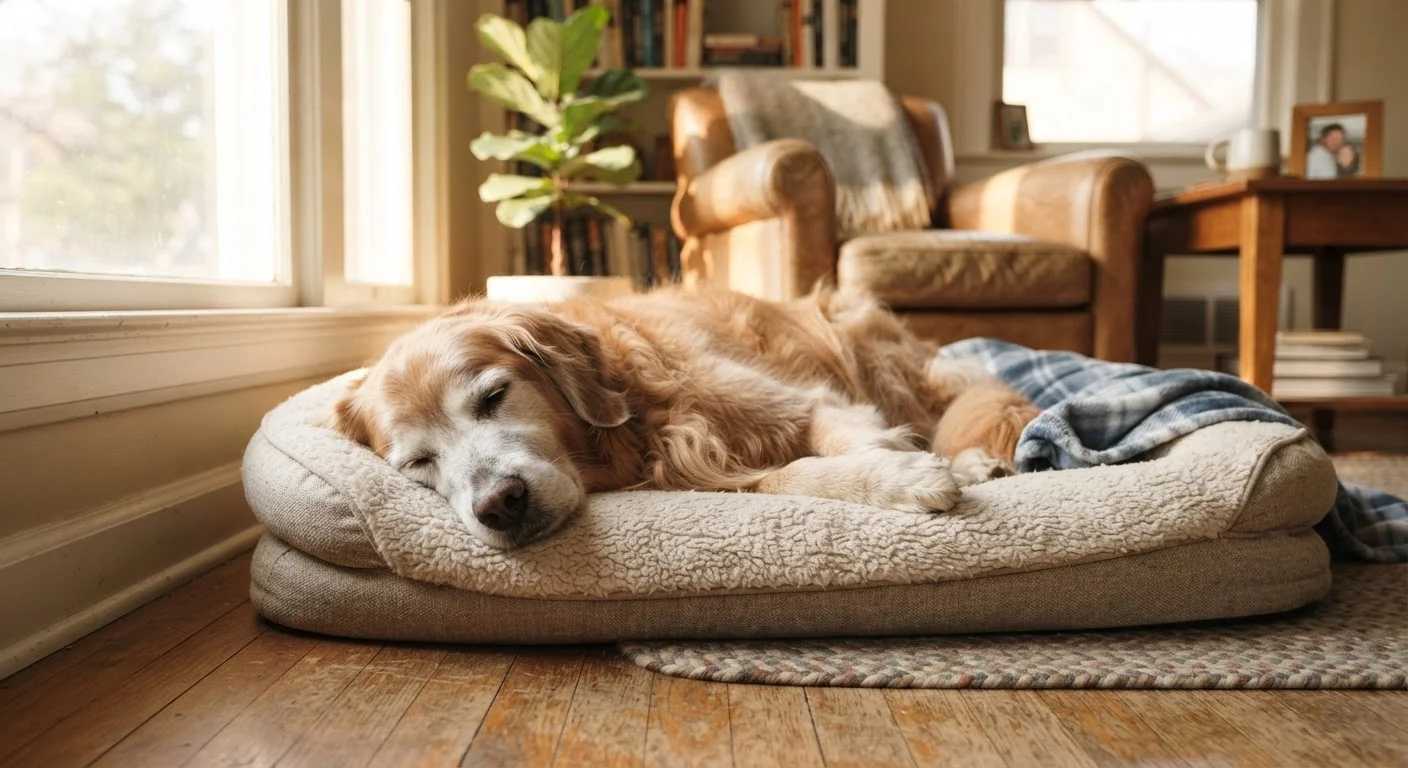
Many of the most effective senior-dog care strategies are low-cost and immediately implementable. Orthopedic bedding can meaningfully reduce joint pressure during sleep - an underappreciated factor given how much time dogs spend lying down. Ramps or steps that allow a dog to access furniture or vehicles without jumping reduce impact stress over time. Raised food and water bowls can ease neck and back discomfort during meals for dogs with arthritis.
Schedule veterinary checkups every six months rather than annually.
Age-related conditions in dogs can progress quickly. Biannual visits allow earlier detection of kidney disease, heart changes, thyroid issues, and other common senior conditions, giving you more treatment options at each stage.
Adjust food portions and formulation as your dog's metabolism slows.
Senior dogs typically need fewer calories but may benefit from higher-quality protein to maintain muscle. Unchecked weight gain accelerates joint deterioration and cardiovascular strain in older animals.
Switch from one long daily walk to two or three shorter, gentler outings.
Shorter, more frequent exercise preserves cardiovascular fitness and mental stimulation without overloading aging joints. Recovery time between bouts of activity increases in senior dogs.
Provide orthopedic bedding in your dog's primary sleeping area.
Dogs sleep many hours per day, and firm or unsupported surfaces place ongoing pressure on arthritic joints. Memory foam or thick orthopedic beds can significantly reduce discomfort during rest periods.
Report behavioral changes to your veterinarian rather than attributing them to "old age."
Behavioral shifts - increased irritability, house-soiling, nighttime restlessness, decreased interest in food or play - are often early signs of treatable pain, cognitive decline, or systemic illness. Normalizing them as aging can delay helpful intervention.
Small environmental changes compound over months and years. Thinking proactively about friction points in your dog's daily routine - what requires jumping, climbing, or prolonged standing - and reducing unnecessary strain in those moments is one of the clearest ways to support a senior dog's comfort and mobility.