Why Boredom Drives Nuisance Behaviours
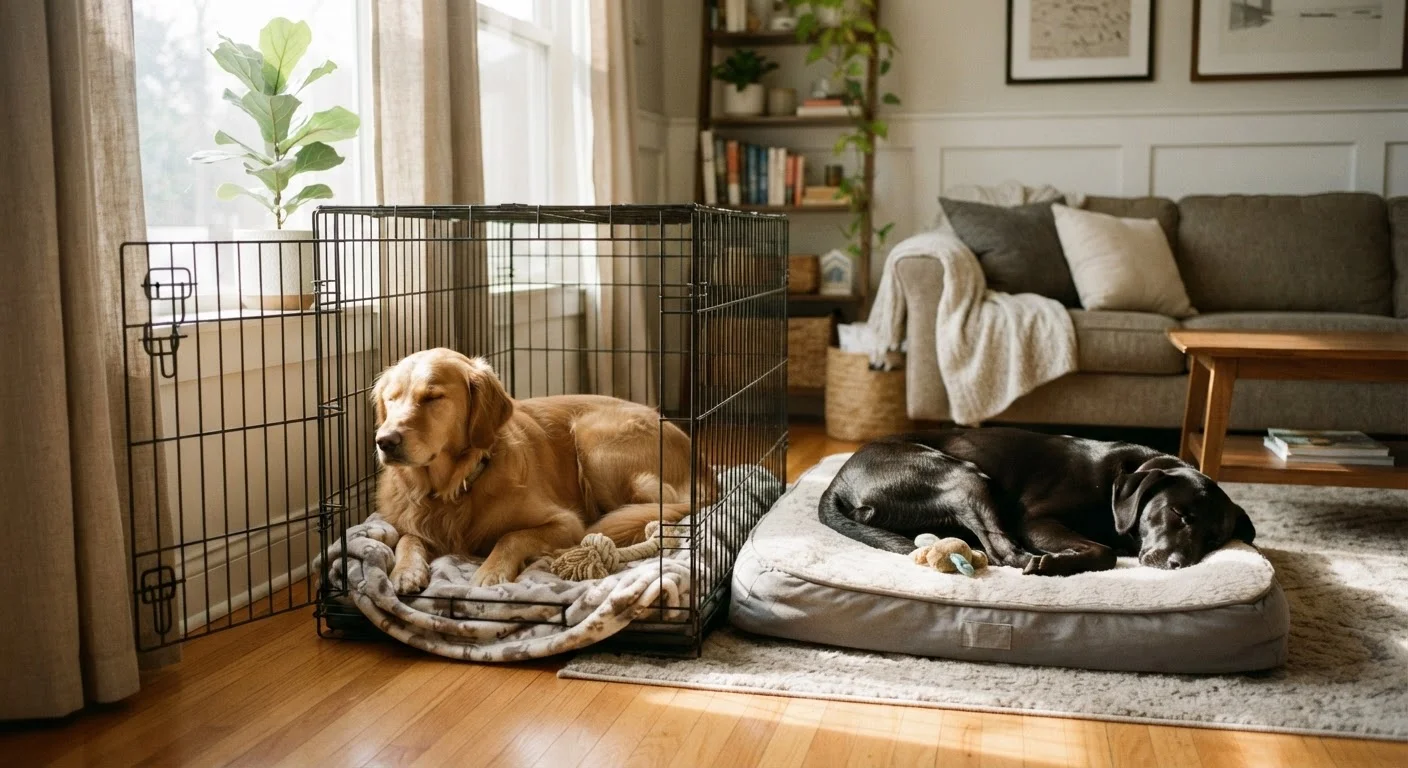
When dogs bark incessantly, chew furniture, dig up the yard, or pace restlessly, the instinct is often to label the behaviour as disobedience. In most cases, however, the underlying cause is simpler: the dog does not have enough to do. Dogs are cognitively complex animals whose brains were shaped over thousands of years of working alongside humans - tracking, herding, retrieving, guarding. Without outlets for that mental energy, they create their own.
Environmental enrichment refers to any modification of a dog's surroundings or routine that stimulates natural behaviours - sniffing, foraging, problem-solving, social interaction, and physical movement. Research in animal behaviour consistently shows that enrichment reduces stress-related and frustration-driven behaviours in domestic dogs. The strategies below are practical, vet-informed, and adaptable to everyday home environments. They work best when layered with solid training; see our guide on managing separation anxiety if your dog's problem behaviours are tied to being left alone.
Scatter Feeding and Sniff Work
Instead of serving your dog's meals in a bowl, scatter kibble across a patch of grass, a snuffle mat, or even a crinkled towel. Sniffing is cognitively exhausting in the best possible way - dogs process scent information through a vastly more developed olfactory system than humans, and sustained sniff work is genuinely tiring. Studies in applied animal behaviour have found that scent-based activities lower cortisol levels and heart rate in dogs, suggesting a calming effect beyond simple distraction.
Start with a handful of kibble scattered over a small area. Gradually increase the search difficulty by hiding food under cups, inside cardboard rolls, or within a layered muffin tin covered with tennis balls. Even five to ten minutes of sniff work before a period when your dog would typically engage in problem behaviour can meaningfully reduce that behaviour's frequency.
Sniffing is genuinely tiring - even five minutes of scatter feeding can pre-empt common problem behaviours.
Food Puzzle Toys and Lick Mats
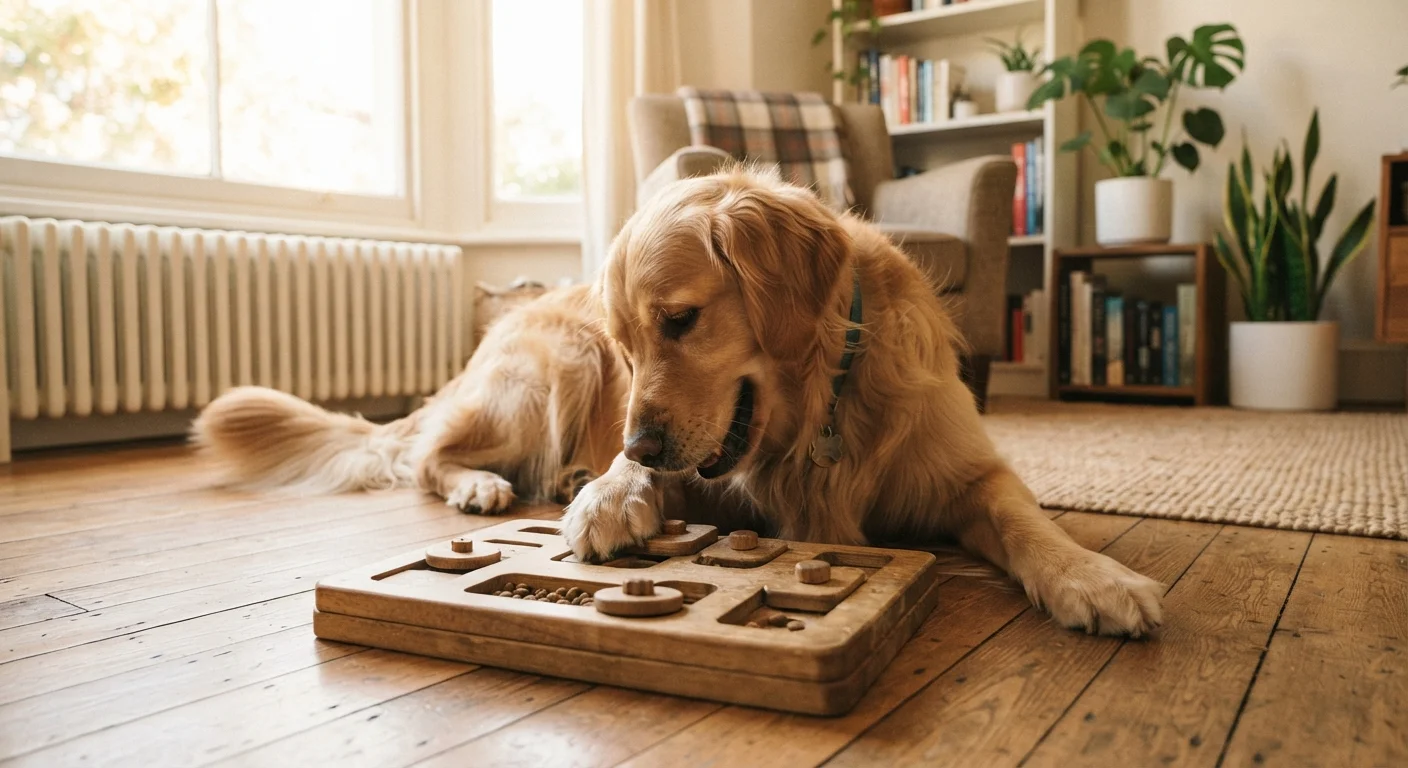
Food dispensing toys and lick mats slow eating and extend mealtime engagement. Puzzle feeders - devices that require a dog to slide, lift, or spin components to access food - activate problem-solving skills and can occupy dogs for significantly longer than a standard bowl. Lick mats with spreadable food (unsalted peanut butter, plain canned pumpkin, or plain yogurt are common choices) also trigger a rhythmic licking behaviour that many dogs find self-soothing.
Choose a puzzle difficulty appropriate to your dog's experience. Starting too difficult can cause frustration and disengagement; beginning too easy means the activity is over before it's had any calming effect. Progress difficulty gradually as your dog becomes reliably successful. Freeze-stuffed toys extend engagement time substantially and work well for dogs who empty softer puzzles too quickly.
Match puzzle difficulty to your dog's skill level - too hard causes frustration, too easy means it's over in seconds.
Decompression Walks With Free-Sniff Time
A walk where your dog is allowed to stop, sniff, and investigate at their own pace - rather than moving at a brisk human-set tempo - is categorically different in its enrichment value. Veterinary behaviourists sometimes call this a "decompression walk," and it prioritises the dog's sensory experience over distance covered. A 20-minute decompression walk can be more mentally satisfying for a dog than a 45-minute structured walk on a tight leash.
Practically, this means relaxing leash tension and allowing your dog to choose when to move and when to pause - within safe limits. If leash manners are still being developed, a longer line (with appropriate training to maintain safety) gives dogs more freedom while keeping them under control. For guidance on building leash skills that make these walks manageable, see our article on teaching polite leash walking.
A slow, sniff-led 20-minute walk can satisfy a dog more deeply than a fast 45-minute structured outing.
Chew Opportunities With Appropriate Items
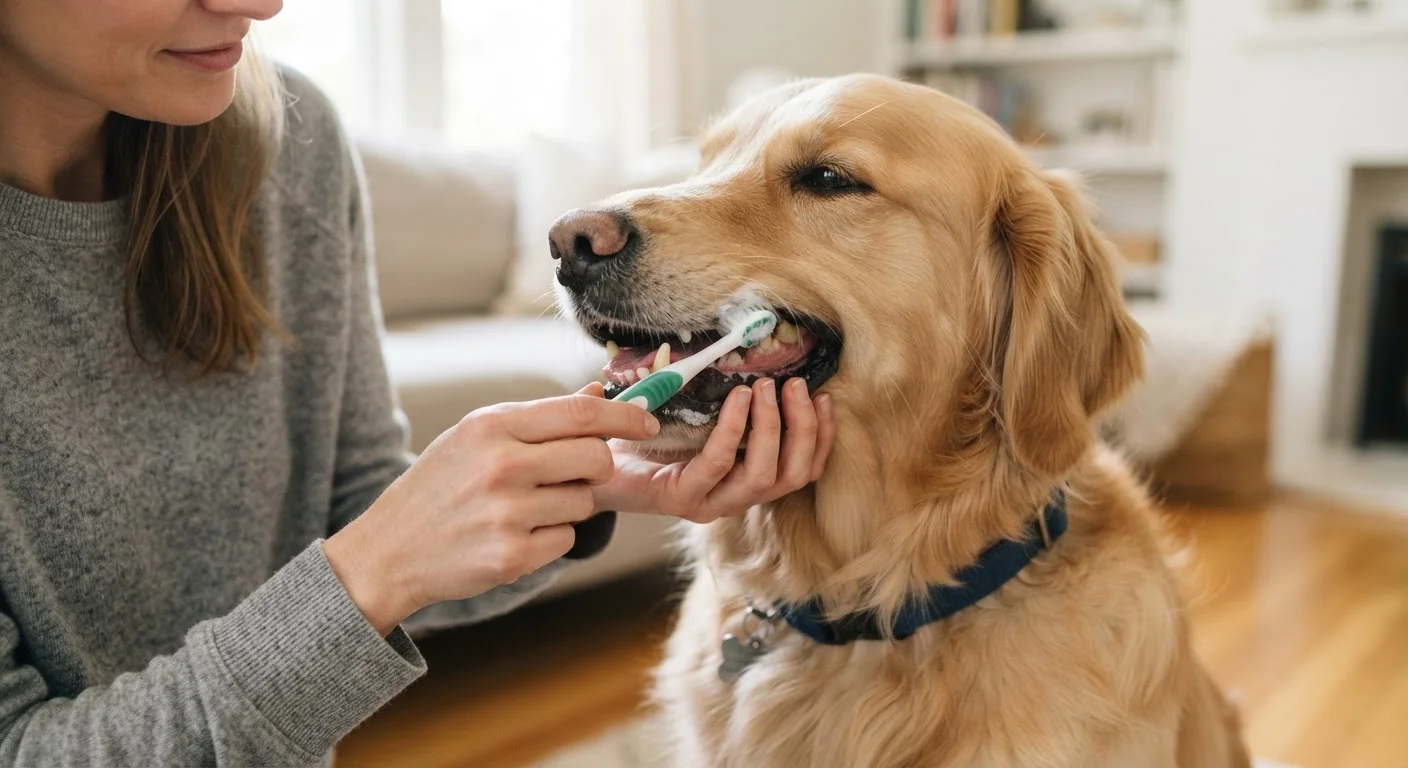
Chewing is a self-reinforcing behaviour - dogs chew because it releases endorphins and relieves jaw tension, not simply because they are bored. Trying to eliminate chewing entirely is unlikely to succeed; redirecting it to appropriate outlets is far more effective. Providing durable chews (such as bully sticks, raw bones appropriate to your dog's size, or rubber chew toys) as a daily or regular fixture reduces the likelihood of furniture, shoes, or household items becoming targets.
Different dogs have different chewing intensities. A soft chewer may be satisfied with a braided rope toy, while a power chewer needs something significantly more durable. Supervise new chew items until you understand how your dog interacts with them, and consult your veterinarian about which chew types are appropriate for your dog's dental health and size.
Chewing releases endorphins - providing daily appropriate chew items redirects a natural urge constructively.
Nose Work and Scent Games Indoors
Formal nose work - teaching a dog to search for a specific scent, such as birch oil - is a sport, but the foundational games can be played at home with no specialised equipment. The simplest version: hide small pieces of food in several locations around a room and release your dog to find them. Progressively hide items in harder spots - under cushions, behind furniture legs, inside open paper bags.
You can also teach your dog to find a specific named toy by pairing its name with a reward each time the dog touches or retrieves it, then gradually hiding it. These games leverage dogs' natural predatory search sequence and provide genuine cognitive challenge. Nose work is particularly useful for dogs who are physically limited by age or injury but still have high mental energy needs.
Nose work is among the most tiring activities available to dogs - and requires almost no equipment to start.
Novel Environments and Controlled Exploration
Novelty itself is enriching. Rotating the route of a familiar walk, visiting a new park, or allowing your dog supervised access to an unfamiliar area of your own yard provides a surge of new sensory input. Even bringing home a cardboard box or a bag with new smells on it can spark exploratory behaviour that occupies a dog meaningfully for several minutes.
For dogs whose social skills allow it, structured dog-to-dog play provides rich, dynamic stimulation that human-directed games cannot replicate. If your dog is still developing social confidence, gradual, low-pressure exposure is important - our guide on socialisation at any age outlines how to do this without inadvertently increasing fear or reactivity.
Even a cardboard box with unfamiliar smells can spark meaningful exploratory behaviour in a curious dog.
Training Sessions as Mental Exercise
Short, positive-reinforcement training sessions - five to ten minutes, once or twice daily - provide substantial cognitive engagement. Learning and practising behaviours requires concentration, and the reward process itself (anticipating, performing, receiving) is stimulating. Dogs who receive regular training are frequently calmer between sessions because their cognitive capacity has been genuinely exercised.
You don't need to introduce new commands constantly. Practising known behaviours in novel locations, at varying distances, or with new distractions raises the cognitive challenge considerably. Teaching impulse-control games (such as "leave it" with increasing difficulty) also directly addresses the self-regulation deficits that underlie many problem behaviours. Training and enrichment are most effective when used together, not as alternatives to each other.
Five to ten minutes of focused training can exhaust a dog cognitively in ways that an hour of free play cannot.
Building Enrichment Into Your Dog's Routine
No single enrichment activity is a permanent fix. Dogs habituate quickly to repeated stimuli, which means the puzzle toy that occupied your dog for 20 minutes last week may hold their attention for only two minutes today. Rotating activities - across sniff-based, social, physical, and cognitive categories - keeps novelty alive and sustains engagement over time.
Rotate to Prevent Habituation
Dogs habituate quickly to repeated enrichment items - a puzzle toy that was absorbing on Monday may be ignored by Friday. Keep a small rotating stock of enrichment options and introduce each one fresh after a break of several days. This simple strategy preserves novelty and maintains the activity's effectiveness over weeks and months.
It's also worth matching enrichment intensity to your dog's current state. An overtired or anxious dog may not engage with a novel toy; a highly aroused dog may need a decompression walk before a cognitive task. Think of enrichment as a menu, not a prescription - observe what your dog responds to and adjust accordingly. If your dog's social needs are going unmet, socialisation strategies can complement your enrichment plan effectively.
This article is for general informational purposes only and is not a substitute for personalised veterinary or certified animal-behaviour guidance. If your dog's problem behaviours are severe, persistent, or accompanied by signs of distress, consult a licensed veterinarian or a certified applied animal behaviourist.