
Why Dogs Are Wired to Hide Pain
In the wild, showing weakness can attract predators or trigger displacement from a social group. Dogs carry this evolutionary inheritance, which means their default response to pain is often suppression rather than display. A dog limping dramatically is already communicating openly - the harder cases are the dogs that simply become quieter, sleep more, or stop jumping on the couch without any obvious reason.
This instinct is not a choice, and it is not stubbornness. It is biology. Understanding this helps owners shift their attention from waiting for obvious distress to watching for subtle departures from a dog's individual baseline. Every dog has a normal - and deviation from that normal is the most reliable signal something may be wrong.
Track Your Dog's Individual Baseline
Because pain signals are often departures from normal, it helps to know your dog's baseline behaviors well. Note their typical appetite, sleep positions, exercise enthusiasm, and social engagement. When something shifts - even subtly - you will have a concrete reference point to share with your veterinarian.
Behavioral Cues That Often Go Unnoticed
Behavioral changes are frequently the first - and only - clue a dog is uncomfortable. Common signs that owners often overlook include:
- Withdrawal or reduced interaction: A normally social dog that starts avoiding family members or retreating to quiet spaces may be self-protecting.
- Restlessness or difficulty settling: A dog that repeatedly changes position, gets up and lies down, or seems unable to get comfortable may be managing internal discomfort.
- Changes in appetite or water intake: Pain - especially abdominal or dental pain - can suppress hunger or thirst without any vomiting or diarrhea to make the cause obvious.
- Altered grooming or self-directed attention: Excessive licking or chewing of a single body area often signals localized pain rather than a skin issue.
- Reduced enthusiasm for familiar activities: A dog that used to race to the door for walks but now hangs back may be experiencing joint or muscle pain.
For a deeper look at how dogs use body language to communicate discomfort and other states, see our guide to reading dog body language.
Behavioral Changes Can Have Multiple Causes
Not every behavioral change signals physical pain - anxiety, cognitive changes in older dogs, and environmental stressors can produce similar patterns. This is exactly why veterinary evaluation matters: it helps distinguish physical pain from behavioral or neurological causes rather than leaving owners guessing.
Physical Signs Worth Watching For
Some physical cues are visible if you know what to look for:
- Postural changes: A hunched back, lowered head carriage, or reluctance to sit or lie down in a preferred position can all reflect musculoskeletal or abdominal pain.
- Facial tension: Research into canine facial coding has identified expressions associated with pain - including a furrowed brow, tightened orbital area, and pulled-back ears. These are subtle but real.
- Altered gait: Stiffness after rest, shorter stride length, or slight favoring of one limb may precede a visible limp by days or weeks.
- Unexplained panting at rest: When panting occurs in a cool setting without prior exertion, it can indicate pain or internal stress rather than temperature regulation.
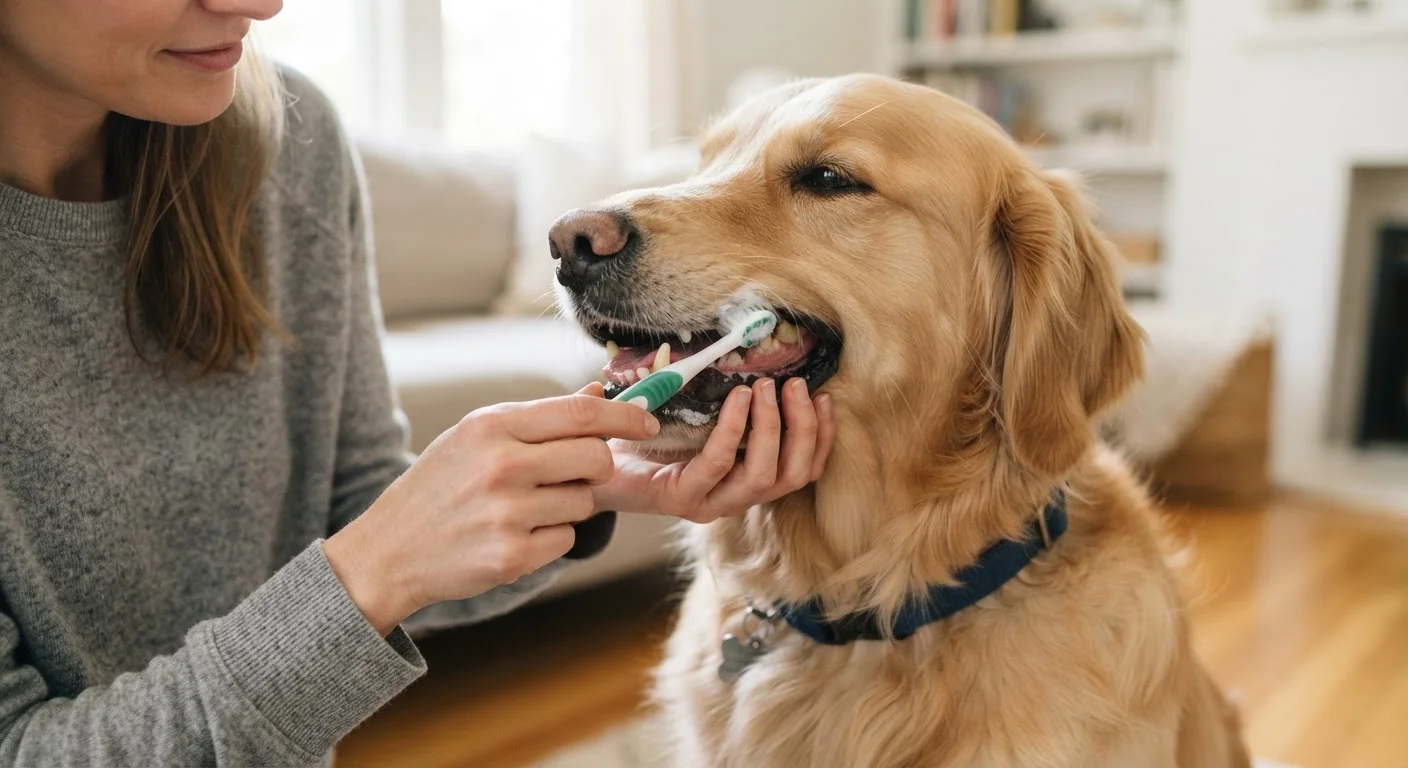
Dental pain deserves special attention because it is one of the most common and most overlooked sources of chronic discomfort in adult dogs. A dog with significant periodontal disease may still eat, play, and appear normal. Our article on dog dental health covers what owners frequently miss in this area.
~80%
Adult dogs with some degree of periodontal disease by age 3
According to the American Veterinary Dental College, periodontal disease is the most common clinical condition seen in adult dogs, yet it often causes pain without obvious behavioral signals.
20-30%
Estimated dogs affected by chronic pain conditions
Veterinary pain management researchers estimate that a significant minority of the dog population lives with unrecognized chronic pain, most commonly from osteoarthritis.
When to Contact Your Veterinarian
Any unexplained change in your dog's behavior or physical presentation is a reasonable reason to call your veterinarian. You do not need to be certain your dog is in pain - concern is enough. Waiting for symptoms to worsen often delays appropriate care and can allow underlying conditions to progress.
Never administer human pain medications (including ibuprofen, aspirin, or acetaminophen) to a dog without explicit veterinary guidance. These drugs are commonly toxic to dogs even at low doses. A veterinarian can assess your dog's specific situation and recommend appropriate, safe pain management.
It is also worth noting that behavioral changes sometimes overlap with anxiety or emotional distress rather than physical pain. If your dog's symptoms seem tied to your absence or schedule changes, our article on separation anxiety in dogs explores what drives that pattern and how it is managed.
This article provides general educational information about dog health and is not a substitute for professional veterinary advice. If you are concerned about your dog's wellbeing, consult a licensed veterinarian.