
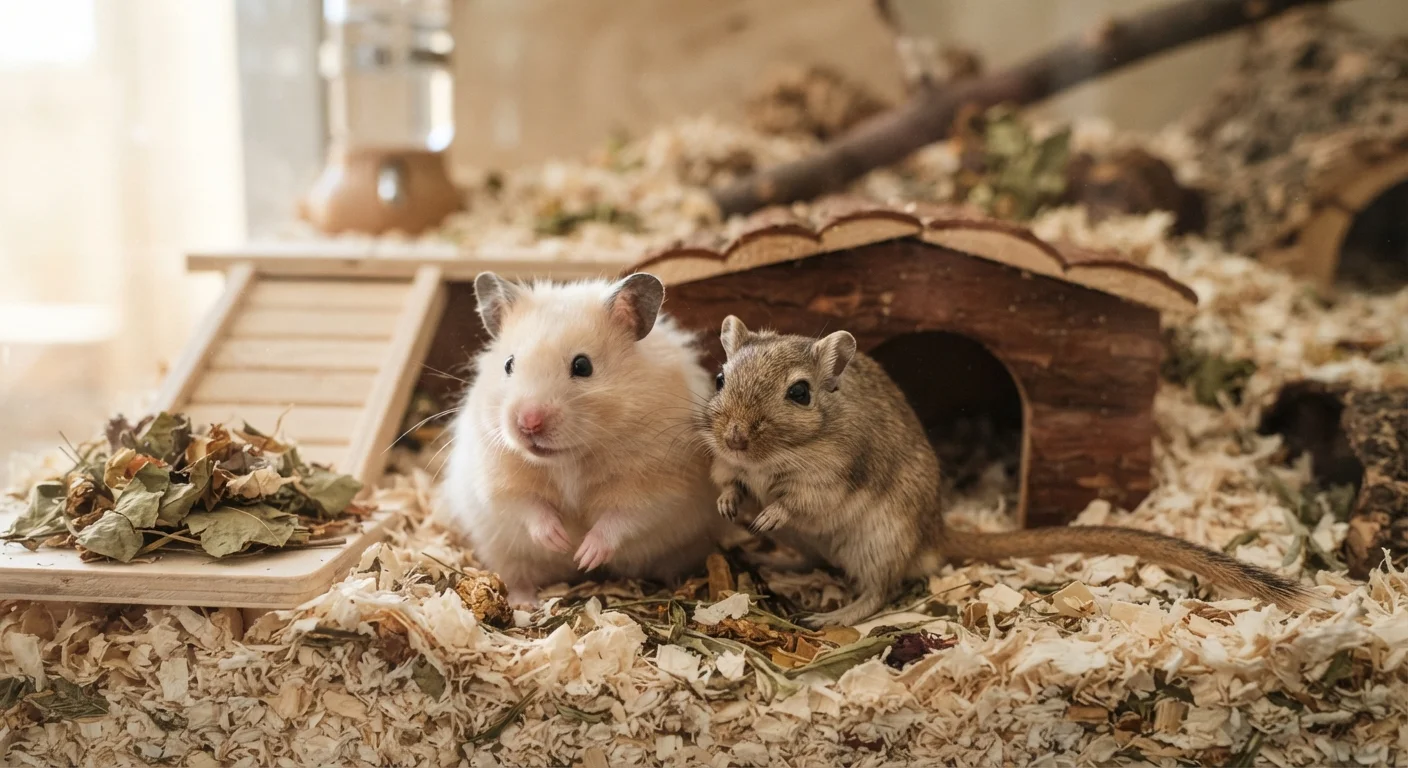
Social Needs: One vs. Two (or More)
One of the most fundamental differences between hamsters and gerbils is how each species relates to others of its kind. Hamsters are solitary animals. In the wild, they fiercely defend individual territories. Housing two adult hamsters together - even of the same sex - typically results in fighting that can cause serious injury. For most hamster species kept as pets, one animal per enclosure is not just acceptable; it is the safest arrangement.
Gerbils, by contrast, are highly social. In their natural desert habitat, they live in family groups and spend much of their time grooming, playing, and sleeping together. A lone gerbil is generally a stressed gerbil. Veterinary and animal-behavior guidance consistently recommends keeping gerbils in same-sex pairs or small same-sex groups. Introducing gerbils that were not raised together requires a careful, gradual process known as a split-cage introduction to reduce aggression.
This distinction matters enormously at the point of purchase. Bringing home a single gerbil to save money or space often results in a less healthy, less behaviorally fulfilled animal. If your household can only realistically manage one pet enclosure with one occupant, a hamster is likely the more appropriate fit. If you can commit to the companionship a gerbil requires, the reward is a far more visibly interactive pair.
| Criterion | Hamster | Gerbil |
|---|---|---|
| Social structure | Solitary; one per enclosure | Social; needs a bonded companion |
| Activity pattern | Primarily nocturnal | Polyphasic; active day and night |
| Minimum bedding depth | 3-4 inches | 6+ inches for burrowing |
| Typical lifespan | 2-3 years | 3-5 years |
| Handling ease | Calm when socialized; less frantic | Fast and curious; requires care |
| Cage type | Wire or tank; escape-proof | Deep glass tank recommended |
Activity Patterns, Handling, and Housing
When are they awake? Most pet hamsters - including the popular Syrian and dwarf varieties - are primarily nocturnal. They will typically sleep through a large portion of the day and become active in the late evening and overnight. Disturbing a hamster during its sleep cycle can cause stress and increase the likelihood of biting. Owners who expect daytime activity may find a hamster frustrating.
Gerbils follow a polyphasic activity pattern, meaning they cycle through activity and rest throughout both day and night. This makes them more likely to be visibly active when a typical family is home, which many owners find engaging.
Handling and temperament vary by individual animal and how consistently they have been socialized from a young age. Both species can become comfortable with gentle, regular handling. However, hamsters - especially Syrians - tend to be easier to handle solo, as they are less prone to the quick, erratic movement common in gerbils. Gerbils are fast and curious; securing them during handling requires more care, particularly with children.
Housing requirements differ more than many new owners expect. The minimum recommended enclosure size for a Syrian hamster is generally 40 gallons or equivalent floor space; dwarf species need somewhat less. Gerbils need deep bedding - at least 6 inches - to satisfy their natural burrowing instinct, and their enclosure should be escape-proof, as they are persistent chewers and diggers. A glass tank with a secure mesh lid is often recommended for gerbils over standard wire cages. Both species benefit from a solid-surface exercise wheel, hides, and regular enrichment. For households managing more than one small pet species, our guide to keeping multiple small pets offers practical advice on space and scheduling.
Considering Other Small Pets Too?
If you're weighing small mammals against birds, the decision involves a different set of trade-offs around noise, lifespan, and interaction. Our comparison of budgerigars and cockatiels walks through those distinctions in a similar side-by-side format. Every species has its own care requirements that are worth researching thoroughly before committing.
This article is for general informational purposes only and does not constitute veterinary advice. Consult a licensed veterinarian for guidance specific to your pet's health and care needs.