Why Prices Follow Predictable Cycles
Most product categories don't have random pricing. Retailers set prices based on supply availability, consumer demand, and inventory management - all of which shift with the seasons. Understanding these rhythms doesn't guarantee savings, but it gives you a framework for planning purchases rather than reacting to them.
Two forces drive most seasonal pricing: supply cycles (when goods are produced or imported) and demand cycles (when consumers most want them). When supply peaks and demand dips simultaneously, prices tend to soften. When demand outpaces supply - think patio furniture in May - prices hold firm or rise.
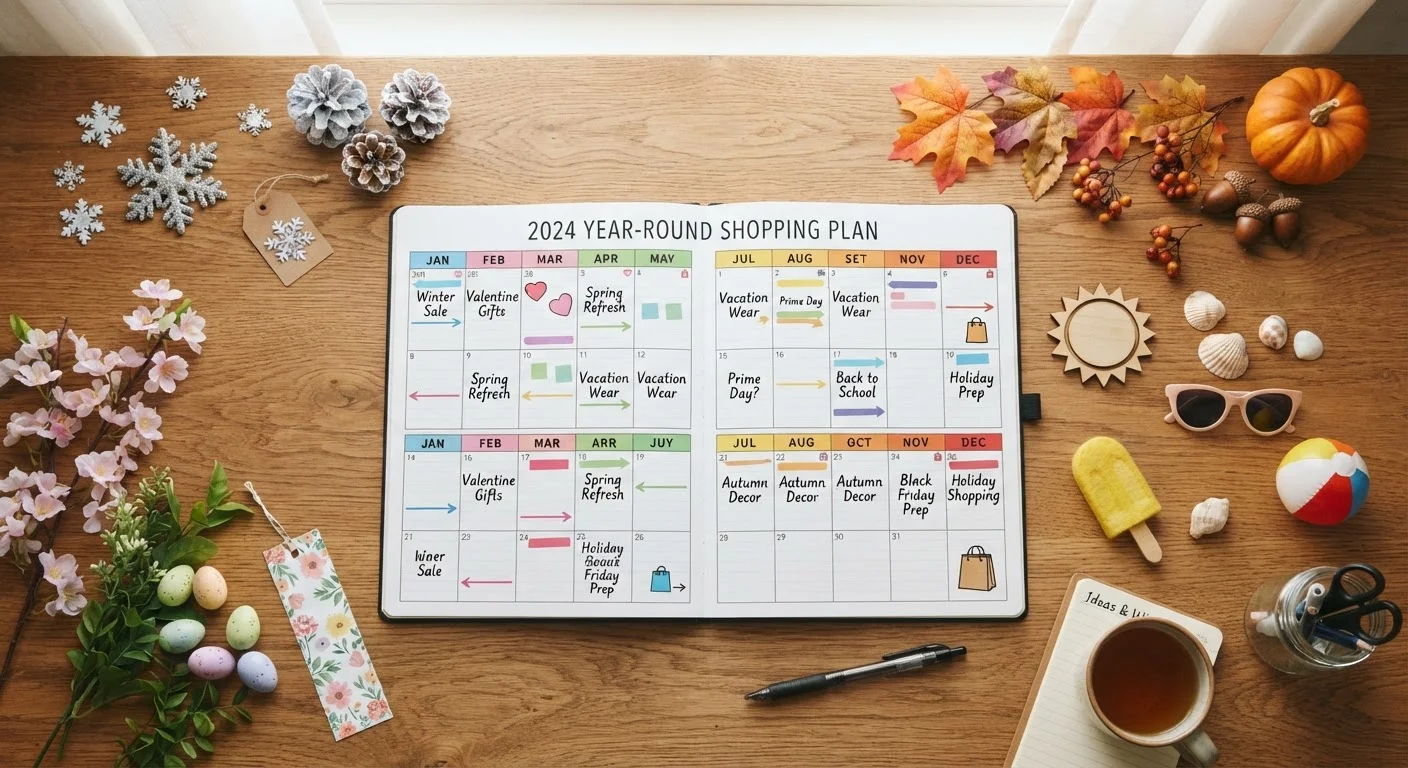
Retailers also operate on fiscal and model-year calendars. Electronics refresh annually, apparel ships by season, and appliances often clear out before new models arrive. These predictable rotations create windows where older inventory gets marked down to move - not because the product is inferior, but because shelf space has a cost. See how retailers structure their discount calendars for a closer look at the logic behind these cycles.
| Categories with clearest seasonal cycles | Outdoor furniture, apparel, appliances, lawn equipment, holiday décor |
| Main driver of seasonal price dips | Excess inventory before model or season changeover |
| Most reliable tool for verifying a deal | Product-specific price history over 12+ months |
| Common anchoring tactic timing | Prices sometimes raised before major sale events to inflate apparent discounts |
| Off-season purchasing advantage | Lower demand means less competition for stock and softer pricing |
Category-by-Category Seasonal Patterns
Different product categories follow distinct timing rhythms. Here's a reference overview of common patterns:
- Outdoor furniture & grills: Demand peaks in spring. Prices typically soften in late summer and fall as retailers clear inventory before storage season.
- Winter apparel & outerwear: Full-price windows run October through December. Post-holiday and late-winter clearance often offers the steepest discounts - though selection narrows significantly.
- Major appliances: New models typically ship in September and October, making late summer a historically softer period for prior-year models. Holiday weekends (Memorial Day, Labor Day) are also traditional appliance sale windows.
- Lawn care equipment: Off-season purchasing in fall or winter often yields lower prices than spring, when demand spikes with the first warm weekends.
- Holiday décor: Prices drop sharply immediately after the relevant holiday. Stock up for next year if storage isn't a constraint - see how to rotate seasonal items without creating storage chaos for a practical approach.
- Mattresses & bedding: Presidents' Day, Memorial Day, and Labor Day weekends have historically been associated with promotional pricing in this category.
- Electronics: Post-holiday (January) and pre-new-model-release windows often see price reductions on prior generations. Black Friday pricing is heavily marketed but actual savings vary more than the promotions suggest.
Supply cycle
The recurring pattern of when a product is manufactured, harvested, or imported. When supply is high relative to demand, prices often soften.
Demand cycle
The seasonal pattern of consumer interest in a product category. High demand - such as for air conditioners in summer - typically supports higher prices.
Price anchor
A reference price (often the 'original' or 'regular' price) used to make a sale price appear more valuable. Anchors can be inflated, making the discount appear larger than it is.
Model-year clearance
A period when retailers discount current-generation products to make room for newly arriving models. Common in electronics, appliances, and vehicles.
Price floor
The lowest price a product typically reaches in a given cycle, based on historical data. Identifying the price floor helps shoppers recognize a genuine dip.
Using Price History to Verify Patterns
Seasonal patterns are general tendencies, not guarantees. A product's actual pricing history is more reliable than any general rule. Price-tracking tools let you see how a specific item has moved over months or years, helping you distinguish a genuine dip from a temporarily inflated baseline dressed up as a discount.
When reviewing price history, look for: consistent low points at predictable times of year, how deep the typical trough is versus the peak, and how long low-price windows typically last. Reading a price history chart carefully is one of the more practical skills a cost-conscious shopper can develop.
Also worth noting: retailers are increasingly aware that shoppers track prices, and some temporarily raise anchor prices before sale events. Understanding anchoring tactics helps you evaluate whether a listed discount reflects a real change from the item's typical price.
The most useful approach combines seasonal awareness with specific price data - using the calendar as a rough guide for when to start watching, and verified price history to decide when to actually buy. For a broader toolkit, the deal hunting hub covers complementary strategies worth building into your routine.
This article provides general consumer education and is not financial advice. Individual pricing varies by retailer, region, and market conditions. Verify current prices independently before making any purchase decision.