
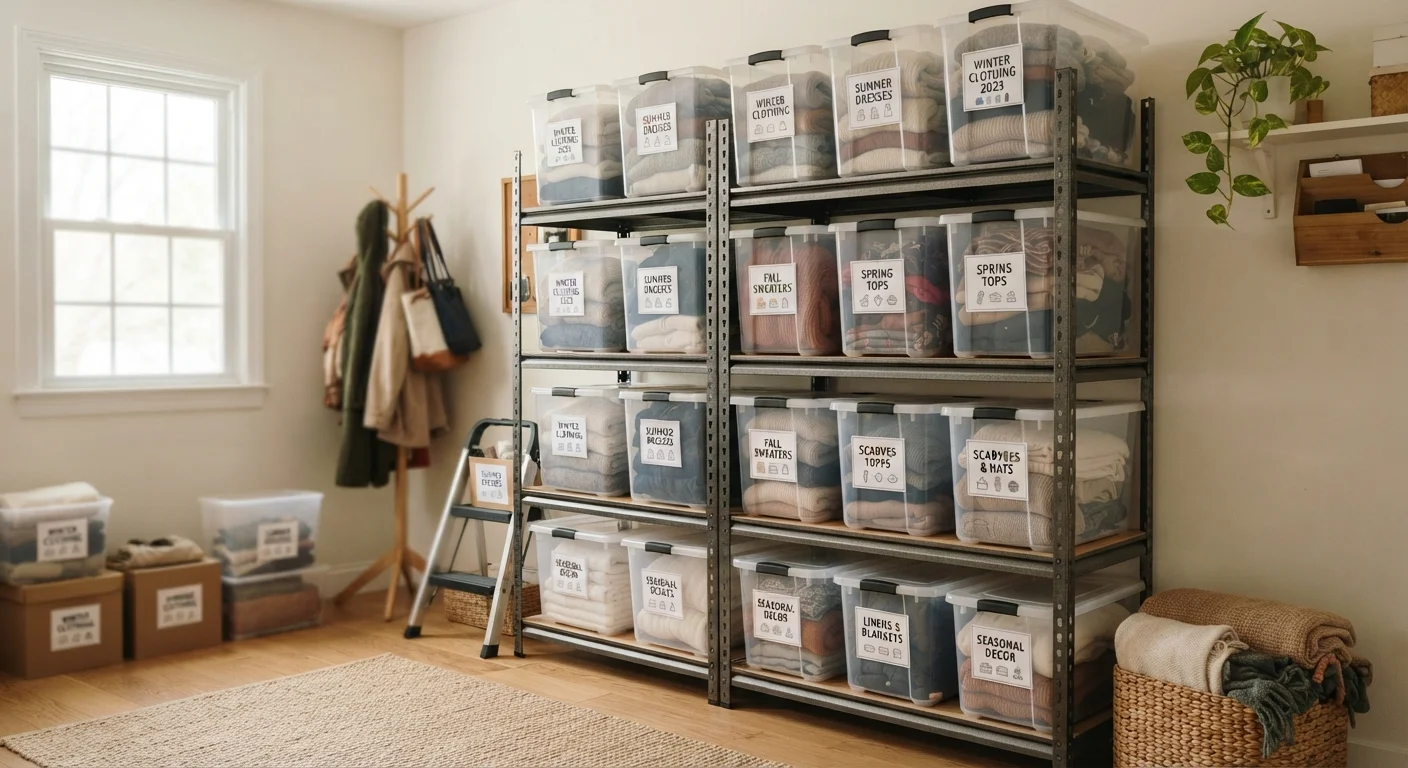
Why Seasonal Rotation Goes Wrong
Most households don't lack storage space - they lack a repeatable system. Winter coats get shoved into whatever bin is available. Holiday décor ends up across three separate closets. By the time the next season arrives, no one remembers where anything went, and a simple swap turns into a half-day search-and-rescue mission.
The fix isn't buying more containers. It's building a rotation process that's identical every time - same zones, same labels, same sequence of steps. When the system is predictable, the swap takes under an hour instead of an afternoon.
Think of seasonal organization as two interlinked tasks: storing what's leaving and retrieving what's arriving. When you treat them as one tangled job, chaos follows. This checklist separates them into clear phases so you can work calmly through each one.
If you want to understand the broader principles behind zone-based storage, our guide to how professional organizers think explains exactly how category and container thinking works in practice.
Tools and Supplies You'll Need
You don't need a closet-renovation budget to rotate seasons well. The tools below are affordable basics that make the process dramatically smoother.
Clear plastic storage bins with lids
Allow you to see contents at a glance without opening, protecting items from dust and pests.
Vacuum-seal storage bags
Compress bulky items like comforters and winter coats to reclaim significant shelf space.
Permanent markers and adhesive labels
Create consistent, readable labels on every container so retrieval never requires guessing.
Garment bags (breathable fabric)
Protect hanging seasonal clothing from dust while allowing airflow to prevent mildew.
Cedar blocks or sachets
Deter moths and insects in clothing storage without the ventilation concerns of chemical mothballs.
Sticky notes or small notepad
Track repair-needed items and mid-season discards so decisions are ready before the next rotation.
A few notes: vacuum-seal bags are excellent for bulky items like comforters and winter coats, but they're not ideal for anything that needs to breathe (leather, wool knits). Clear bins beat opaque ones almost every time - being able to see contents without opening saves real effort at retrieval.
The Seasonal Rotation Checklist
Work through each group in order. Resist the urge to skip the declutter phase - items stored without review just become next season's problem.
Before You Start: Declutter First
Preparing Items for Storage
Packing and Labeling
Assigning Storage Zones
Retrieving the Incoming Season
Final Review
Never Store Damp or Dirty Items
Packing away clothing, gear, or décor that isn't fully clean and dry is the single most common cause of mold, mildew, and pest damage in seasonal storage. Even lightly damp fabric sealed in a bin for several months can develop mold that permanently ruins the item. Always allow washed items to dry completely - typically 24 hours in open air - before sealing them for storage.
Once you've completed a full rotation cycle, look for patterns. Did you store things you never retrieved? That's your clearest signal to let them go. Maintenance habits like the one-in, one-out rule make it easier to keep inventory from quietly growing between rotations.
For households where storage is shared among adults with different habits, see our article on organizing shared spaces with multiple adults for strategies that keep everyone on the same page.
Maintaining the System Year-Round
The rotation checklist handles the big seasonal swap, but a few lightweight habits between seasons keep things from drifting back into disorder.
Do a mid-season pass. Roughly halfway through each season, spend 10 minutes checking that everything in active use is back in its designated spot. Items that migrated to the wrong place are much easier to reroute now than at full rotation time.
Label as you go, not after. Whenever you pull something out of storage mid-season - a rain jacket retrieved early, decorations used for a non-peak event - return it with its label intact and to its assigned bin. Don't leave restoring to memory.
Keep a running discard list. Hang a notepad near your main storage area. Whenever you use something and think "I should probably get rid of this," write it down. By rotation time, you'll have a ready-made declutter list rather than decision fatigue on the spot.
If you store seasonal outdoor gear in a garage, our garage organization checklist walks through how to integrate seasonal items into a working garage without letting them take over.
This article provides general home organization guidance for informational purposes only. Results will vary by household size, storage configuration, and the volume of items being managed.