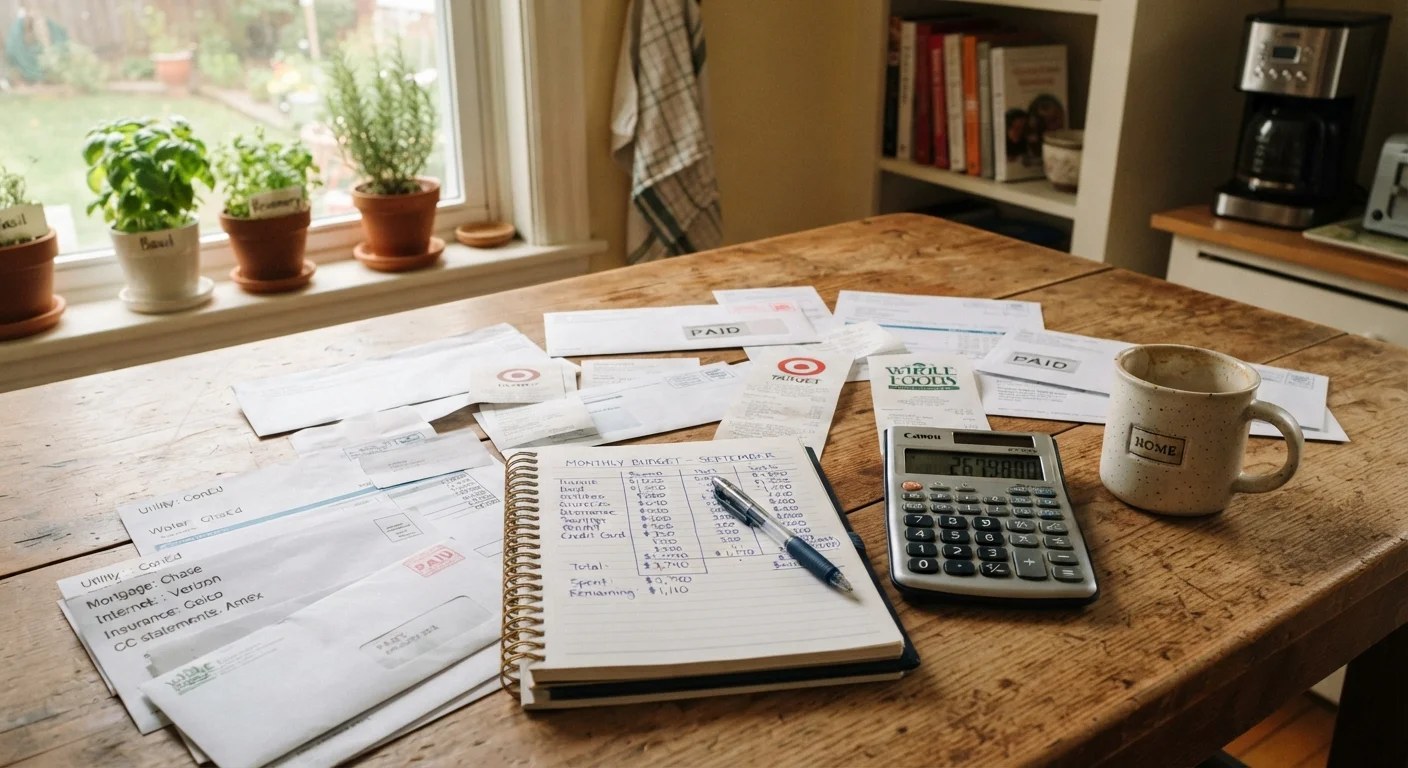

Why Irregular Expenses Break Most Home Budgets
Most household budgets account for the predictable: mortgage payment, utilities, groceries. The ones that consistently fall apart do so because of costs that are entirely real but never make it into the monthly plan. A new water heater, a professional roof inspection, a year's worth of homeowners insurance paid in one lump sum - these aren't surprises in the true sense. You know they're coming. The timing and amount are just fuzzy enough to get postponed until they become urgent.
This is the problem sinking funds are built to solve. Instead of treating these costs as unexpected emergencies, you anticipate them, calculate what they'll cost, and save toward them steadily. By the time the bill arrives, the money is already set aside. For a deeper look at why even well-intentioned budgets run into this trap, see why budgets look fine on paper but keep failing in practice.
1%-2%
Of home value recommended annually for maintenance
Financial planners commonly cite this rule of thumb as a baseline for how much homeowners should set aside each year for upkeep and repairs, though actual costs vary widely by home age and condition.
$10,000-$20,000
Typical cost of full roof replacement
HomeAdvisor's cost data consistently places full residential roof replacement in this range for average-sized homes in the US, depending on material and regional labor rates.
3 in 5
Americans unable to cover a $1,000 surprise expense from savings
Bankrate's annual Emergency Savings Report has repeatedly found that a majority of US adults could not comfortably cover an unexpected $1,000 expense without borrowing or going into debt.
How to Set Up a Sinking Fund: The Core Mechanics
Setting up a sinking fund requires three things: identifying the expense, estimating the total cost, and deciding on a timeline. From there, the math is simple division.
- List the expense - Be specific. "Home repairs" is too vague. "Roof replacement" or "HVAC replacement" gives you something to research and estimate.
- Estimate the cost - Use contractor quotes, published industry averages, or your own past records. When in doubt, round up. You can always redirect surplus funds later.
- Set a timeline - How many months until you'll likely need this money? A roof with five years of life left gives you 60 months to save.
- Divide and contribute - Divide the estimated cost by the number of months. That's your monthly contribution. Automate the transfer if your bank allows it.
- Keep it separate - Use a dedicated account or sub-account. Mixing sinking fund money with day-to-day checking makes it too easy to spend.
If you're just beginning to structure your household finances, building your first home budget from the ground up walks through the full process, including where sinking funds fit into a complete budget framework.
Automate Contributions From Day One
Set up an automatic monthly transfer to each sinking fund account the day after your paycheck clears. Treating it like a non-negotiable bill - rather than a manual transfer you make when you remember - is the single most reliable way to keep contributions consistent. Even small amounts compound meaningfully over a multi-year savings window.
Which Expenses Belong in a Homeowner's Sinking Fund
Not every cost warrants a dedicated sinking fund - only those that are predictable enough to plan for but irregular enough to disrupt a monthly budget without prior saving. Common categories for homeowners include:
- Roof replacement - Typically needed every 20-30 years depending on material; one of the largest single home expenses.
- HVAC systems - Furnaces and central air units have finite lifespans and expensive replacement costs.
- Major appliances - Refrigerators, washing machines, water heaters, and dishwashers all eventually fail.
- Exterior maintenance - Painting, driveway sealing, and deck repairs recur on multi-year cycles.
- Annual lump-sum bills - Property taxes paid in installments, annual insurance premiums, or HOA assessments.
- Landscaping or seasonal prep - Tree trimming, gutter cleaning, and winterization costs that hit at the same time each year.
Many of these costs are covered in detail in hidden homeownership costs that quietly wreck a budget - a useful reference for building out your own list.
Understanding whether a cost is truly fixed or variable also matters when deciding how to fund it. The article on fixed vs. variable household expenses explains that distinction clearly.
Keeping Sinking Funds on Track Over Time
Starting a sinking fund is straightforward; maintaining it requires a bit of routine upkeep. Once a month - or at minimum quarterly - review each fund's balance against its target. Costs change, timelines shift, and estimates sometimes need updating. A furnace that seemed five years away may start showing signs of age sooner.
A structured monthly review process, like the one described in the homeowner's end-of-month budget reset, is a natural place to check fund progress alongside the rest of your budget. If you've had a surplus month, redirect some of it into underfunded sinking accounts. If you've had to spend from a fund, recalculate the remaining timeline and adjust contributions accordingly.
One common mistake is treating a sinking fund like a savings account with flexible rules - borrowing from it for unrelated expenses and planning to repay it later. That erodes the entire purpose. Keep contributions automatic and the account boundaries firm. The discipline pays off when a $4,000 HVAC bill lands and your budget doesn't flinch.
This article is for general informational and educational purposes only and does not constitute personalized financial advice. Consult a licensed financial professional for guidance specific to your situation.