Setting the Stage: What Each State Actually Offers Families
Both Florida and California appear on nearly every family vacation shortlist - and for good reason. Each delivers sunshine, coastline, and iconic attractions. But they deliver very different trips. Understanding what makes each state tick helps you match the destination to your family's actual preferences rather than its postcard reputation.
Florida is compact and theme-park-dense. The Orlando metro alone hosts a cluster of major parks within a half-hour of each other. Add Gulf Coast beaches with calm, warm water, and you have a state built for efficient, high-impact family itineraries. Before you plan, it's worth revisiting what "family-friendly" actually means so you can cut through marketing language and identify what your family genuinely needs.
California, by contrast, is enormous. The drive from San Diego to the Oregon border takes roughly 12 hours without stops. That scale is both the state's greatest strength and its biggest logistical challenge. Families willing to plan strategically unlock beach towns, national parks, wine country (for the adults), and two major theme-park metro areas. But road-tripping with young children across this geography requires honest planning.
| Criterion | Florida | California |
|---|---|---|
| Geographic size | Compact; easy to cover key regions | Enormous; requires strategic planning |
| Beach water temperature | Warm Gulf & Atlantic water | Cool Pacific; varies by region |
| Theme-park concentration | Highest in the world (Orlando) | Major parks spread across state |
| Landscape variety | Flat; beaches, wetlands, springs | High; coast, desert, mountains, redwoods |
| General lodging cost | Broadly more affordable | Often higher, especially coastal cities |
| Weather risk window | Hurricane season: June-November | Wildfire season: summer-fall |
| Best for young children | Gulf beaches; calm shallow water | Southern CA beaches; watch for currents |
Beaches, Weather, and the Outdoor Experience
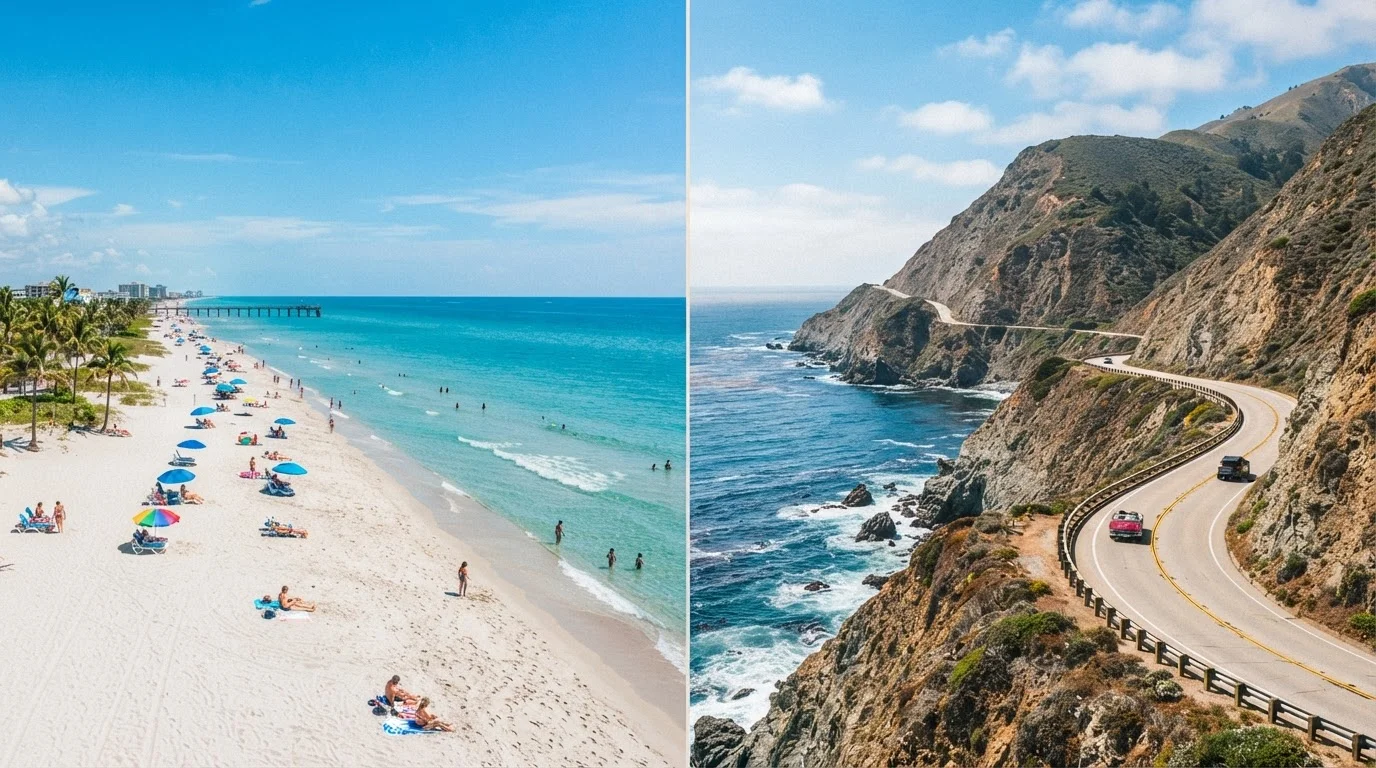
Florida's Gulf Coast beaches - think Clearwater, Siesta Key, and St. Pete Beach - offer shallow, warm, brilliantly clear water that's hard to beat for families with young kids. The Atlantic side runs warmer than the Pacific but tends to have stronger surf. Humidity is real, and Florida's peak hurricane season runs roughly June through November, so families often aim for fall-through-spring visits to reduce weather risk.
California's beaches are visually dramatic but can surprise visitors: Pacific water temperatures average significantly cooler than the Gulf, and rip currents are a genuine concern at many spots. Southern California beaches (Santa Monica, Coronado, Huntington) are warmer and calmer than the legendary surf breaks to the north. Weighing beach towns against mountain retreats is also worth exploring if your family is debating whether a coastal trip is the right call at all.
Beyond beaches, California's outdoor range is simply unmatched. You can take kids from tide pools in the morning to towering redwoods by afternoon. Florida counters with the Everglades - one of the most ecologically unique places in North America - plus manatee encounters and world-class fishing. Both states deliver memorable outdoor experiences; the question is whether you want depth (Florida) or breadth (California).
~1,200 mi
Length of California's coastline
California's Pacific coastline spans roughly 1,200 miles, offering dramatically varied beach environments from the Mexican border to the Oregon state line.
75°F+
Average Gulf Coast water temp (summer)
The Gulf of Mexico consistently reaches warm swimming temperatures in summer months, a key draw for families with young children.
Top 3
Florida's rank among most-visited US states
Florida consistently ranks among the top three most-visited states in the US, driven heavily by family and leisure tourism.
Theme Parks, Costs, and Practical Planning
Orlando's theme-park density is unrivaled anywhere in the world. Multiple major parks sit within a compact radius, meaning families can visit two or three in a single trip without long transit days. California has Disneyland in Anaheim and several other major parks, but they're spread along a coastline that takes hours to traverse.
That said, theme parks are just one piece of a well-rounded family trip. Exploring what else rounds out a memorable trip can help families avoid the trap of building every itinerary around park tickets alone.
On cost: Florida generally offers more budget flexibility. Hotel competition near Orlando is fierce, which keeps prices varied and value options accessible. California's lodging market - particularly in the Bay Area, Los Angeles, and coastal towns - skews more expensive. Families road-tripping on a tighter budget may find state parks a surprisingly cost-effective alternative to paid attractions in either state.
Check Official Advisories Before You Go
Entry conditions, park hours, weather advisories, and local regulations can all change. Always check official state tourism sites, the National Weather Service, and park operator websites before finalizing travel plans. For international visitors, verify visa and entry requirements through official government sources.
Travel costs, park pricing, and conditions vary and change frequently. Always verify current information through official park and tourism sources before booking.