What the Numbers on the Bottle Actually Mean
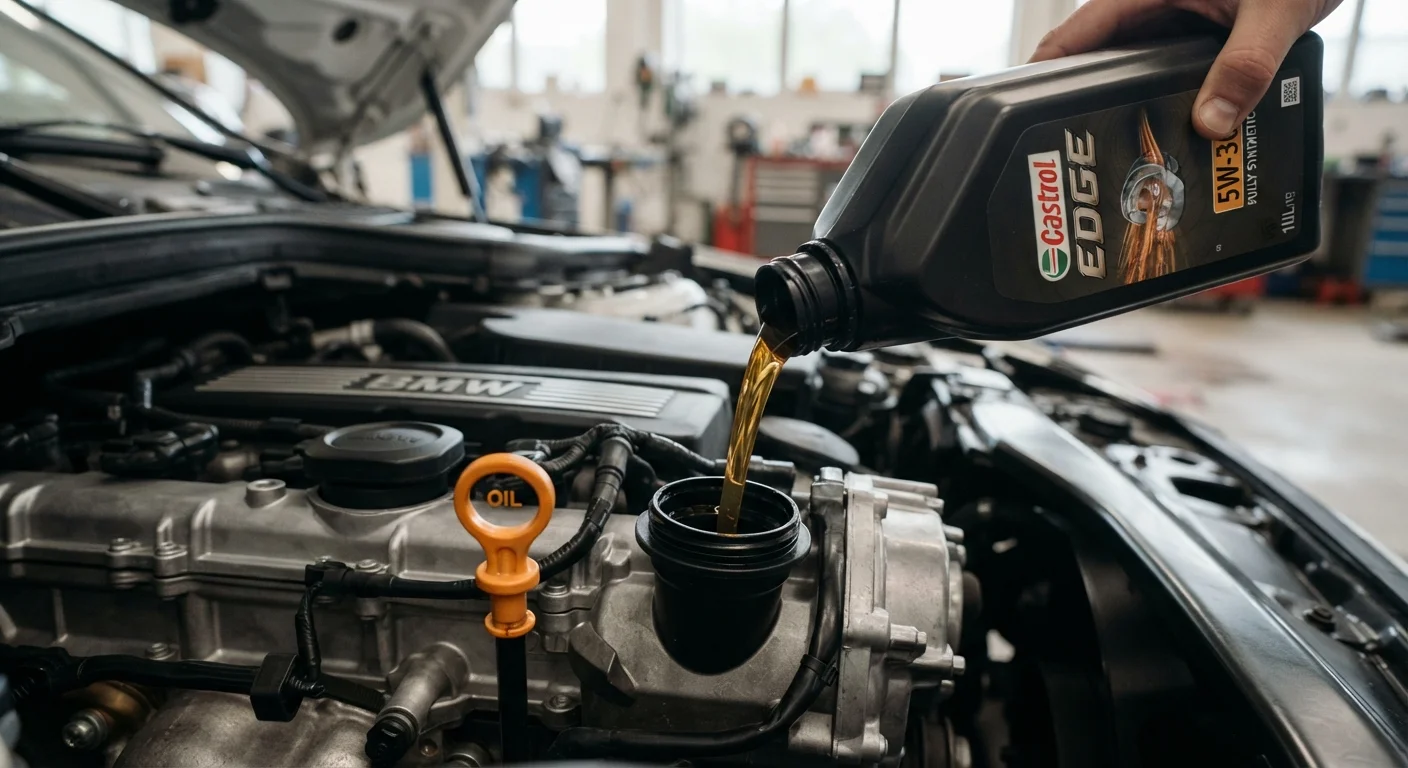
Pick up any motor oil bottle and you'll see a code like 5W-30 or 10W-40. This is the SAE viscosity grade, and it carries two pieces of information in one label.
The number before the W (winter) rates how easily the oil pumps at cold temperatures. Lower numbers - like 0W or 5W - flow more readily at startup in freezing weather, which matters because most engine wear happens in the first seconds before oil pressure builds. The number after the W reflects the oil's thickness at normal operating temperature, typically around 212°F. A higher number means a thicker film at heat.
Most passenger vehicles today use a multigrade oil - one formulated to behave like a thinner oil when cold and a thicker oil when hot. This replaced single-grade oils that required seasonal swaps. The right grade for your vehicle is printed in your owner's manual; it accounts for your engine's tolerances, intended operating conditions, and design. No label claim or shop recommendation should override that specification.
Viscosity Grades Vary by Climate
Drivers in consistently hot climates may be recommended a slightly higher cold-weight number (like 10W) compared to those in cold-winter regions (0W or 5W). If you've relocated or experience extreme seasonal shifts, it's worth confirming your current grade still matches the manufacturer's guidance for your conditions.
Synthetic, Conventional, and Blend: What the Label Categories Mean
Beyond viscosity, oil labels indicate the base stock type. Here's what each category means in practical terms:
- Conventional (mineral) oil is refined from crude oil. It works adequately for many standard engines under moderate driving conditions but breaks down faster at temperature extremes.
- Full synthetic oil is engineered from chemically modified base stocks. It offers more consistent viscosity across temperatures, resists oxidation longer, and generally supports extended drain intervals.
- Synthetic blend mixes conventional and synthetic base stocks. It's a middle-ground option - better temperature performance than straight conventional, usually at a lower price point than full synthetic.
For a deeper look at how these types compare in real-world driving, see how synthetic and conventional motor oils differ.
The API (American Petroleum Institute) certification donut and the ILSAC starburst symbol confirm the oil has passed standardized performance tests. For gasoline engines, look for the current API service category - SP as of recent years - which ensures backward compatibility with older specifications.
~90%
Engine wear occurring at cold start
Industry engineering data consistently attributes the majority of internal engine wear to the brief window before full oil pressure is established after startup.
7,500-10,000 mi
Typical synthetic oil change interval
Many major automakers specify this range for full synthetic oil under normal driving conditions in current owner's manuals.
3,000 mi
Old conventional-oil change rule
This figure originated decades ago and no longer reflects the performance of modern synthetic and synthetic-blend formulations.
Change Intervals: What the Evidence Actually Supports
The old 3,000-mile rule was developed for conventional oil and older engine designs - it no longer reflects what modern engines and lubricants require. Most vehicles running full synthetic today can safely go 7,500 to 10,000 miles between changes; some manufacturers specify intervals up to 15,000 miles under normal conditions.
That said, driving habits affect oil life more than many drivers realize. Short trips under five miles, frequent towing, dusty environments, and stop-and-go traffic all accelerate oil degradation. Many late-model vehicles include an oil life monitoring system that estimates remaining oil quality based on engine conditions - these systems are generally reliable and worth following.
For a broader framework on service timing, your car's maintenance schedule decoded walks through what each milestone in your owner's manual actually requires. And if persistent myths are shaping your habits, oil change myths that cost drivers money addresses the most common ones directly.
Checking Oil Between Changes: A Simple Habit That Pays Off
Scheduled changes are not a substitute for regular checks. Oil level can drop between intervals - through normal consumption, minor seeps, or a developing leak - without triggering any warning light until the problem is serious.
A dipstick check takes under a minute: park on level ground, wait a few minutes after shutting off a warm engine, pull and wipe the dipstick, reinsert fully, then read the level. Look at the color too: honey-brown is normal; black and gritty suggests it's time to change regardless of mileage; milky or foamy oil can indicate coolant contamination, which warrants a mechanic's attention promptly.
For a full rundown of fluid checks you can handle at home - including coolant, brake fluid, and power steering - see fluid checks every car owner can do at home. These habits form the foundation of what long-term car maintenance looks like across a vehicle's life.
Keep a Simple Oil Log in Your Glove Box
Write down the date, mileage, and oil type each time you change or top off your oil. This takes 30 seconds and creates a real maintenance record that's useful for diagnosing consumption trends, validating service history when selling the vehicle, and keeping warranty documentation organized.