Why Fluid Checks Are the Easiest Maintenance Win
Fluids are the circulatory system of your vehicle. They lubricate, cool, transmit force, and protect components that would otherwise grind themselves to pieces. Unlike many maintenance tasks, checking them requires no special tools, no ramps, and no mechanical background - just a few minutes and a clean rag.
Skipping these checks is one of the most common ways drivers unknowingly invite expensive repairs. A quart low on engine oil doesn't announce itself loudly; it simply shortens engine life. A coolant system running low on a hot day can turn a routine commute into a roadside breakdown. The good news: catching either issue early is almost always free.
Before you start, always check fluids on a level surface with the engine off and cooled down (unless the check specifically requires otherwise). Keep a clean lint-free rag handy. For a broader pre-drive habit, see our driver's efficiency check.
What you will need
The Six Fluids to Check and What to Look For
Work through these in order. Each check builds a mental baseline so you'll notice when something is off in future months.
Engine Oil
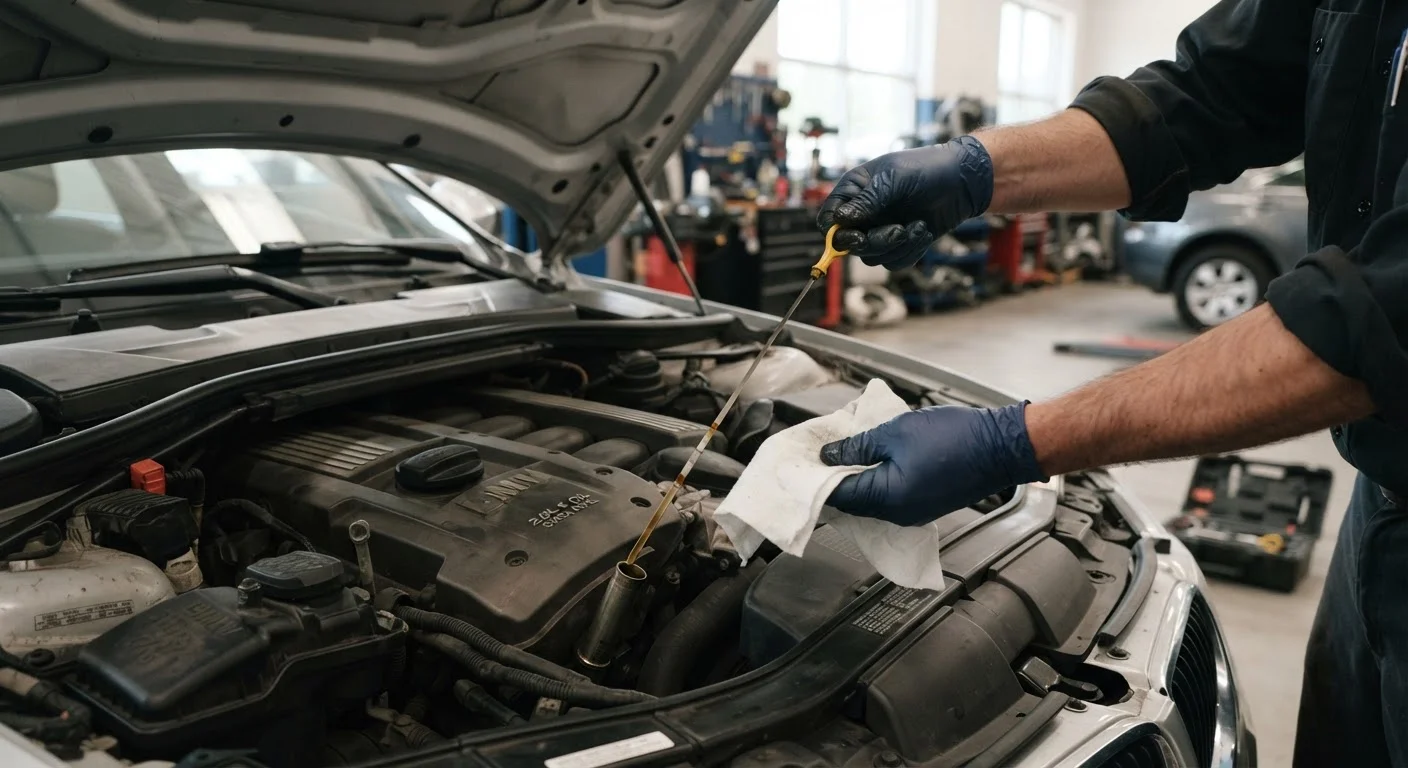
Locate the oil dipstick (usually has a brightly colored ring handle). Pull it out, wipe it clean, reinsert fully, then pull it out again. Check that the oil level sits between the MIN and MAX marks. Also look at the oil on the rag: it should be amber to dark brown. Milky or grayish oil can indicate coolant contamination - have a mechanic inspect it.
Coolant (Antifreeze)
Look for the translucent plastic overflow reservoir - do not open the radiator cap on a warm engine. The level should fall between MIN and MAX. Coolant is typically green, orange, or pink depending on type; a rust-brown color suggests contamination and requires a flush by a professional.
Brake Fluid
The brake fluid reservoir is a small translucent container on top of the master cylinder, near the back of the engine bay on the driver's side. The level should be between MIN and MAX. Brake fluid is clear to light yellow when new; dark brown fluid is a sign it has absorbed moisture and should be replaced by a qualified mechanic.
Power Steering Fluid
Many newer vehicles use electric power steering and have no fluid reservoir - check your owner's manual. If your car does have one, locate the reservoir (often labeled with a steering wheel icon), and check the level using the dipstick attached to the cap or the MIN/MAX marks on the side. The fluid should be clear to light pink; dark or milky fluid needs attention.
Transmission Fluid
Automatic transmissions typically have a dipstick similar to the oil dipstick - consult your owner's manual for location and whether the engine should be running or off for an accurate reading (this varies by manufacturer). The fluid should be red to pink and smell slightly sweet. Dark brown or burnt-smelling fluid indicates it's due for a service. Many modern vehicles have sealed transmissions with no dipstick; in that case, leave this check to a professional.
Windshield Washer Fluid
The washer fluid reservoir is typically the easiest to find - a translucent tank with a windshield icon on the cap. There's no dipstick; simply look at the level through the reservoir wall. Top up with premixed washer fluid rated for your climate. Do not substitute plain water, which can freeze in winter and leave mineral deposits on your windshield.
If you notice a warning light related to any of these systems, consult our dashboard warning lights reference to understand urgency before driving further.
Keep a Simple Maintenance Log
Jot down the date, mileage, and fluid levels each time you check. Even a notes app on your phone works. Patterns - like oil that drops noticeably every 1,000 miles - are much easier to spot with a record than from memory alone.
When a Low Reading Means More Than a Top-Up
Fluids don't disappear on their own in a properly functioning vehicle. If you're consistently topping up the same reservoir - especially brake fluid or coolant - that's a signal to investigate a possible leak or internal issue rather than simply refilling.
Brake fluid is a closed system. A noticeable drop typically means either worn brake pads (which cause the caliper pistons to extend further, drawing fluid down) or an actual leak somewhere in the lines or calipers. Either scenario warrants a closer look - our guide on what your brakes are telling you covers the symptoms to watch for.
Don't Top Up Brake Fluid to Mask a Problem
Adding brake fluid to a low reservoir without diagnosing the cause can delay detection of a genuine leak or worn components. Brake system integrity is critical to safety. If levels are persistently low or the pedal feels soft, have a qualified mechanic inspect the system before driving the vehicle further.
For most drivers, a simple monthly visual check and a full fluid inspection every three to six months - aligned with your owner's manual - is a sustainable habit. Pair it with seasonal checks to catch the issues that change with the weather. If you're unsure whether a particular task is within your comfort zone, this guide on DIY vs. professional service lays out a clear framework.