Your Brakes Are Always Sending Signals
Brakes don't fail silently. Long before they stop working, they give you audible, tactile, and visual cues - squeals, vibrations, a pedal that sinks too low. The problem isn't that drivers miss these signals entirely; it's that they misread them, downplay them, or assume the symptom will resolve on its own.
Understanding what each symptom actually means is the first step toward making smart decisions about repair timing and cost. And because braking directly affects safety, the stakes are higher than with most other vehicle systems. This guide walks through the most common mistakes drivers make when their brakes try to communicate - and what to do instead.
If you're already in the habit of monitoring other vehicle systems, checking your brake fluid at home is a logical companion step to the symptom awareness covered here.
Ignoring squealing brakes because the noise comes and goes.
Why it happens: Intermittent squealing is easy to rationalize - it stops when you release the pedal, so it doesn't feel urgent. Drivers often assume it's moisture or dust rather than wear.
Treating a vibrating or pulsating brake pedal as a minor annoyance.
Why it happens: Pedal pulsation feels dramatic but rarely causes an immediate loss of braking, so drivers tend to adapt to it rather than investigate.
Assuming the brake warning light is a sensor glitch.
Why it happens: Dashboard warning lights sometimes illuminate due to minor electrical faults, leading drivers to dismiss them without investigation - especially if no obvious symptom accompanies the light.
Delaying brake service to wait for a better price or more convenient time.
Why it happens: Brake work can be expensive, and drivers sometimes defer it while budgeting - especially if the symptom seems stable.
Overlooking brake performance changes after a vehicle sits unused.
Why it happens: Drivers returning to a vehicle after days or weeks of non-use don't expect brake issues and may not notice subtle degradation in pedal feel.
When to Stop Driving and Call a Mechanic
Some brake symptoms allow a window of time to schedule a service appointment. Others indicate you should not drive the vehicle further. Knowing the difference matters.
Don't Ignore These Stop-Driving Symptoms
A brake pedal that sinks to the floor, a sharp pull to one side during braking, or a complete loss of braking resistance are all conditions that require you to stop driving the vehicle immediately. These are not situations to monitor and revisit - they indicate the braking system may not be able to stop the vehicle reliably. Have the vehicle towed to a qualified mechanic rather than driving it to a shop.
A soft or spongy brake pedal - especially one that continues to sink toward the floor under steady pressure - is a red flag that warrants immediate attention. This symptom often indicates air in the brake lines or a fluid leak, both of which can severely compromise stopping ability. Similarly, if your vehicle pulls sharply to one side during braking, or if you notice a burning smell after normal driving, have the vehicle inspected before driving further.
Squealing alone, particularly when brakes are cold or damp, is not always an emergency - but it should be evaluated promptly. Grinding, by contrast, typically means metal-on-metal contact and should be treated as urgent.
For context on how driving habits affect brake wear over time, see our piece on how aggressive braking accelerates wear and fuel costs. And when you're weighing whether to handle any follow-up inspection yourself, this comparison of DIY vs. professional repair can help you decide.
Brake Repair Is Not a DIY Shortcut Area
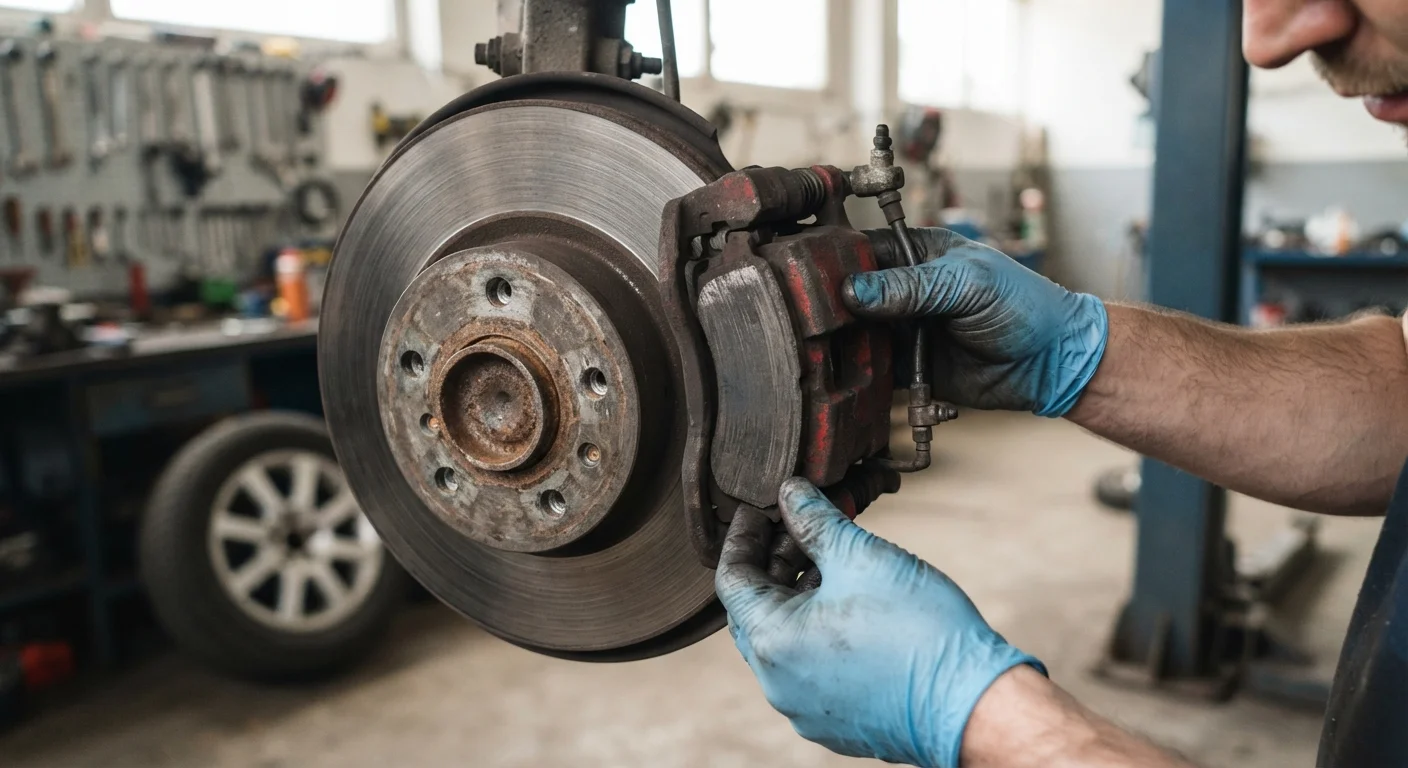
While many vehicle maintenance tasks can be handled by a careful home mechanic, brake system work carries serious safety implications if done incorrectly. Improper pad installation, incorrect torque on caliper hardware, or bleeding errors can result in brake failure. Unless you have verified mechanical training and the proper tools, brake repairs should be left to a qualified professional. This is one area where cutting corners on labor can have life-altering consequences.