Why Driving Style Is Your Biggest Fuel Lever
Most drivers focus on vehicle choice when thinking about fuel economy - engine size, hybrid vs. conventional, city vs. highway ratings. What gets less attention is that how you drive a vehicle consistently outweighs what you drive, at least within a given class.
Research from the U.S. Department of Energy consistently shows that aggressive driving - defined as rapid acceleration, high cruising speeds, and late hard braking - can reduce fuel efficiency by 10-20% compared to smooth, anticipatory driving. That's a gap wide enough to flip the fuel economy ranking between two vehicles of the same model year.
The good news: driving style is entirely learnable. Unlike upgrading your vehicle, changing your habits costs nothing and delivers results immediately. The sections below walk through each major lever in priority order, so you can focus on the changes with the biggest payoff first.
10-20%
Fuel savings from smoother driving style
The U.S. Department of Energy estimates aggressive driving - rapid acceleration and hard braking - can lower fuel economy by this margin on the highway.
0.2% per PSI
Fuel economy lost per under-inflated tyre
According to the U.S. Department of Energy, tyres under-inflated by just one PSI can reduce fuel economy by roughly 0.2% per tyre.
~2-8%
Drag penalty from rooftop cargo carriers
The DOE estimates a rooftop cargo box reduces fuel economy by around 2-8% in city driving and up to 25% at highway speeds.
Anticipating Traffic and Reading the Road
The most trainable skill in efficient driving is also the most underrated: reading what's happening far ahead and adjusting early. Reactive drivers accelerate, brake, and accelerate again in rapid cycles - burning fuel and wearing components unnecessarily. Anticipatory drivers carry momentum smoothly through the same conditions.
Practical habits that build this skill:
- Scan 10-15 seconds ahead, not just the bumper in front of you. Traffic lights changing, merges, and slowdowns visible at a distance give you time to coast rather than brake.
- Extend your following distance. A three-second gap in normal conditions isn't just safer - it gives your coasting room to work.
- Use context clues. School zones, delivery corridors, and freeway on-ramps all signal predictable disruptions. Approach them with momentum already moderated.
Extend your following distance to at least three seconds in normal conditions. The extra buffer gives you time to coast rather than brake, which keeps kinetic energy working for you instead of wasting it as heat.
Every hard braking event converts momentum into wasted heat energy. Coasting to decelerate instead preserves that energy and reduces brake wear simultaneously.
Remove roof racks and cargo carriers when you're not actively using them - even an empty rack creates measurable aerodynamic drag that compounds over highway miles.
Aerodynamic drag increases with the square of speed, meaning accessories that seem minor at city speeds become significant fuel drains above 50 mph.
For a detailed breakdown of how city stop-and-go compares to highway cruising on your fuel bill, see City Driving vs. Highway Driving: Where Your Fuel Really Goes.
Speed, Momentum, and the Cost of Acceleration
Aerodynamic drag increases with the square of speed - meaning a vehicle traveling at 70 mph faces roughly twice the aerodynamic resistance of one at 50 mph. Above 50 mph, wind resistance becomes the dominant load on your engine, and fuel consumption climbs steeply with each additional 5 mph.
Within legal speed limits, moderate cruise speeds on the highway consistently outperform higher speeds on fuel economy. But speed selection is only part of the picture. How you reach that speed matters just as much:
- Accelerate gradually after stops - targeting a comfortable pace over 10-15 seconds rather than full-throttle lunges.
- Use cruise control on flat highways to eliminate the micro-variations in throttle that accumulate over distance.
- On long descents, stay in gear and let engine braking do the work rather than riding the brakes.
Don't Confuse Coasting in Neutral With Saving Fuel
On modern fuel-injected vehicles, coasting in gear with your foot off the accelerator often uses little or no fuel, as the engine's fuel injectors cut delivery during deceleration. Shifting to neutral removes this benefit and can also reduce engine braking, which may increase braking distances. Unless your owner's manual advises otherwise, stay in gear when slowing down on descents.
“The most fuel-efficient drivers aren't necessarily the slowest - they're the most predictable. They accelerate smoothly, read the road ahead, and let physics do the work whenever possible.”
— Oak Ridge National Laboratory, U.S. Department of Energy vehicle research facility
Managing Load, Drag, and Accessories
Everything you add to or attach to your vehicle costs fuel. The physics are straightforward: more mass requires more energy to accelerate; more aerodynamic disruption requires more energy to overcome drag.
Common culprits that are easy to address:
- Roof racks and cargo carriers: Even empty, these add significant drag at highway speeds. Remove them when not in use.
- Excess cargo weight: Every 100 lbs of unnecessary weight in the trunk reduces fuel economy by roughly 1-2% for the average vehicle, according to DOE estimates.
- Air conditioning: AC at city speeds can reduce fuel economy by 5-25% depending on conditions. At highway speeds, keeping windows closed and using AC conservatively is often more efficient than open windows creating drag.
For a more complete inventory of overlooked efficiency drains, see Everything That Quietly Drains Your Fuel Economy.
Maintenance Habits That Protect Efficiency
Efficient driving habits can only do so much if the vehicle itself is working harder than it should. Basic maintenance keeps mechanical resistance low and lets your driving technique work as intended.
The highest-impact, lowest-effort maintenance tasks for fuel economy:
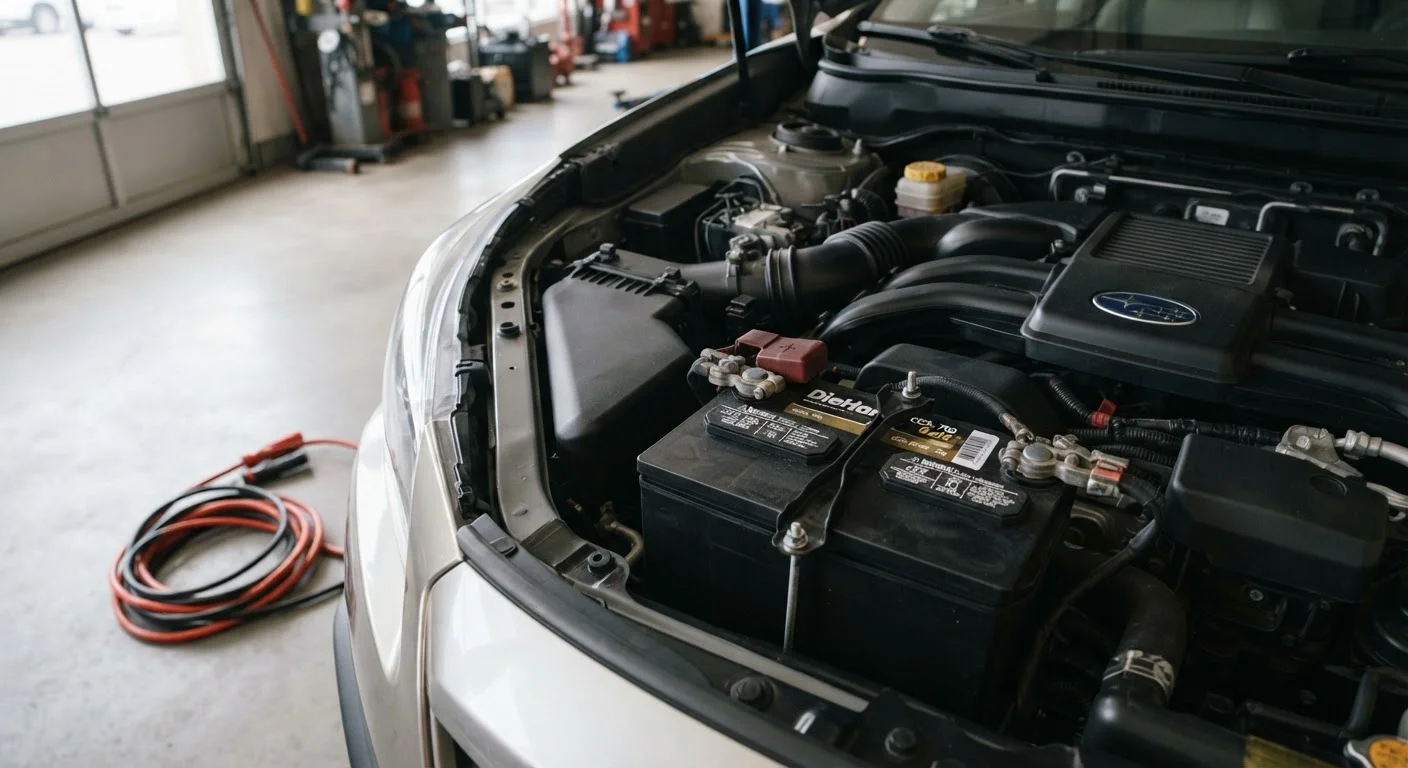
- Tyre pressure: Under-inflation increases rolling resistance and can reduce fuel economy by up to 0.2% per PSI per tyre. Check monthly and before long trips.
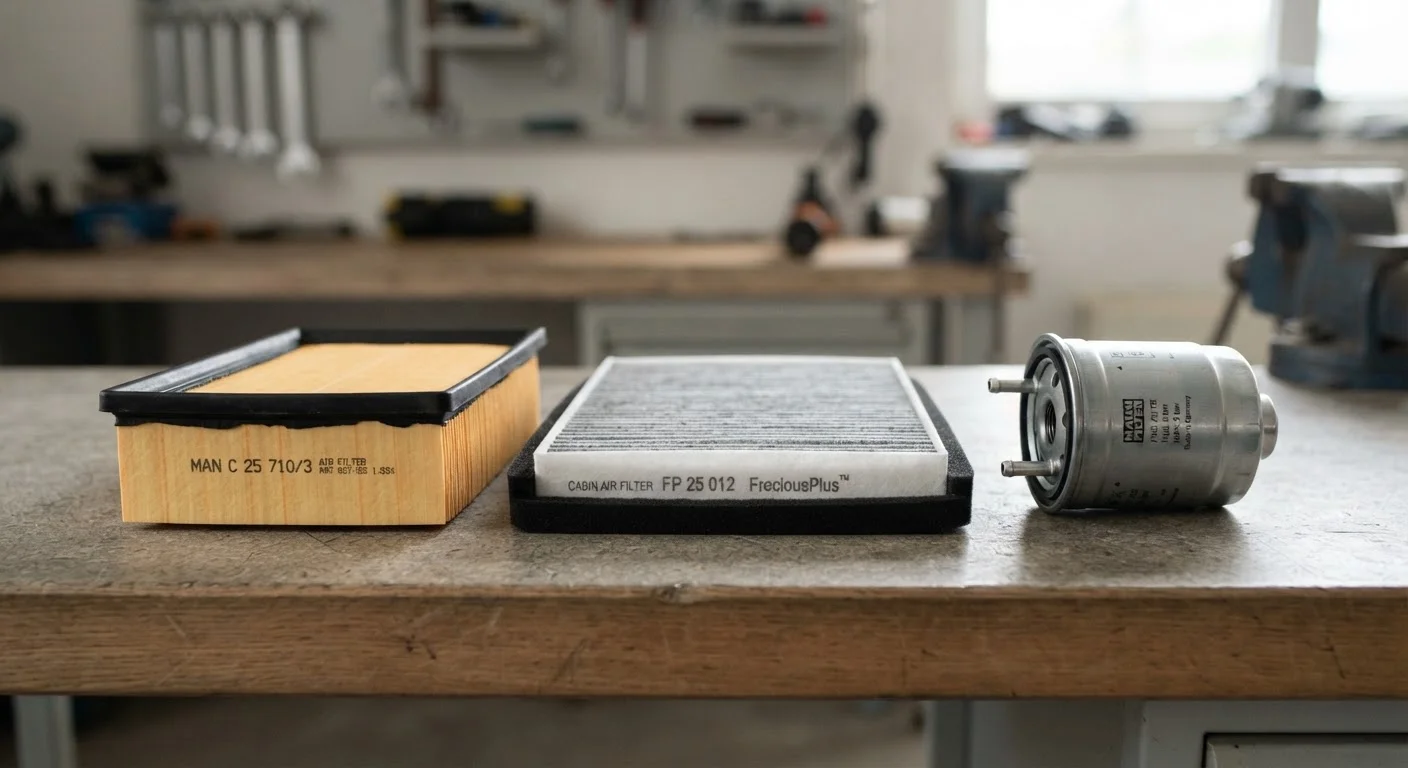
- Engine air filter: A clogged air filter reduces the quality of the air-fuel mixture. Replacement intervals vary by vehicle - check your owner's manual.
- Spark plugs: Worn plugs cause incomplete combustion and measurably reduce efficiency. Follow the manufacturer's replacement schedule.
- Motor oil grade: Using the recommended viscosity for your engine reduces internal friction. Switching to a lower-viscosity oil than specified can cause engine wear.
Check Tyre Pressure Monthly
Tyre pressure changes roughly 1 PSI for every 10°F shift in ambient temperature, so seasonal swings frequently push tyres out of the optimal range without any visible sign. A simple gauge check once a month - and before any long trip - takes under two minutes and directly supports fuel economy and tyre longevity. Use the pressure listed on the driver's door jamb, not the maximum figure stamped on the tyre sidewall.
These tasks also form the foundation of a solid car maintenance routine that protects both reliability and resale value.
Efficiency Varies by Vehicle Type
The techniques in this guide apply broadly, but the magnitude of gains differs by powertrain. Hybrid drivers benefit most from smooth deceleration because regenerative braking recaptures energy. EV drivers should pay particular attention to climate control use, as heating and cooling consume a meaningful share of battery range. Diesel drivers often see proportionally larger gains from consistent cruising speeds on longer runs.
Tracking Your Progress
Efficiency improvements are only meaningful if you can measure them. Many drivers rely on their dashboard's average fuel economy display - but this resets or averages in ways that can mask real trends. Tracking fill-ups manually, even in a simple notes app or spreadsheet, gives you a cleaner signal.
Calculate your real-world MPG at each fill-up: divide miles driven since the last fill-up by gallons added. Track this number monthly. Over time, you'll see whether habit changes, seasonal shifts, or maintenance events are moving the needle.
For a structured approach to recording all vehicle running costs - not just fuel - see Tracking and Managing Vehicle Running Costs Throughout the Year. Pairing fuel tracking with your broader household budget can also reveal how transportation costs compare to other major spending categories.
Never Sacrifice Safety for Fuel Economy
Efficient driving techniques - smooth acceleration, extended following distance, gentle braking - are compatible with safe driving. However, no fuel-saving habit justifies tailgating, ignoring speed limits, or delaying necessary braking. Safety must always take priority over economy. If a technique ever feels like it conflicts with safe vehicle control, abandon it.
This article is for general informational and educational purposes. Fuel economy figures cited reflect U.S. Department of Energy data and general industry estimates; individual results will vary based on vehicle type, driving conditions, and maintenance history. Always follow your vehicle manufacturer's maintenance recommendations.