What Idling Actually Costs at the Pump
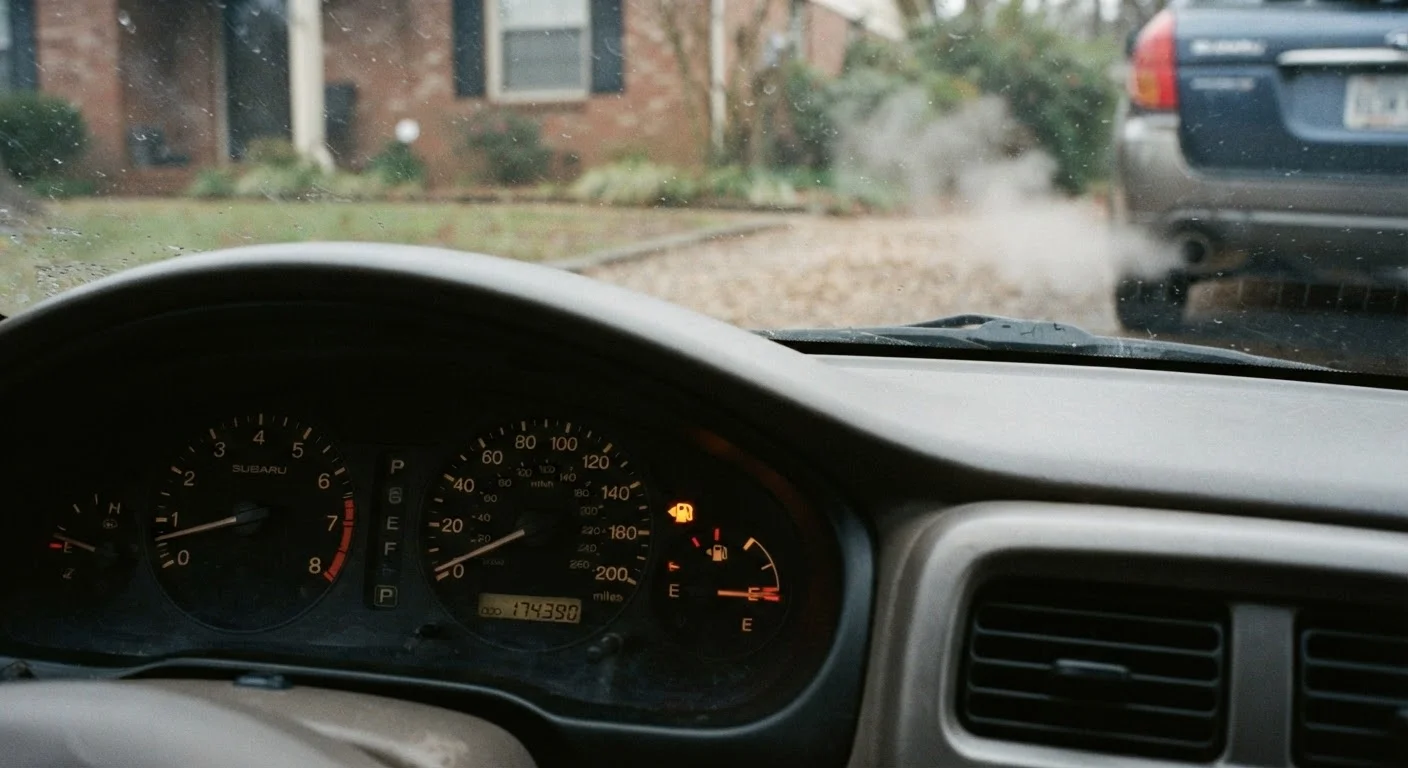
The math on idling is straightforward and a little uncomfortable. At idle, your car burns fuel while delivering exactly zero miles per gallon. Depending on engine size and whether the air conditioner is running, a typical passenger car consumes between 0.16 and 0.3 gallons per hour at idle. A larger SUV or truck can push past 0.5 gallons per hour.
Scale that out: 10 minutes of idling per day equals roughly one hour of idle time every six days. Over a year, a driver idling just 10 minutes daily could waste 10-20 gallons of fuel - purely sitting still. At typical U.S. pump prices, that represents a real annual expense with nothing to show for it.
This connects directly to the broader picture of how fuel costs accumulate over a vehicle's lifetime - small daily habits compound significantly across years of ownership.
0.16-0.3 gal/hr
Fuel burned by a typical car at idle
Figures based on U.S. Department of Energy guidance on passenger vehicle idle fuel consumption; larger engines and A/C use trend higher.
10-20 gal/yr
Fuel wasted by 10 min of daily idling
Estimated annual waste for a typical passenger car idling roughly 10 minutes per day based on published idle consumption rates.
60 seconds
Threshold where shutting off saves more fuel
Fuel-efficiency research and DOE guidance consistently indicate engine-off beats idling for stops exceeding approximately one minute.
The Cold-Weather Warm-Up Myth
One of the most persistent reasons drivers idle is the belief that engines need several minutes to warm up before driving, especially in winter. This was true of older carbureted engines - it has not been accurate for fuel-injected vehicles, which became standard in U.S. cars through the 1980s and 1990s.
Modern engines use sensors and computer-controlled fuel delivery that adjust automatically for cold temperatures. The fastest way to bring the engine and its oil to operating temperature is gentle driving - not stationary idling. A brief 30-60 second warm-up before pulling away is reasonable; anything beyond that in a modern car is burning fuel for no mechanical benefit.
For more on misconceptions like this, see our guide to fuel efficiency myths drivers still believe.
Drive Gently for the First Few Minutes
Instead of idling to warm up, start driving within 60 seconds but keep speeds moderate and avoid hard acceleration for the first few miles. This brings the engine and transmission fluid to operating temperature faster than idling does, while still protecting components from high-load stress when cold.
When Idling Is Genuinely Unavoidable
Not all idling is discretionary. Traffic congestion, railroad crossings, and certain safety situations - running the rear defroster in freezing conditions before a drive, for instance - are legitimate reasons an engine may need to run while stationary. The goal of reducing idle time is not to create risk; it is to eliminate the idle time that serves no purpose.
Drive-throughs, warming the car for personal comfort on mild days, and letting the engine run while making a quick stop are the categories where idle reduction pays off most clearly. These are choices, not constraints.
It is also worth noting that idling costs extend beyond fuel. Engine oil circulates under low-load conditions during idle, and prolonged idling can contribute to carbon buildup over time - an added maintenance consideration. This overlaps with other overlooked habits that quietly drain fuel economy.
The 60-Second Rule and What It Means in Practice
A practical threshold supported by fuel-consumption data: if a stop is expected to last longer than 60 seconds, turning off the engine and restarting saves more fuel than idling through it. Modern starters are built for repeated use, and fuel-injection systems prime the engine efficiently on restart. The restart itself burns a trivial amount of fuel - far less than a minute of continuous idle consumption.
Applied consistently - at drive-through queues, school pickup lines, and parking-lot waits - this habit alone can recover several gallons of fuel per year without any mechanical downside.
Idling is just one piece of a larger fuel picture. How you accelerate and brake matters just as much - see why aggressive braking and accelerating costs more than you think for the companion view. And if you want to understand how city versus highway driving changes your fuel equation entirely, city driving vs. highway driving breaks that down clearly.