Why This Decision Is Harder Than It Looks
Every homeowner eventually faces the repair-or-replace dilemma - a cracked floor tile, a door that won't latch, a faucet that drips no matter what you do. The instinct is often to reach for the quickest fix, or conversely, to assume that anything broken is junk. Neither reflex leads to good decisions.
The real challenge is that the right answer depends on several overlapping factors at once: how much the repair costs relative to replacement, how many useful years the component has left, whether the problem will recur, and how much disruption you're willing to absorb. Working through those factors methodically - rather than guessing - is what separates a smart home investment from an expensive mistake.
Before diving into any repair job, it's also worth doing a quick self-assessment of the problem. Our home repair pre-check list walks through exactly that process, and often reveals whether the fix is simpler than it first appeared.
The Core Framework: Four Questions to Ask
Regardless of what you're evaluating - a hollow-core door, hardwood flooring, a bathroom fixture, or a kitchen appliance - the same four questions apply.
1. What's the cost ratio?
A widely used rule of thumb in home maintenance is the 50% rule: if the repair cost exceeds 50% of what a new replacement would cost installed, replacement becomes worth serious consideration. This isn't a hard law, but it anchors the conversation in numbers rather than feelings. Get at least one written estimate before assuming you know either figure.
2. How much useful life remains?
A repair that costs 40% of replacement value sounds reasonable - unless the component is already at 90% of its expected lifespan. Spending money to extend something by two or three years rarely makes financial sense. Typical lifespan benchmarks (interior doors: 30+ years; hardwood floors: 25-100 years depending on thickness and care; standard faucets: 15-20 years) help you gauge where you stand.
3. Is the problem likely to recur?
Some failures are isolated events - a hinge screw stripped from the wrong anchor, a grout line cracked by a one-time impact. Others are symptoms of systemic wear, moisture damage, or a design flaw that will keep showing up. If the root cause isn't being addressed by the repair, the repair is just delay.
4. Are there safety, code, or efficiency implications?
A door that fits poorly might seem like a nuisance, but it can also compromise weatherproofing, security, or fire containment. A floor with soft spots beneath the surface may signal subfloor rot requiring professional evaluation. If a repair leaves a safety concern unresolved, replacement - and possibly a licensed contractor - is the appropriate path. Always verify whether a project requires a permit or inspection in your municipality before starting.
| Repair | Replace | |
|---|---|---|
| Upfront cost | Usually lower | Higher initial outlay |
| Long-term value | Good if lifespan remains | Better when component is near end-of-life |
| Disruption | Typically minimal | Can require significant time and labor |
| Safety concerns | May leave root issue unresolved | Opportunity to meet current codes |
| Energy efficiency | Usually unchanged | Newer components often more efficient |
| Best when | Cost is under 50% of replacement; lifespan remains | Cost exceeds 50% or repeated failures occur |
Applying the Framework to Common Household Components
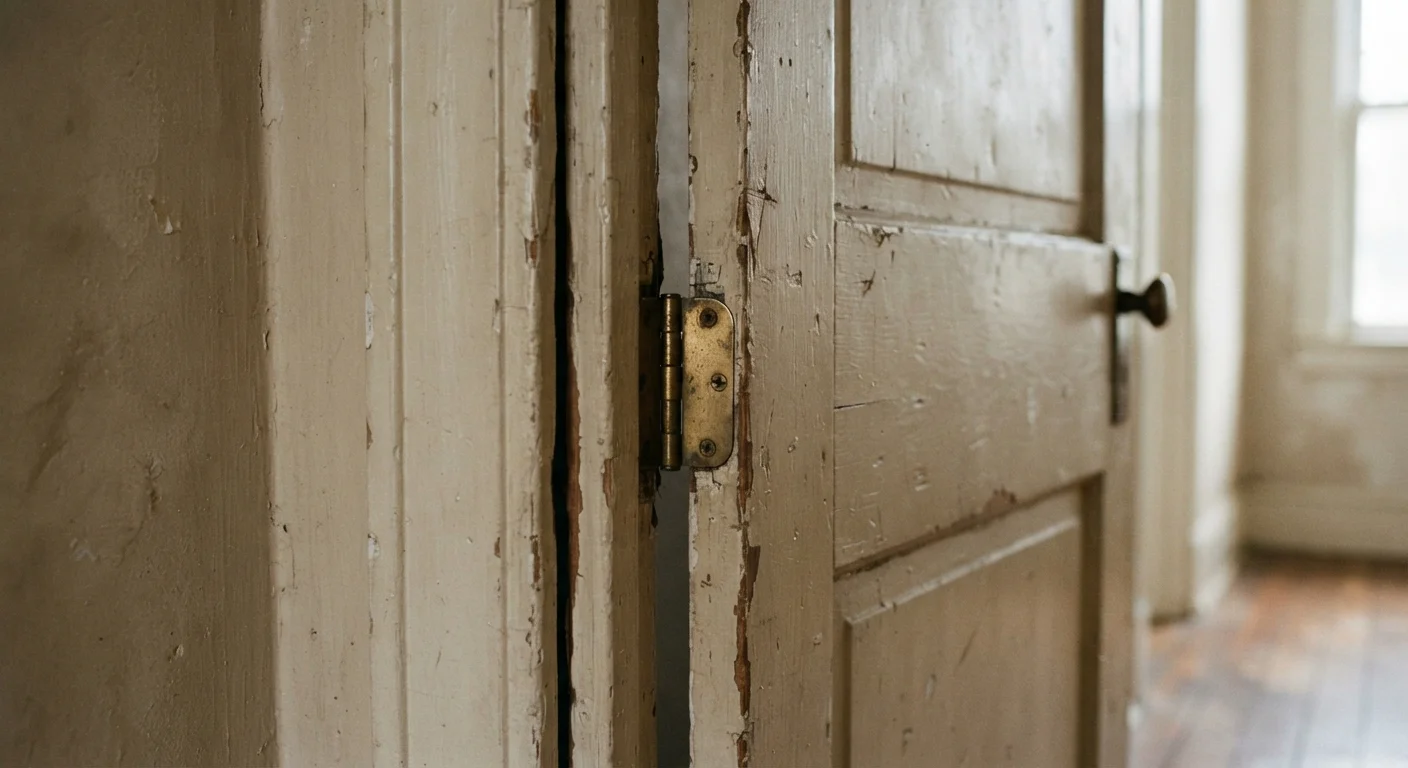
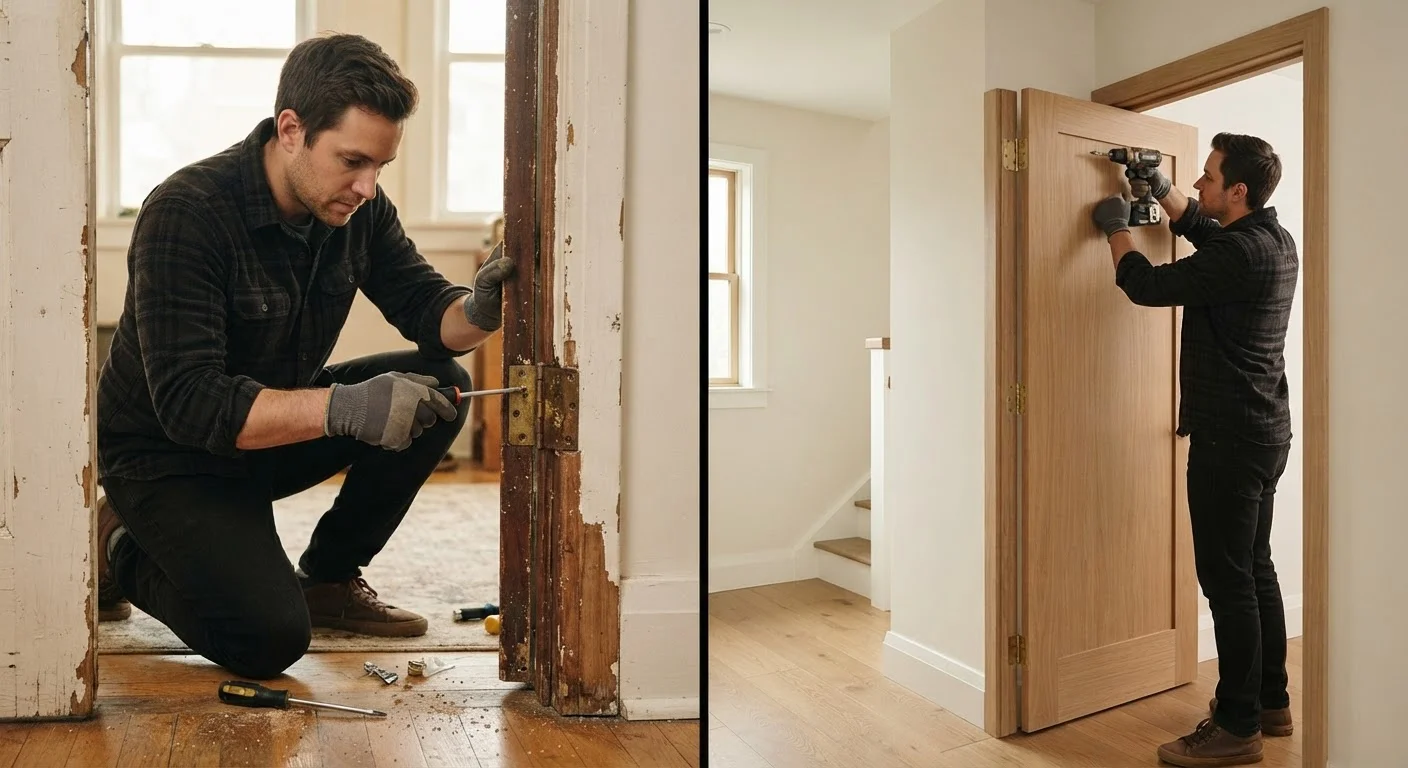
Interior doors: Hinges, latches, and minor surface damage are almost always worth repairing - parts are inexpensive and the work is manageable for a confident DIYer. A door with a warped or split core, however, typically can't be restored to proper function and is better replaced.
Hardwood floors: Individual boards can often be replaced or refinished. If damage is widespread, or the flooring has been sanded to near-minimum thickness (typically under 3/16 inch), refinishing may no longer be viable and full replacement makes more sense. See our guide to assessing a repair job before picking up a sander.
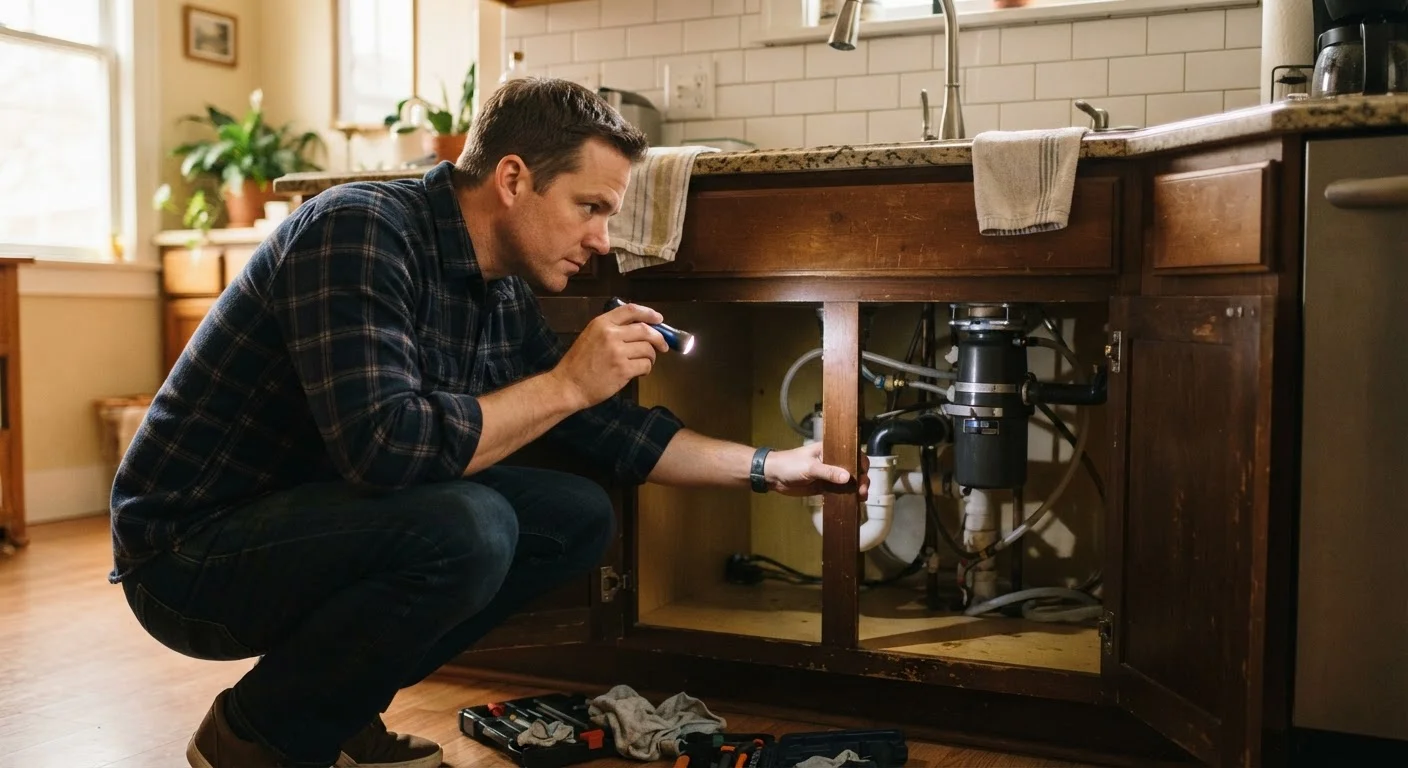
Plumbing fixtures: Most faucet drips are caused by worn washers or cartridges - inexpensive parts that extend fixture life significantly. If corrosion has reached the body of the fixture or the valve seat is deeply pitted, replacement is usually cleaner and more reliable long-term.
Appliances: The 50% rule applies well here. Also factor in energy efficiency: an older appliance operating inefficiently may cost more in ongoing utility spending than a newer model - something worth calculating before assuming repair is the frugal choice. For a broader look at this kind of financial trade-off, the logic in our keep vs. replace analysis for vehicles translates directly to major home systems.
Get a Written Estimate Before Deciding
Many homeowners either over- or underestimate repair costs without getting a proper quote. Before committing to either path, ask for a written estimate from a qualified tradesperson - it gives you a real number to plug into the 50% rule and removes guesswork from the equation. For refurbished or reconditioned alternatives, our new vs. refurbished guide can help you evaluate that middle-ground option as well.
Building the Habit: Document and Revisit
One underrated habit is keeping a simple home maintenance log - even a basic spreadsheet noting what was repaired, when, and at what cost. Over time, this record shows you which components are consuming disproportionate maintenance spending, helping future repair-or-replace decisions almost make themselves.
It also supports insurance claims, helps contractors understand a home's history, and can be a meaningful document when selling. If you're looking to connect this kind of decision-making to your broader household budget, the home budgeting hub offers practical frameworks for doing exactly that.
Finally, having the right tools on hand changes the math on many repair decisions - jobs that would otherwise require a service call become manageable DIY tasks. Our DIY repair toolkit guide covers what's worth owning and why.