Why a Core Toolkit Pays for Itself
Most household repairs fall into a surprisingly small number of categories: something is loose, something is broken, something needs cutting, or something needs sealing. A compact set of quality hand tools handles the overwhelming majority of these situations - no specialized equipment required.
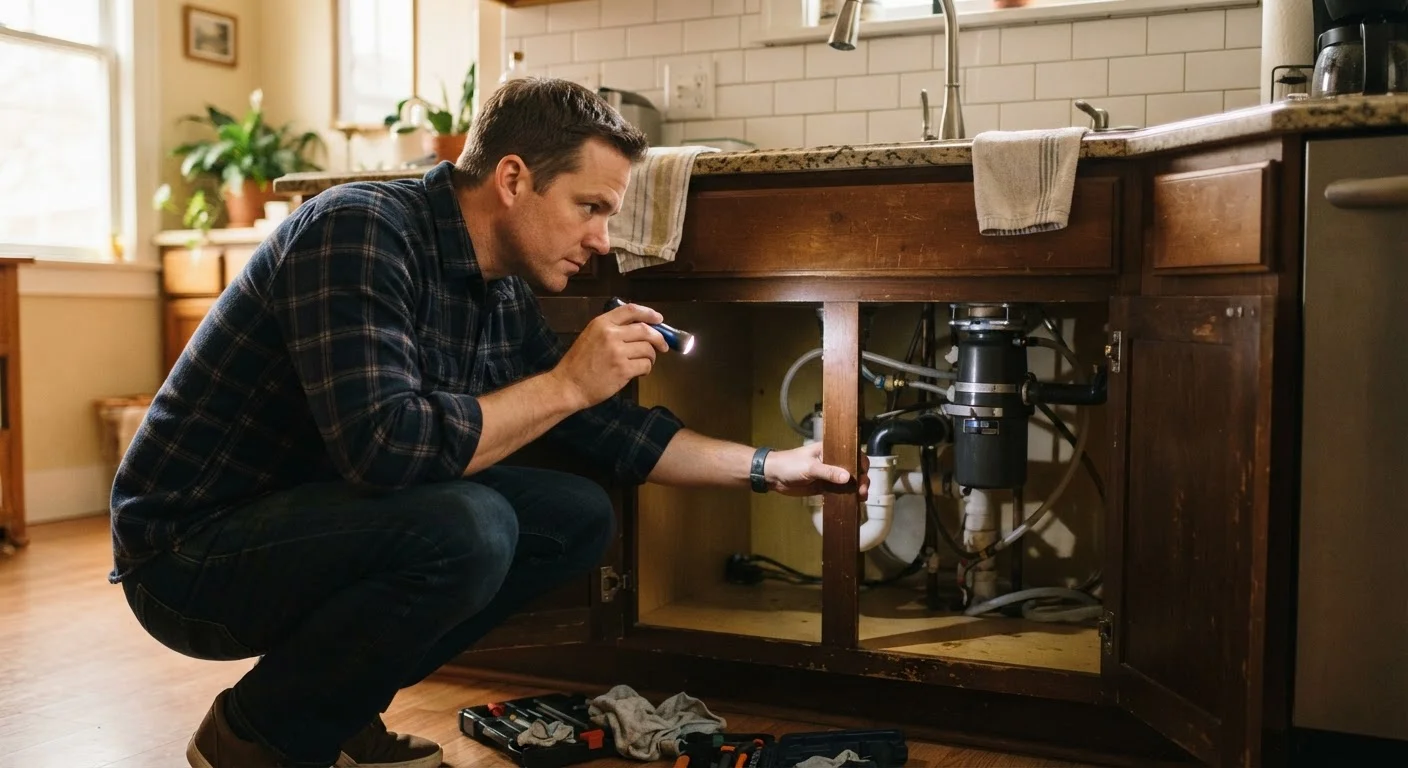
Before assembling your kit, it helps to assess the job properly so you know exactly what you're dealing with. And if you're weighing whether a repair is worth doing at all, a repair-vs-replace framework can clarify the decision before you spend a dollar.
Investing in a baseline toolkit also reduces the temptation to improvise - using a butter knife as a screwdriver, for instance - which is both ineffective and a common source of minor injuries.
| Toolkit core item count | 7 hand tools cover most everyday repairs |
| Most common screw drive types in US homes | Phillips and flathead |
| Recommended tape measure length | 25 feet for typical home use |
| Sandpaper grits to stock | 80 (coarse), 120 (medium), 220 (fine) |
| Work requiring a licensed professional | Electrical panels, gas lines, structural, plumbing to main supply (Verify permit requirements with your local building authority) |
The Essential Hand Tools
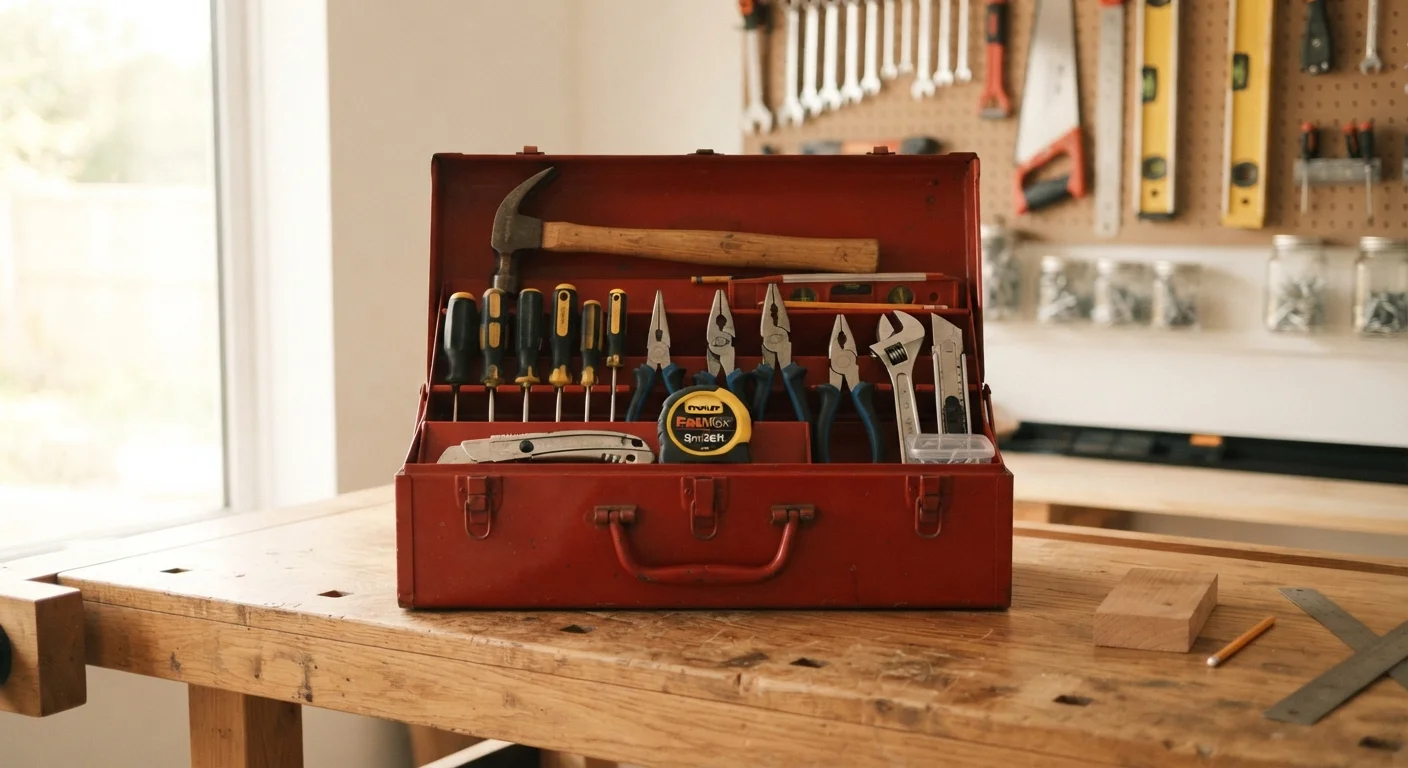
These are the tools that earn their place through sheer frequency of use:
- Claw hammer (16 oz): Drives and removes nails, seats stubborn parts, and handles general persuasion tasks. A smooth face leaves fewer marks on finished surfaces than a milled face.
- Flathead and Phillips screwdrivers (multiple sizes): The two most common drive types in US homes. A set covering small, medium, and large covers nearly everything.
- Adjustable wrench (10-inch): Grips nuts, bolts, and plumbing fittings without requiring a full socket set. One adjustable wrench replaces a dozen fixed sizes for everyday tasks.
- Needle-nose and slip-joint pliers: Needle-nose reaches into tight spaces; slip-joint grips irregularly shaped objects. Between them, these two cover most gripping needs.
- Tape measure (25 ft): Accurate measurement prevents costly re-cuts and mismatched purchases. A locking blade and a sturdy belt clip are worth having.
- Utility knife: Opens packaging, scores drywall, trims caulk, and cuts insulation. Keep spare blades - a dull blade requires more force and is more likely to slip.
- Level (24-inch): Hanging shelves, pictures, or fixtures without one almost always results in a redo.
These tools are the workhorse layer of any home repair kit. Pair them with safe working habits to keep each task incident-free.
PVA glue
Polyvinyl acetate adhesive, commonly sold as wood glue. It forms a strong, rigid bond between wood surfaces when clamped and allowed to cure fully, typically within 24 hours.
Wall anchor
A fastener inserted into drywall or masonry to provide a secure attachment point where a screw alone would not hold. The type required depends on wall material and the weight being supported.
Caulk
A flexible sealant applied to gaps and joints around windows, trim, and fixtures to prevent air, moisture, or pest infiltration. Paintable caulk can be finished to match surrounding surfaces.
Drive type
The shape of the recess in a screw head that a screwdriver engages - most commonly Phillips (cross-shaped) or flathead (single slot) in US residential use.
Toggle bolt
A wall anchor that uses spring-loaded wings which open behind drywall to distribute load, allowing heavier items to be hung on hollow walls without hitting a stud.
Fasteners, Adhesives, and Repair Materials
Tools accomplish nothing without the right consumables on hand. A modest supply of the following covers the vast majority of fix-it scenarios:
- Assorted screws and nails: Wood screws (1¼″, 1⅝″, 2½″), drywall screws (1⅝″), and finish nails handle furniture, trim, and wall repairs. Store them sorted by type in a small compartmented box.
- Wall anchors: Plastic expansion anchors for light loads; toggle bolts or threaded drywall anchors for heavier items on hollow walls. The anchor type must match the wall material.
- All-purpose sandpaper (80, 120, 220 grit): Prepares surfaces before painting, smooths rough edges, and removes light rust from hardware.
- Paintable caulk and caulk gun: Seals gaps around windows, baseboards, and trim. A basic ratchet-style caulk gun gives better control than squeeze tubes for longer runs.
- PVA wood glue: Stronger than most fasteners for wood-to-wood joints once cured. Clamp or tape while drying.
- Painter's tape: Protects surfaces during painting and is far easier to remove cleanly than standard masking tape.
Keeping even a small stock of these materials means a midnight repair doesn't require a hardware store run. This ties directly into managing your household budget - having supplies on hand prevents the premium pricing of emergency or convenience purchases.
When Your Toolkit Has Limits
A well-stocked hand-tool kit empowers a lot of repairs - but recognizing its limits is equally important. Electrical, gas, structural, and plumbing work that connects to main supply lines typically requires a licensed professional and, in many jurisdictions, a permit. Attempting these without proper training risks serious injury, code violations, and complications with homeowner's insurance.
If a job involves your electrical panel, gas lines, load-bearing walls, or roofing, call a qualified tradesperson. For smaller tasks where you're unsure, running through a pre-check list can help you determine whether professional help is genuinely needed or whether the fix is simpler than it looks.
The same principle applies in other domains: the line between confident DIY and professional territory matters just as much for vehicle maintenance as it does for home repairs.
Knowing your toolkit's capabilities - and its boundaries - is the foundation of confident, safe home ownership.