Why Fall Prep Is Worth the Effort
Most garden problems in spring trace back to something left undone in fall. Diseased foliage left standing can harbor fungal spores through winter. Bulbs left in frozen ground can rot. Hoses left connected to outdoor spigots can split - and so can the pipes behind them. A few focused hours now can prevent hours of frustrating cleanup and replanting come March.
Think of this checklist as a closing ritual for your garden. You're not abandoning it; you're setting it up to rest well and wake up strong. Whether you're tending a small raised bed or a sprawling yard, the same core principles apply. And if you want to carry the seasonal mindset indoors, our seasonal heating checklist covers the home systems side of fall preparation.
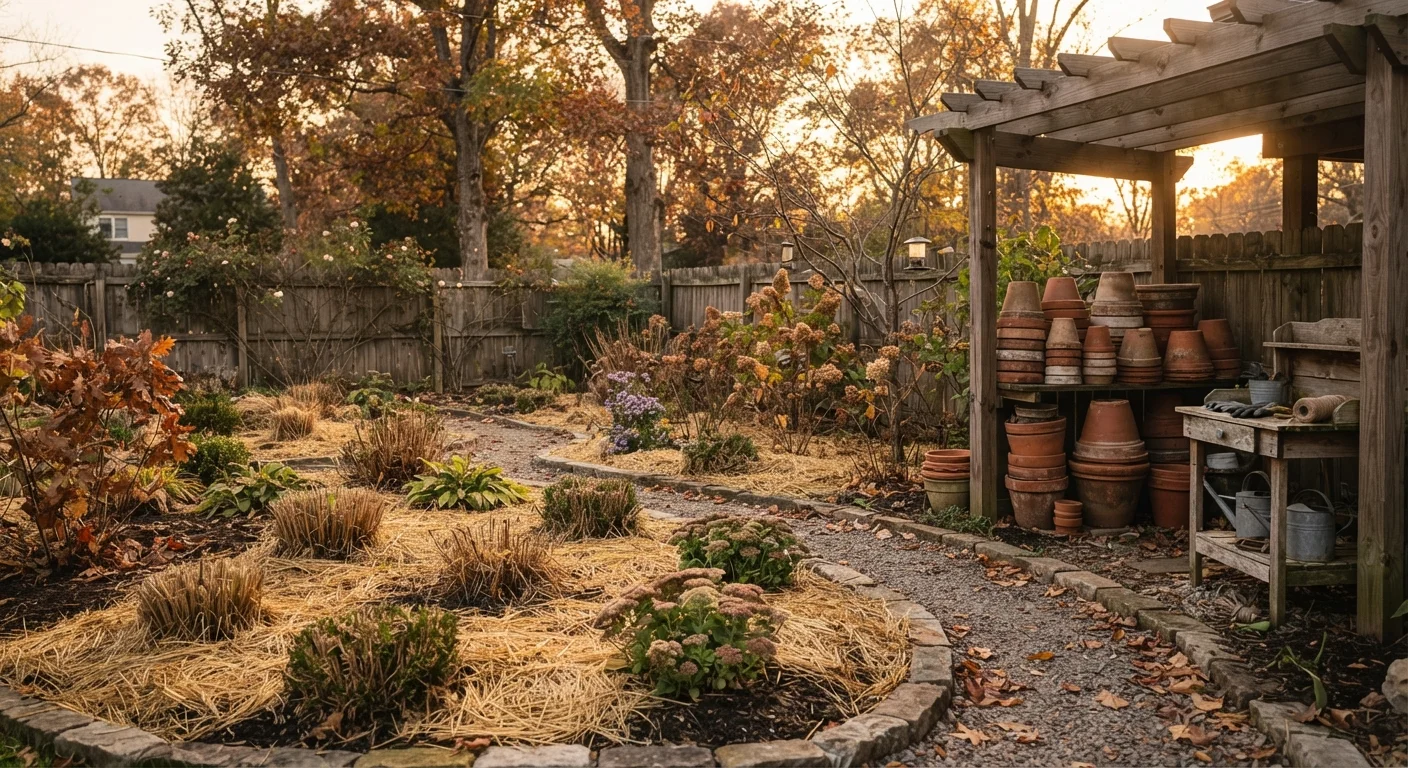
Beds and Borders
Bulbs and Tender Plants
Containers and Pots
Water and Irrigation
Tools and Equipment
Tools and Supplies You'll Need
You don't need a shed full of specialized equipment to complete this checklist. Most tasks require a small set of hand tools and basic materials you may already own. Check what you have on hand before purchasing anything new.
Pruning shears / hand pruners
Cutting back perennial stems and removing spent annuals cleanly without tearing plant tissue.
Garden fork or spade
Digging up tender bulbs and dividing overcrowded perennials without damaging root systems.
Mulch (shredded leaves, straw, or wood chips)
Insulating bed soil to moderate freeze-thaw cycles and protect dormant roots.
Hose bib foam cover
Insulating outdoor faucets from freezing temperatures to prevent pipe damage.
Paper bags or cardboard boxes with dry peat moss
Packing and storing dug bulbs and tubers through the winter in a breathable, cushioned environment.
Linseed oil or tool oil
Coating metal tool surfaces before storage to prevent rust.
Sharpening stone or file
Restoring a clean edge to pruners and spades before long-term storage.
Fuel stabilizer
Preventing gas-powered lawn equipment fuel from degrading during months of storage.
Don't Compost Diseased Plant Material
Home compost piles rarely reach the sustained temperatures needed to kill fungal spores or bacterial pathogens. If any plants showed signs of disease this season - powdery mildew, black spot, or blight - bag and dispose of that material with household waste rather than adding it to compost. Returning it to the garden the following year can restart the problem.
Irrigation Blowout Is Not a DIY Task for Everyone
Blowing out an in-ground irrigation system with compressed air requires the right compressor capacity and technique to avoid damaging pipes and sprinkler heads. If you haven't done it before, it's generally worth hiring a licensed irrigation professional for this one step. A damaged irrigation system can cost significantly more to repair than the service call.
Timing: When to Start
The right window is typically the four to six weeks before your area's average first frost date - not after a killing frost has already struck. In much of the US, that means September through early November, depending on your hardiness zone. Your local cooperative extension service website is the most reliable source for first-frost averages in your specific county.
A few tasks, like dividing perennials and planting spring bulbs, are time-sensitive: the soil needs to be workable and warm enough for roots to establish before the ground freezes hard. Other tasks - cleaning tools, draining hoses - can happen any mild day before temperatures drop and stay below freezing.
If you're also putting a vegetable garden to bed, see our guide on starting a vegetable garden from scratch for context on how annual crops differ from perennial beds in their end-of-season care. And for lawn-specific fall tasks like overseeding and fertilizing, the month-by-month lawn care reference is a helpful companion.
Know Your First Frost Date Before Starting
Acting too early on some tasks - like cutting back roses or digging dahlias - can actually stress plants that aren't yet fully dormant. Always base your timing on your local average first frost date, available through your state's cooperative extension service. Hardiness zone maps give a general picture, but local microclimates vary, and your county extension office will have the most accurate guidance for your area.