Choosing the Right Location
The single most consequential decision you will make as a new vegetable gardener is where to put the garden - and the determining factor is sunlight. Most food-producing vegetables need a minimum of six hours of direct sun per day, with eight hours being ideal for fruiting crops like tomatoes and peppers. Walk your yard at different times on a clear day and observe which areas are shaded by fences, trees, or the house itself.
Proximity to a water source matters almost as much as light. Hauling hoses across a large yard becomes a genuine deterrent to consistent watering, which is one of the most common reasons first-year gardens underperform. Choose a spot within reach of an outdoor spigot or where a hose extends comfortably.
If your yard is limited in flat, sunny space, a raised bed or even containers can work well. For a side-by-side look at what container growing actually requires, see our container gardening guide.
Use the 'Sun Map' Trick Before Committing
Before digging anything, place small stakes or flags in your yard every two hours on a sunny day to track shadow movement. This gives you a reliable picture of actual sun exposure rather than an estimate. Moving a garden bed after the fact is far more work than choosing the right spot from the start.
Planning Your Garden Layout
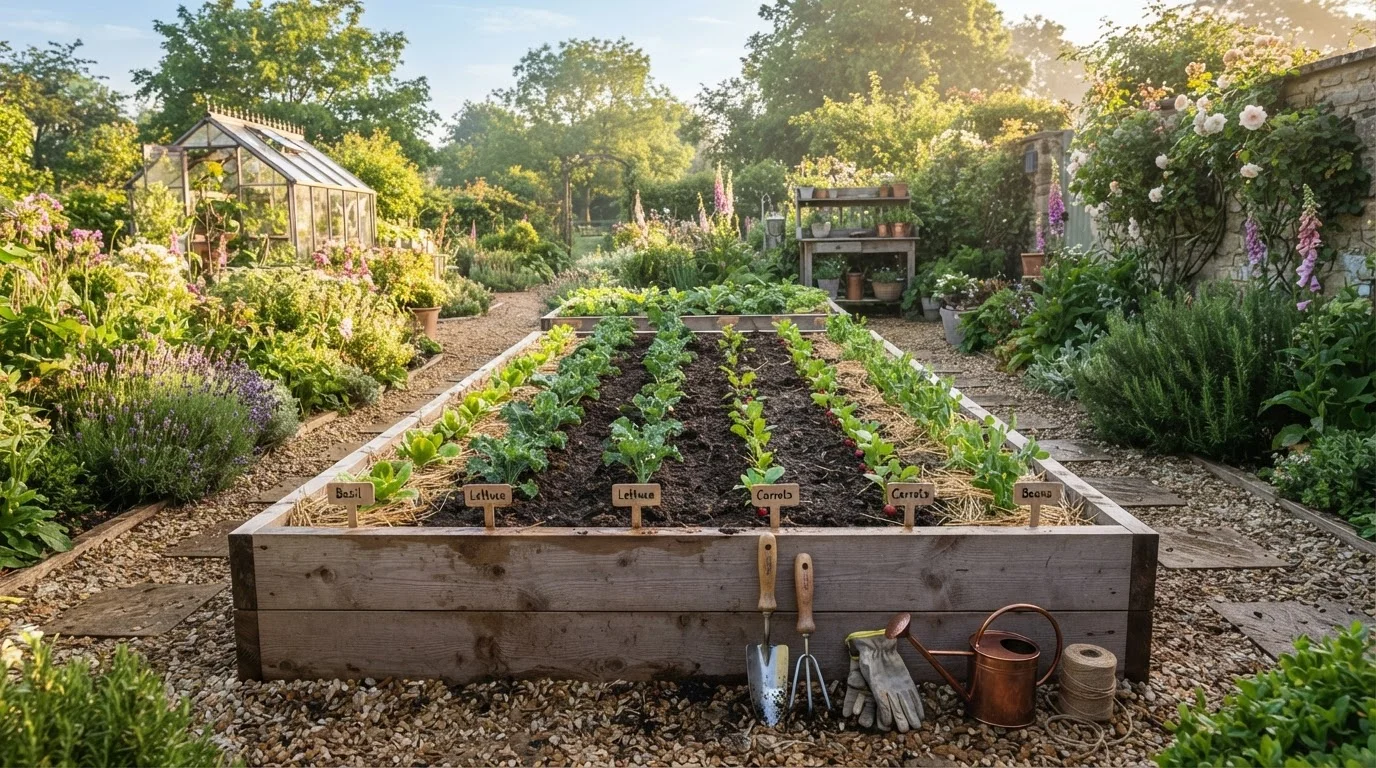
Before buying a single seed, sketch a rough plan. For first-time growers, a 4×8-foot raised bed or an equivalent in-ground plot is a practical starting size - large enough to grow a variety of crops, small enough to manage without feeling overwhelmed.
Think in terms of taller plants (like staked tomatoes or pole beans) positioned on the north side of the bed so they don't shade shorter neighbors. Group crops with similar water and spacing needs. Planting in blocks rather than long single rows allows more plants per square foot - a technique often called square foot gardening.
Draw your layout on paper or a simple grid. Note how much space each vegetable needs at maturity - seed packets list this. Overcrowding is among the most common beginner mistakes: plants compete for nutrients, airflow decreases, and disease spreads more easily.
6+ hrs
Daily sun most vegetables require
University extension services consistently cite six to eight hours of direct sunlight as the threshold for productive vegetable gardening.
1 inch
Water per week most vegetable gardens need
This general guideline - roughly equivalent to one good deep watering session - comes from widely cited cooperative extension horticultural recommendations across the U.S.
25 days
Time to harvest for radishes
Radishes are among the fastest-maturing vegetables and are commonly recommended by extension educators as confidence-building crops for new growers.
Preparing the Soil
Healthy soil is the foundation every successful vegetable garden is built on. Understanding what your soil is actually made of saves time and money later. A basic soil test - available through most cooperative extension offices for a modest fee - tells you the pH level and nutrient balance. Vegetables generally prefer a pH between 6.0 and 7.0.
For in-ground beds, loosen the top 10 to 12 inches of soil using a garden fork, then work in 2 to 4 inches of compost. Compost improves drainage in clay soils, adds moisture retention to sandy soils, and feeds the microbial life that makes nutrients available to plants. For raised beds, fill with a mix of topsoil, compost, and an aerating component like perlite or aged bark.
To learn more about building productive soil from the ground up, see our guide on why healthy soil matters. And if you want to reduce ongoing amendment costs, our home composting guide covers how to turn kitchen scraps into free, high-quality organic matter.
Selecting Vegetables to Grow
Choose crops that match your climate, your space, and your willingness to tend them. New gardeners often try to grow too many different things at once. A focused selection of reliable producers is more satisfying than an ambitious list that overwhelms.
Crops that tend to succeed for beginners include:
- Lettuce and salad greens - fast-maturing, tolerant of part shade, and harvestable in as little as 30 days
- Radishes - ready in 25 days, excellent for filling gaps between slower-growing plants
- Zucchini and summer squash - highly productive, forgiving of minor neglect
- Bush beans - no staking required, steady producers across summer
- Cherry tomatoes - more disease-resistant than larger varieties and quicker to ripen
- Herbs (basil, parsley, chives) - useful in the kitchen and easy to maintain alongside vegetables
Check the seed packet or plant tag for your area's last frost date compatibility. Cool-season crops like lettuce and radishes go in early spring; warm-season crops like tomatoes wait until nighttime temperatures stay consistently above 50°F.
Start with transplants for tomatoes and peppers, not seeds - the indoor seed-starting phase adds complexity that can derail a first-year gardener before anything even goes in the ground.
Tomatoes and peppers need 6 to 10 weeks of indoor growth before transplanting outdoors. Skipping this phase by purchasing nursery starts reduces failure points significantly for beginners.
Plant one 'fast crop' like radishes or leaf lettuce between your slower-growing plants to use every inch of space productively from week one.
This technique, called intercropping, makes use of the open soil around slow developers and gives new gardeners something to harvest early - which is motivating enough that it meaningfully improves follow-through.
Planting and Watering Basics
Vegetables can be started from seed directly in the ground (direct sowing) or from transplants - young plants already started indoors or purchased from a nursery. For beginners, transplants reduce risk for crops like tomatoes, peppers, and eggplant that require a long growing season. Direct sowing works well for beans, carrots, beets, and most greens.
Follow spacing guidelines precisely. Plant depth matters: most seeds are sown at a depth two to three times their diameter. After planting, water gently and thoroughly - the goal is to moisten the root zone, not just dampen the surface.
Once established, most vegetable gardens need about 1 inch of water per week, either from rainfall or irrigation. Deep, infrequent watering encourages roots to grow downward, making plants more drought-resilient. Watering at the base of plants rather than overhead reduces fungal disease risk. A simple drip irrigation line or soaker hose is one of the most practical investments a new gardener can make.
To keep startup costs in check, see how other homeowners approach budgeting for home projects - the same structured thinking applies to garden spending.
Ongoing Maintenance and Seasonal Care
A vegetable garden requires consistent attention, but most tasks are short - 15 to 30 minutes several times per week is enough to keep a small bed healthy. Regular maintenance tasks include:
- Weeding - weeds compete directly for water and nutrients; remove them while small, when they pull easily
- Mulching - a 2-inch layer of straw or wood chips around plants suppresses weeds and retains soil moisture
- Pest monitoring - check the undersides of leaves weekly for eggs or feeding damage; catch problems early before they spread
- Harvesting regularly - picking vegetables at peak ripeness encourages plants to keep producing
At the end of the growing season, resist the impulse to simply abandon the bed. Clearing plant debris removes overwintering habitat for pests and diseases. Replenish the soil with fresh compost. Our guide on preparing your garden for winter covers exactly what to do before cold weather sets in so your garden recovers quickly in spring.
Starting a vegetable garden doesn't require perfect conditions or a large budget. What it does require is a clear plan, a reasonable starting size, and a willingness to learn from each season. Most experienced growers will say that their second year was dramatically easier - because the soil was better, the layout was smarter, and they knew which plants actually thrived in their yard.