Why Single Cats Need Active Enrichment
Cats are often assumed to be self-sufficient loners, but that picture is only partly accurate. Domestic cats - particularly those kept exclusively indoors - have complex cognitive and predatory needs that an empty apartment doesn't naturally meet. A cat living alone has no feline companion to wrestle with, chase, or groom, which means the mental stimulation that would come from social interaction falls squarely on the environment and the owner.
Under-stimulated cats don't simply "get bored" in a passing way. Chronic boredom can manifest as destructive scratching, compulsive over-grooming, weight gain from inactivity, or attention-seeking behaviors that escalate over time. Veterinary behaviorists recognize environmental deprivation as a genuine welfare concern, not a personality quirk.
If you're considering whether a second cat might help, our guide on one cat or two walks through that decision carefully. But for many households, a single well-enriched cat is a happy cat - the key is intentionality.
Enrichment Needs Change with Age
Kittens and young adult cats typically need more active stimulation, while senior cats may prefer gentler, shorter sessions and more emphasis on comfortable perching and scent enrichment. If your cat's interest in play drops noticeably, have a veterinarian check for pain or mobility issues before assuming it's simply an age-related preference shift.
Best Practices for Mental Stimulation
The practices below are grounded in feline behavioral science and can be adapted to most home setups, regardless of square footage or budget.
Rotate toys on a weekly schedule rather than leaving the same toys out permanently.
Cats habituate quickly to stationary objects. A toy that prompted excited play on Monday becomes invisible furniture by Friday. Novelty is a key driver of feline engagement, and rotation recreates the experience of encountering something new without requiring constant purchases.
Use puzzle feeders or food-dispensing toys for at least one meal per day.
In the wild, cats spend a significant portion of their waking hours hunting - a behavior that engages problem-solving, patience, and physical coordination. Eating from a bowl eliminates all of that cognitive effort. Puzzle feeders reintroduce mental work around food, which is one of the most natural forms of enrichment for cats.
Schedule two structured interactive play sessions daily, each lasting 10-15 minutes.
Unstructured play - leaving a toy on the floor - rarely sustains a cat's attention. Owner-directed play with a wand or feather toy mimics the unpredictable movement of prey, which is far more compelling. Consistent timing also creates a routine cats anticipate, reducing anxiety.
Create vertical space and designated perches throughout your home.
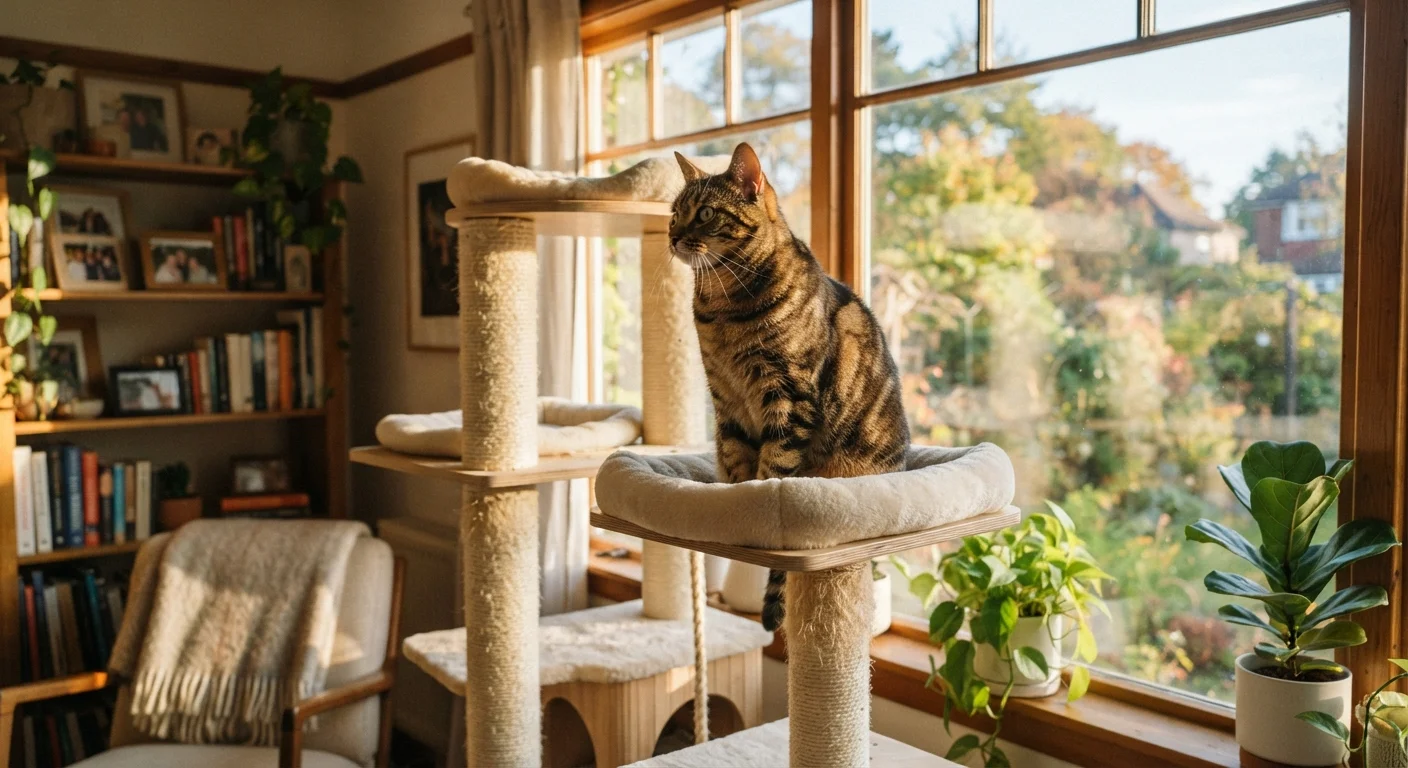
Cats are instinctively drawn to elevated positions for safety and observation. In a single-cat household with no companion to compete with, vertical space still matters enormously - it expands the effective territory of a small home and provides mental stimulation through different vantage points.
Provide consistent window access with an enriching outdoor view.
Bird and squirrel activity outside a window functions as passive television for cats - engaging visual and auditory attention without requiring owner participation. Research in feline welfare consistently identifies window access as a significant contributor to indoor cat wellbeing.
Introduce novel scents as a low-effort enrichment tool.
A cat's olfactory system is vastly more sensitive than a human's, and scent exploration engages the brain in ways that visual stimulation alone does not. New smells trigger investigative behavior - sniffing, rubbing, and pawing - that can occupy a cat for extended periods.
Quick Wins You Can Implement Today
Not all enrichment requires purchases or major changes. Several of the most effective techniques are free or rely on items you already own. Start with these to see an immediate shift in your cat's engagement.
For owners who are new to cat care altogether, our first-time cat owner guide covers how to set up a stimulating home environment from day one.
Reading Your Cat's Signals
Enrichment isn't a one-size-fits-all formula. Cats communicate preferences clearly if you know what to look for. A cat that walks away from a toy after two seconds isn't broken - it may prefer a different prey type (some cats favor feather-style lures; others go for small, scurrying toys). Adjust based on what actually holds attention.
Watch for these signs that your current enrichment routine isn't enough:
- Excessive sleeping beyond 16 hours a day paired with low responsiveness when awake
- Redirected aggression - sudden swatting or biting at owners without a clear trigger
- Repetitive behaviors like pacing along the same path or obsessive grooming leading to hair loss
- Destructive behavior targeting furniture, cords, or household objects
Any of these warrant a conversation with your veterinarian to rule out medical causes before attributing them solely to boredom. Once health issues are excluded, a certified cat behavior consultant can help design a targeted enrichment plan.
End Play Sessions the Right Way
Always conclude an interactive play session by letting your cat "catch" the toy several times before putting it away. This mimics a successful hunt and prevents the restlessness that can follow an unresolved chase. Offering a small food treat immediately after reinforces the natural hunt-catch-eat sequence cats are wired to follow.
Whether your cat goes outside or stays in is another factor that shapes enrichment needs - our indoor vs. outdoor cats guide can help you think through that tradeoff.
This article provides general educational information about cat care and is not a substitute for personalized veterinary or behavioral advice. If your cat shows sudden behavioral changes, consult a licensed veterinarian.