What the Research Says About Lifespan and Safety
One of the most frequently cited differences between indoor and outdoor cats is lifespan. Veterinary and animal welfare organizations generally report that indoor cats live considerably longer on average - often cited estimates range from 10 to 15 years indoors compared to roughly 2 to 5 years for cats with full outdoor access, though individual variation is significant and these figures depend heavily on environment and care quality.
The reasons are not difficult to understand. Outdoor cats face a concentrated set of hazards: motor vehicles, predators such as coyotes and dogs, territorial fights with other cats, exposure to toxins like antifreeze or rodenticides, and infectious diseases spread through contact with other animals. Feline immunodeficiency virus (FIV) and feline leukemia virus (FeLV), for example, spread primarily through bites - a common outcome of outdoor cat fights.
It is worth noting that these risks are not uniform. A cat with outdoor access in a quiet rural property faces meaningfully different dangers than one roaming a suburban neighborhood near a highway. Context matters when assessing realistic risk.
| Criterion | Indoor Cats | Outdoor Cats |
|---|---|---|
| Average lifespan | 10-15 years (estimated) | 2-5 years (estimated) |
| Traffic and injury risk | Minimal | Significant |
| Infectious disease exposure | Low | High (FIV, FeLV, rabies) |
| Parasite exposure | Low to moderate | High (fleas, ticks, worms) |
| Natural behavior expression | Requires deliberate enrichment | More naturally available |
| Wildlife impact | None | Meaningful, documented impact |
| Owner effort required | High enrichment investment | High veterinary vigilance |
The Case for Keeping Cats Indoors
Beyond lifespan statistics, indoor living eliminates a wide range of acute dangers while also protecting local wildlife. Domestic cats are efficient hunters, and their cumulative effect on bird and small mammal populations has been documented extensively in ecological research. Keeping cats indoors removes this impact entirely.
The practical challenge of indoor living is enrichment. Cats are cognitively active predators, and a house without sufficient stimulation can lead to boredom, anxiety, obesity, and stress-related conditions including over-grooming or inappropriate elimination. See our guide to keeping a single cat mentally stimulated for proven strategies that address this need without adding another pet.
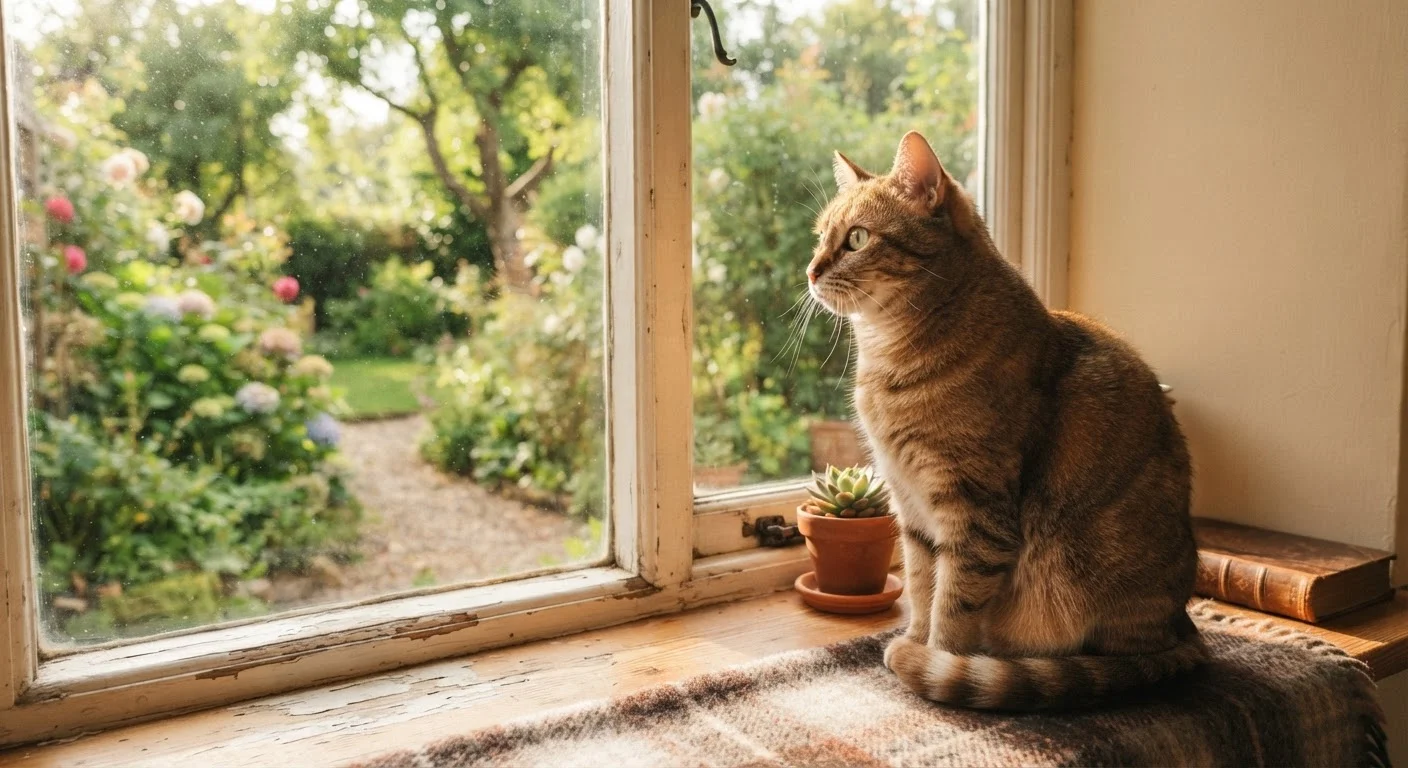
Structured play sessions, puzzle feeders, window perches, vertical climbing spaces, and rotating toys can meaningfully replicate the cognitive and physical engagement that outdoor exploration provides. Indoor cats also benefit from routine - consistent feeding times and predictable interaction help reduce stress. For owners thinking about nutrition as part of that routine, understanding how dry and wet food differ is a useful starting point.
Understanding the Outdoor Cat's Experience
Proponents of outdoor access often point to the behavioral benefits: cats allowed outside exhibit more natural hunting, climbing, and territorial behaviors. For cats raised outdoors from kittenhood, full confinement can be genuinely distressing rather than simply an adjustment period.
If outdoor access is part of your cat's lifestyle, preventive health care becomes especially important. Parasite exposure - fleas, ticks, intestinal worms, and heartworm in some regions - is substantially higher for outdoor cats. Regular veterinary check-ups, up-to-date vaccinations (particularly rabies and FVRCP), and consistent parasite prevention are non-negotiable for outdoor cats. Your veterinarian can recommend a prevention protocol appropriate to your geographic region and your cat's specific exposure risks.
Some owners find a middle path through supervised outdoor time - using a leash and harness, a contained outdoor enclosure (sometimes called a "catio"), or a secure fenced yard. These approaches can offer cats environmental stimulation while meaningfully limiting the most serious hazards. If you're navigating the early stages of cat ownership and considering how lifestyle choice fits into the bigger picture, our guide to bringing a cat home for the first time covers foundational decisions in one place.
What Is a Catio?
A catio is an enclosed outdoor structure - ranging from a simple window box to a large freestanding enclosure - that allows cats to experience fresh air, sunlight, and outdoor sights and sounds without free roaming. Well-designed catios can satisfy many of the behavioral needs associated with outdoor access while removing most of the hazards. They vary widely in size, cost, and complexity, and can be custom-built or assembled from pre-designed kits.
Making the Decision That Fits Your Cat
Ultimately, there is no single correct answer - but the decision should be informed rather than incidental. Key factors to weigh include your geographic environment, your cat's age and history, your own capacity to provide enrichment, and your veterinarian's guidance.
A kitten raised indoors from the start is generally easier to keep as an indoor cat long-term. A cat adopted as an adult with established outdoor habits presents a different set of considerations. Forcing a major lifestyle change on any cat - in either direction - should be approached gradually and with attention to behavioral signals of stress.
Whatever you decide, align your veterinary care plan accordingly. Indoor cats are not risk-free; they still need regular wellness exams, vaccinations, dental care, and parasite prevention appropriate to their exposure level. Outdoor cats need all of this with greater frequency and vigilance. For a broader look at separating cat-care fact from fiction - including some common misconceptions about indoor vs. outdoor health - see our article on common cat health myths.
This article is for general informational purposes only and does not constitute veterinary advice. Always consult a licensed veterinarian for guidance specific to your cat's health and circumstances.