
Why the One-or-Two Question Matters More Than It Seems
Adding a second cat feels like a simple act of generosity - more company, more play, more warmth. But the decision has real consequences for your cat's stress levels, your household budget, and your home's daily management. Unlike dogs, domestic cats are facultatively social, meaning they can form social bonds but are not wired to need them the way pack animals do. Whether a second cat is a blessing or a burden depends almost entirely on context.
If you're preparing to bring home your first cat, understanding these dynamics from the start will shape how you set up your space and routines from day one.
The Case For a Second Cat
Reduces boredom and stress during owner absences
Cats left alone for extended periods can develop stress-related behaviors. A compatible companion provides social stimulation and play that helps moderate these patterns.
Mutual grooming supports social bonding
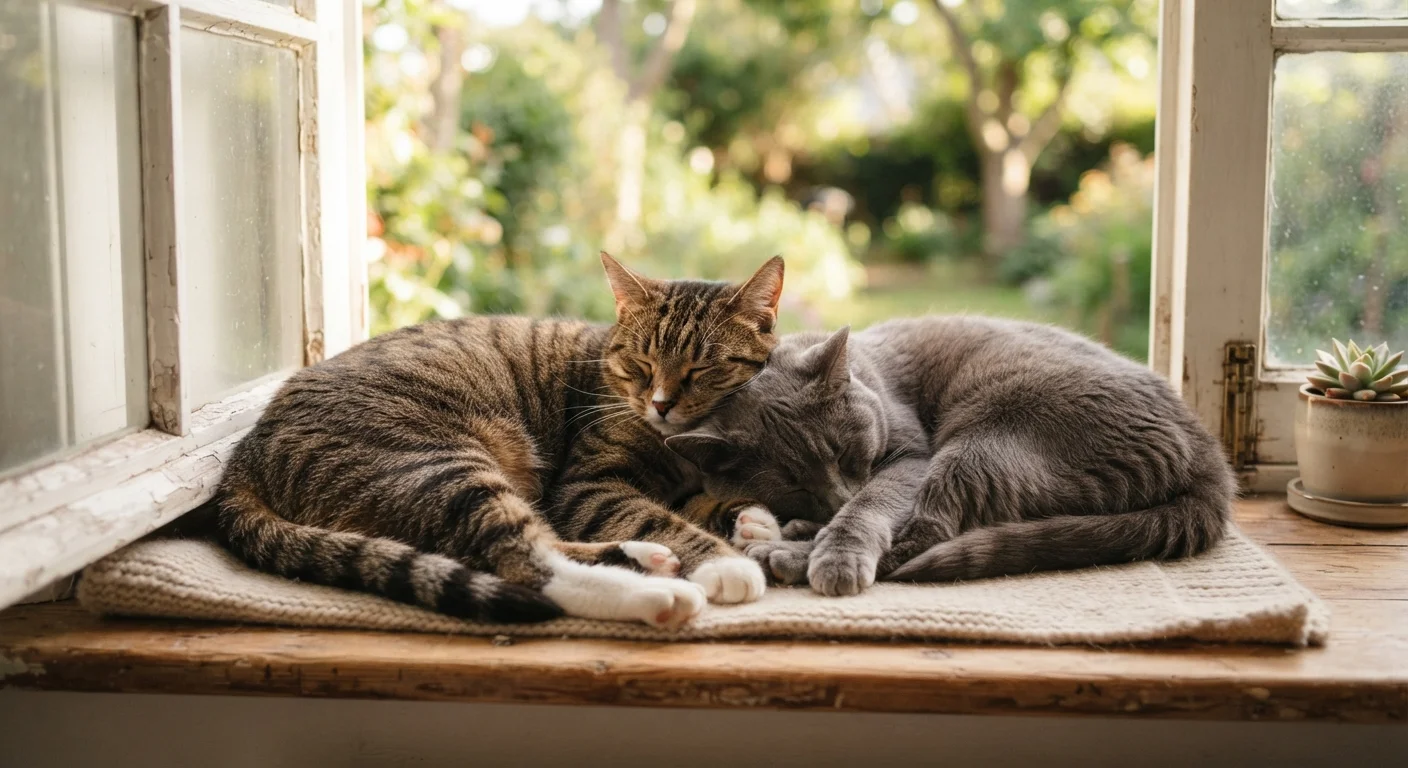
Cats that form a positive bond will often groom each other, especially around the head and neck - areas they can't easily reach themselves. This allogrooming is a meaningful sign of social comfort.
Easier when introduced young
Two kittens adopted together or introduced before 6 months of age are significantly more likely to form a tolerant, stable relationship than adult cats introduced later.
Can moderate excess energy in active cats
High-energy cats often redirect their play drive toward a feline companion, which can reduce behaviors like midnight zoomies or rough play with owners.
The strongest argument for a second cat is behavioral enrichment. Cats left alone for eight or more hours frequently exhibit stress indicators - over-grooming, destructive scratching, or disrupted sleep cycles. A compatible companion can reduce these patterns by providing play, mutual grooming, and low-level social contact throughout the day.
Young cats especially tend to benefit. Kittens introduced together typically establish tolerant or even affectionate relationships that persist into adulthood. Adopting two kittens simultaneously is often easier than introducing an adult cat to a resident pet later on.
~45%
U.S. cat-owning households with multiple cats
According to the American Pet Products Association's National Pet Owners Survey, roughly 45% of cat-owning households in the U.S. include more than one cat.
1+1+1
Recommended litter box formula for two cats
Feline behaviorists widely recommend one litter box per cat plus one additional box, placed in different locations, to minimize resource-guarding conflict.
For owners who struggle to provide consistent interactive play, a feline companion may pick up some of that slack - though it should complement, not replace, owner engagement and environmental enrichment.
The Case Against a Second Cat
Territory conflict is common and unpredictable
Even calm, sociable cats can react aggressively to a newcomer. Territorial stress may manifest subtly - through hiding, reduced appetite, or litter box avoidance - and can persist long after introduction.
Doubles routine and veterinary costs
Two cats require two annual wellness exams, separate vaccination schedules, and individual preventive care. Unexpected illness in one cat can place real financial strain on owners who budgeted for one.
Senior and highly territorial cats rarely benefit
Older cats are generally poor candidates for new companions. The disruption to established routines and territory can cause lasting stress that outweighs any social advantage.
Requires more space and resource planning
Multi-cat households need multiple litter boxes, separate feeding stations, and sufficient vertical and horizontal territory. Small apartments may struggle to accommodate this without ongoing conflict.
Compatibility is never guaranteed
Even with careful introductions, some cats never accept a housemate. Rehoming a second cat after a failed integration is emotionally difficult for owners and stressful for the animals involved.
Territory is the central issue. Cats are highly territorial, and a resident cat's perception of a newcomer as an intruder can create chronic stress for both animals - even after months of cohabitation. Signs of ongoing conflict include resource guarding, inappropriate elimination, and persistent hiding. These behaviors are not always resolved with time alone.
The financial reality also deserves honest acknowledgment. Two cats means two sets of veterinary bills, two feeding regimens, and roughly double the cost of litter, toys, and routine preventive care. If navigating cat nutrition for one cat already feels complex, doing it for two - especially if they have different health needs - adds meaningful management overhead.
Senior cats, in particular, are poor candidates for a new companion. Older cats tend to be set in their routines and more sensitive to disruption, and the stress of a new housemate can outweigh any social benefit.
Making It Work If You Decide to Add a Second Cat
Spay or Neuter Before Introducing a New Cat
Both resident and incoming cats should be spayed or neutered before any introduction begins. Intact cats exhibit stronger territorial and hormonal behaviors that dramatically increase the risk of aggression. If you have questions about timing, your veterinarian can help you weigh the considerations - our overview of spay and neuter tradeoffs also covers relevant background on timing decisions.
If you move forward, the introduction process is where success or failure is largely determined. Rushing two cats together - even cats that seem calm individually - frequently causes lasting fear or aggression. A structured introduction across several weeks, using scent swapping before any visual contact, gives both cats time to acclibrate without confrontation.
Resource planning matters equally. The standard guidance from feline behaviorists is one litter box per cat, plus one extra - placed in separate locations. The same principle applies to feeding stations and elevated resting spots. Crowding resources is a primary driver of inter-cat conflict in multi-cat homes.
For a single cat who is showing signs of boredom or anxiety, it's worth exploring enrichment alternatives before committing to a second pet. Our guide on keeping a single cat mentally stimulated covers proven strategies that can meaningfully improve a solo cat's daily life without the compatibility risks.
This article provides general educational information about cat care and is not a substitute for advice from a licensed veterinarian or certified animal behaviorist. If your cat is showing signs of stress or aggression, consult a qualified professional.