Choosing the Right Tank Size
One of the most persistent myths in fishkeeping is that small tanks are easier for beginners. In practice, the opposite is true. A 5-gallon tank has so little water volume that temperature spikes, ammonia buildup, and pH swings happen rapidly - leaving almost no time to correct a problem before fish are harmed. A tank in the 20-30 gallon range gives you a much more stable environment and opens up a wider variety of compatible species.
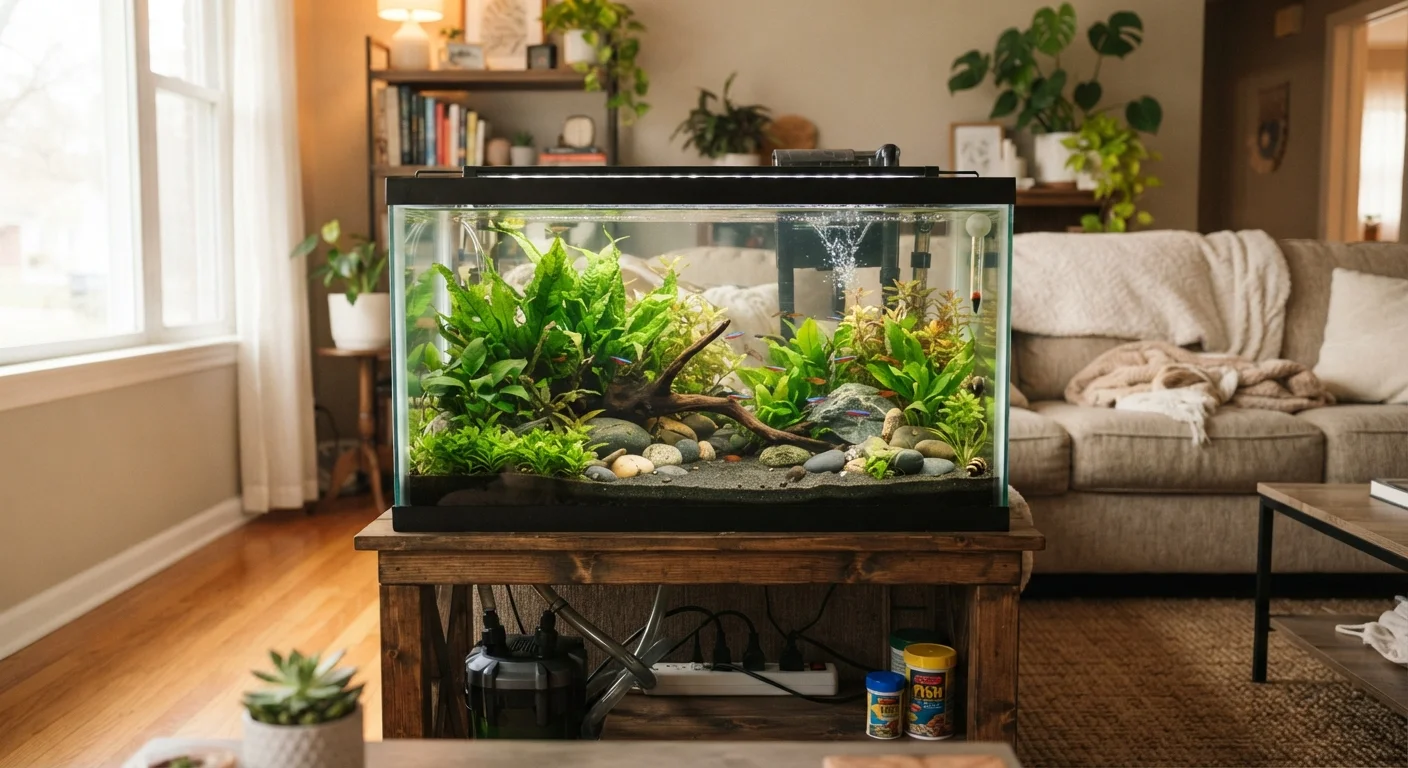
Before buying, consider where the tank will live. A filled aquarium weighs roughly 10 pounds per gallon, so a 20-gallon setup weighs around 200 pounds with gravel and equipment. Choose a dedicated aquarium stand or sturdy furniture rated for the load, placed away from direct sunlight (which fuels algae growth) and heat or air conditioning vents.
If you're weighing the broader question of what type of system to pursue, our guide to freshwater vs. saltwater aquariums breaks down the realistic costs and complexity of each - freshwater is almost always the better starting point.
Essential Equipment You'll Need
A functioning aquarium is a life-support system. The following equipment is not optional:
- Filter: Removes waste and houses the beneficial bacteria responsible for the nitrogen cycle. Choose a filter rated for slightly more than your actual tank size.
- Heater and thermometer: Most tropical fish require water between 74-80°F. A reliable submersible heater paired with a separate thermometer (not just the heater's built-in indicator) keeps conditions consistent.
- Lighting: Standard aquarium LED fixtures work well and are energy-efficient. Aim for 8-10 hours of light per day to support natural rhythms without over-stimulating algae.
- Substrate: Gravel or sand covers the bottom, provides anchor points for plants, and harbors beneficial bacteria. Rinse thoroughly before adding.
- Water test kit: A liquid test kit measuring ammonia, nitrite, nitrate, and pH is essential. Strip tests exist but are less reliable.
- Dechlorinator: A water conditioner that neutralizes chlorine and chloramine in tap water before every water change.
Nitrogen cycle
The biological process by which beneficial bacteria convert toxic ammonia from fish waste into nitrite, then into nitrate, making tank water safer for fish over time.
Ammonia
A toxic compound produced by fish waste, uneaten food, and decaying matter. High ammonia levels are the leading cause of new fish death.
Beneficial bacteria
Microscopic organisms that colonize your filter media and convert harmful waste compounds into less dangerous ones. They are essential to a healthy aquarium.
Dechlorinator
A liquid water conditioner that neutralizes chlorine and chloramine in tap water so it is safe for fish and the bacterial colony in your filter.
Cycling
The process of establishing a colony of beneficial bacteria in a new tank before adding fish, typically taking three to six weeks.
Nitrate
The end product of the nitrogen cycle. Less toxic than ammonia or nitrite, but accumulates over time and is controlled through regular partial water changes.
Cycling Your Tank Before Adding Fish
The nitrogen cycle is the biological process that converts toxic fish waste (ammonia) into less harmful compounds through bacterial action. Without an established colony of beneficial bacteria living in your filter media, ammonia will accumulate and kill fish quickly. This is the step most beginners skip - and the reason so many first fish don't survive their first weeks.
To cycle a new tank, add a small ammonia source (a pinch of fish food, a drop of pure ammonia, or a hardy "cycling fish" used sparingly) and test the water every few days. You're waiting to see ammonia spike, then fall as nitrite rises, then nitrite fall as nitrate climbs. When ammonia and nitrite both read zero and nitrate is detectable, your tank is cycled. This typically takes three to six weeks.
For a deeper explanation of the chemistry involved, see our plain-language guide to the nitrogen cycle.
Speed Up Cycling With Seeded Media
You can shorten the cycling period significantly by adding a small amount of filter media, gravel, or a decoration from an established, healthy aquarium. This transfers an existing bacterial colony directly to your new tank. Ask a fellow hobbyist or a local fish store if they can provide a small piece of seeded media.
Choosing Compatible Fish Species
Once your tank is cycled, research species carefully before purchasing. Key factors to match include water temperature preference, pH range, adult size, and temperament. A fish labeled "community-friendly" at a store may still be a fin-nipper in practice, or may grow too large for your tank within a year.
Start with a small group of one or two species rather than a mixed community. Overstocking is a common beginner mistake that strains filtration and increases disease risk. A rough guideline is one inch of adult fish body length per gallon of water, though this is a starting point, not a firm rule - fish with large body mass or territorial behavior need more space per individual.
It's also worth reading up on specific species' reputations. For example, goldfish are widely misunderstood - they're cold-water fish that require much more space than most people realize and don't belong in small tropical setups.
Ongoing Maintenance Basics
A healthy aquarium requires consistent, modest effort rather than occasional intensive intervention. Build these habits from the start:
- Weekly water changes: Remove and replace 25-30% of tank water each week using dechlorinated, temperature-matched water. This is the single most effective thing you can do for fish health.
- Filter maintenance: Rinse filter media in old tank water (never tap water) every few weeks. Replacing all media at once destroys your bacterial colony - change only portions at a time.
- Glass cleaning: Use an algae scraper or magnetic cleaner on the inside glass before water changes so debris gets siphoned out.
- Regular testing: Test water parameters weekly for the first few months, then monthly once the tank is stable.
- Observe your fish daily: Changes in behavior, appetite, or appearance are often the first sign of illness or water quality problems.
This article is for general informational purposes about aquarium setup and fishkeeping. Individual species and tank conditions vary - consult a knowledgeable aquatics specialist or veterinarian experienced with fish for guidance specific to your setup.