Setting a Realistic Road Trip Budget
Before you pack a single bag, you need a number. Families who skip this step are the ones who come home surprised by how much they spent-and that surprise isn't fun. Start by estimating your four core cost categories: fuel, lodging, food, and activities.
For fuel, use your vehicle's EPA-estimated miles per gallon (MPG) rating alongside current average gas prices and your planned total mileage to get a working estimate. Lodging costs vary widely-campgrounds can run $20-$40 per night while budget motels may be $70-$120. Food costs depend almost entirely on how often you cook versus eat out. Activities can be zero if you lean into free options like state parks and public beaches.
Track Spending Daily, Not at the End
Take two minutes each evening to log what you spent that day across fuel, food, lodging, and activities. This small habit prevents the end-of-trip sticker shock that catches most first-timers off guard. A simple notes app works perfectly-no special tool required.
Once you have a rough total, add a 15% buffer for unexpected costs-a flat tire, an unplanned detour, or an irresistible roadside farm stand. Keeping a shared notes app or simple spreadsheet during the trip helps you track daily spending against your plan. For deeper money-management habits that hold up trip after trip, explore our guide to road trip money habits.
Choosing a Family-Friendly Route
The route you choose shapes everything-how much you'll spend on fuel, how many meltdowns you'll survive, and how much fun everyone actually has. For a first trip, shorter loops (300-500 miles total) beat ambitious cross-country drives. They give you flexibility without the pressure of covering enormous daily distances.
Prioritize routes with frequent, free-to-visit stops: state parks, scenic overlooks, lakefront areas, and small-town main streets. These natural break points serve double duty-they let kids burn energy and they don't cost anything. Heading to a region with multiple stops in close proximity also reduces fuel costs compared to one long linear drive.
If you're dreaming bigger and want to eventually tackle a multi-stop adventure, our multi-stop US family journey guide walks through that planning process step by step. For now, keep the first trip manageable: a loop you could theoretically cut short if needed is far less stressful than a one-way route with no easy exit.
Per-mile fuel cost
The amount you spend on gasoline for every mile driven, calculated by dividing the fuel price per gallon by your vehicle's miles-per-gallon rating. It's a useful way to estimate total fuel expenses before a trip.
Loop route
A road trip route that starts and ends at the same location, forming a circle or loop. Loop routes reduce one-way logistics and let families cut the trip short if needed without stranding themselves far from home.
Kitchenette
A small cooking area in a motel or rental unit, typically including a mini-fridge, microwave, and sometimes a small stovetop. Having one lets families prepare simple meals and store leftovers, reducing restaurant spending.
Buffer fund
A reserved portion of your trip budget-commonly 10-15%-set aside for unexpected costs like a vehicle repair, detour fuel, or an unplanned stop. It prevents one surprise from wrecking the entire budget.
Lodging Without Blowing the Budget
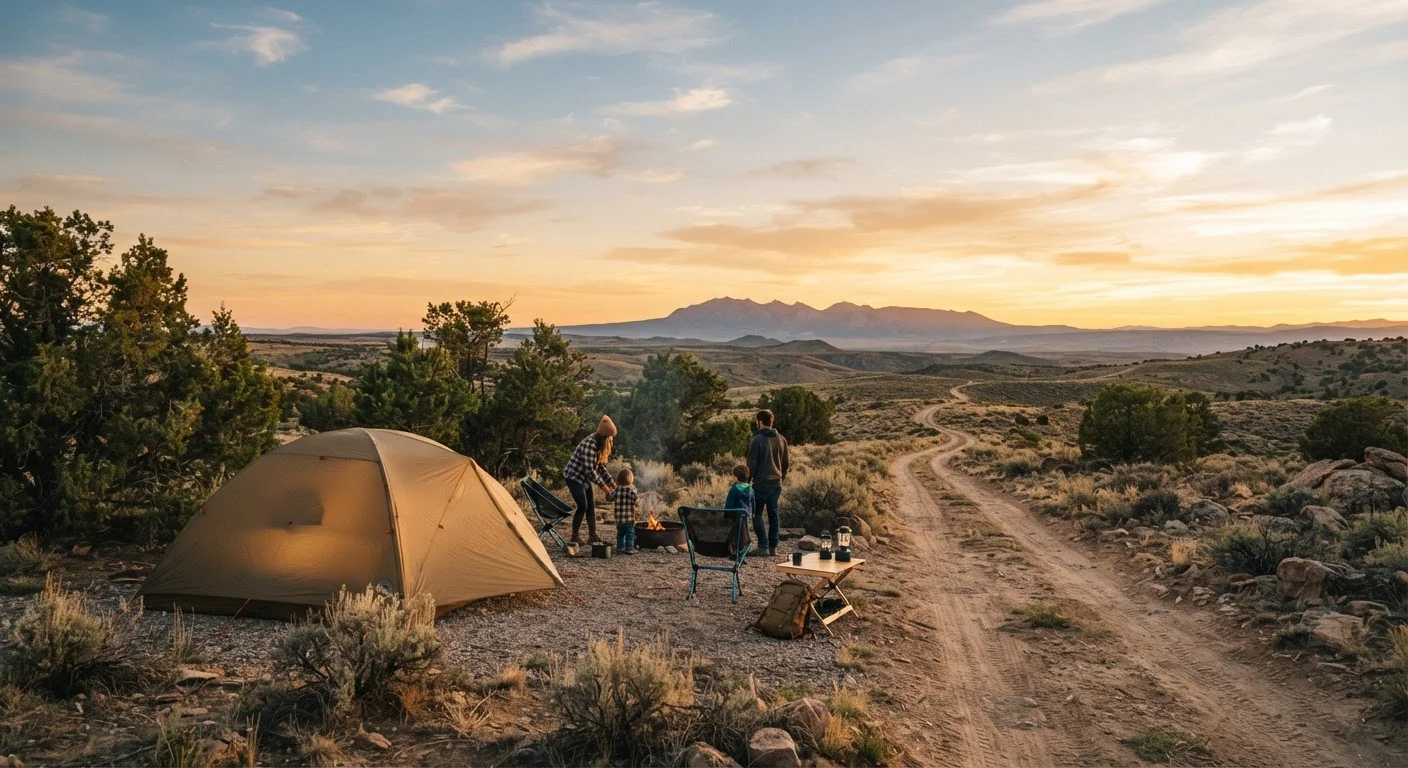
Lodging is typically the second-largest expense after fuel, and it's also one of the most negotiable. Campgrounds-particularly those managed by state parks or the Army Corps of Engineers-offer some of the most affordable overnight options in the country, often with clean restrooms, playgrounds, and picnic areas that kids genuinely love.
If camping isn't right for your family, look for economy motels that include a small kitchenette or microwave and refrigerator. Being able to store leftovers and heat breakfast saves meaningfully over the course of a week. Booking mid-week nights rather than weekends also tends to reduce nightly rates at most properties.
Whatever you choose, confirm the amenities directly-pool access, breakfast inclusion, and pet policies aren't always accurately reflected in third-party listings. Call ahead when in doubt. And be honest about what your kids actually need for a good night's sleep: a quiet room matters more than a fancy lobby.
Feeding the Family on the Road
Food is where many family road trip budgets quietly fall apart. Restaurant meals for four or five people add up fast, especially when you factor in drinks, tips, and the inevitable kid who won't eat what was ordered. The single most effective counter-strategy is packing a well-stocked cooler before you leave.
Bread, deli meat, cheese, fruit, cut vegetables, yogurt, and hard-boiled eggs cover most meals and snacks without requiring cooking. Grocery stores along your route let you restock without detours-plan a quick stop every two days. This approach can realistically cut your daily food spending in half compared to eating out every meal.
That said, one or two sit-down meals at local diners or family-owned spots can be a genuine highlight of the trip and a reasonable budget allocation. The goal isn't deprivation-it's intention. Decide in advance which meals are worth paying for and which are better handled from the cooler. Also check our piece on road trip myths families believe for a reality check on snack-packing assumptions.
Keeping Kids Entertained Mile After Mile
Bored kids escalate costs fast-they're the reason families stop at every roadside attraction and gift shop. The fix is a simple activity rotation plan built before you leave. Give each child a personal backpack packed with their own supplies: a notebook, colored pencils, a small puzzle, a chapter book, or an activity kit. Ownership over the bag reduces negotiating.
Supplement with group games that don't require screens: the license plate game, 20 questions, storytelling rounds, or audiobooks the whole family can follow. Plan a movement stop every 90-120 minutes at a park, rest area with a trail, or anywhere kids can run freely for 15 minutes. Those stops reset everyone-adults included.
Free or low-cost activity stops make the trip itself the destination, not just the endpoint. State park visitor centers, historic sites with junior ranger programs, and local playgrounds in small towns are reliable hits. For more ideas on where to take the whole crew, browse our family destinations hub for US spots suited to all ages. And if you want a solo travel comparison to see how differently these trips can be structured, our first solo weekend trip guide offers a useful contrast.