The Real Numbers: What Each Option Actually Costs Per Night
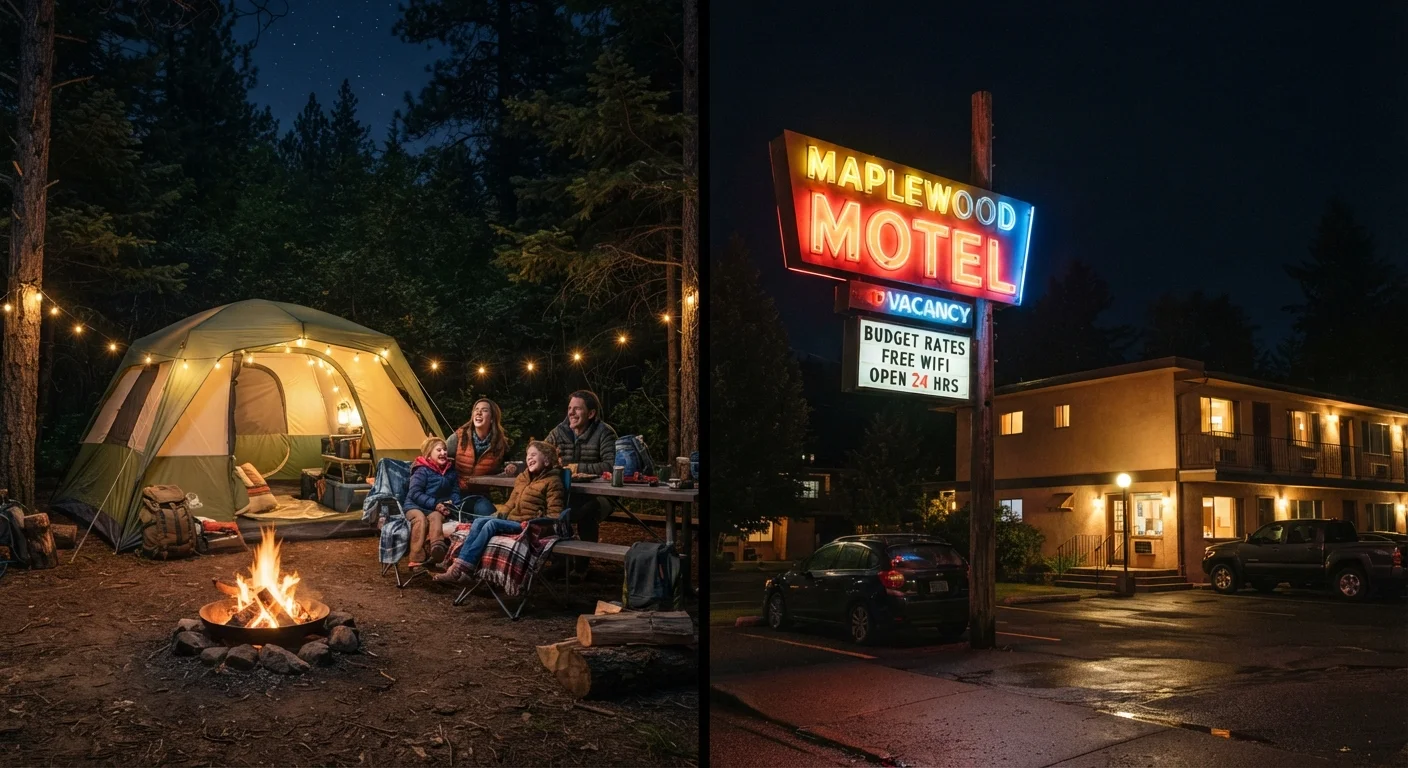
Let's start with the sticker price. Budget motels along popular US road trip corridors generally run between $60 and $110 per night for a family room, depending on location and season. That price includes a bed, a bathroom, Wi-Fi, and often a basic breakfast - all without any prep work on your part.
A developed campsite at a state or national park typically costs $20 to $45 per night. On the surface, that's a significant difference. But tent camping's true cost includes more than the nightly fee. If you're building a kit from scratch - tent, sleeping bags, sleeping pads, a lantern, a camp stove, and cookware - you're looking at $300 to $700 or more in upfront investment. Even buying secondhand, that's real money.
For families who already own solid gear, camping can save $40 to $70 a night compared to budget motels. Over a 7-night trip, that's potentially $280 to $490 in savings - genuinely meaningful for a household budget. But if you're purchasing gear for the first time, you likely won't break even until your second or third trip.
For a fuller picture of where lodging fits among your total travel expenses, see our breakdown of family road trip costs.
| Criterion | Tent Camping | Budget Motels |
|---|---|---|
| Average nightly cost | $0-$45 (site fee only) | $60-$110 per room |
| Upfront gear investment | $300-$700+ if starting fresh | None required |
| Private bathroom access | Rarely; shared facilities | Always included |
| Weather dependency | High - rain and cold disrupt plans | None - climate controlled |
| Setup time per night | 30-60 minutes | Under 5 minutes |
| Geographic availability | Limited near cities and interstates | Available almost everywhere |
| Meal savings potential | High - cook your own food | Low - reliant on restaurants |
| Best savings scenario | Existing gear + free public land | Short trip, no gear owned |
Hidden Costs That Shift the Balance
Neither option is as simple as its nightly rate suggests. Camping comes with costs that don't appear on the campground receipt. Firewood at most developed sites runs $8 to $12 a bundle. Camp meals require groceries, a stove, fuel canisters, and time - though cooking your own food does save money compared to eating out. Don't forget the wear on your gear: sleeping bags lose loft, tent poles break, and air mattresses develop slow leaks.
Budget motels have their own surprises. Pet fees, parking charges in urban areas, and resort fees at certain properties can add $15 to $30 to the advertised rate. And if the motel is far from your planned stops, you may burn extra fuel getting there and back.
$35/night
Average developed campsite fee, US state parks
Based on published fee schedules from multiple state park systems; fees vary significantly by state and site type.
$85/night
Median budget motel rate, US road trip corridors
Reflects general pricing patterns for economy-tier lodging along major US highway routes; rates fluctuate by season and location.
3 trips
Approximate break-even point for new camping gear
A family spending $450 on a starter gear kit and saving $50/night over 3 nights per trip would recoup costs by the third outing.
One overlooked wildcard: location access. Campgrounds aren't everywhere. If your route runs through cities or flat interstate corridors, you may struggle to find a campsite within a reasonable detour. Motels win on sheer geographic availability. Conversely, if you're routing through the Appalachians, Ozarks, or mountain West, free and low-cost campgrounds can be remarkably easy to find.
It's also worth questioning assumptions. Our guide on road trip myths that drain your budget covers several common planning errors - including the belief that camping is always cheaper regardless of context.
Comfort, Convenience, and the Cost of a Bad Night's Sleep
Money isn't the only metric. A night of poor sleep because of rocky ground, unexpected rain, or a neighbor's generator at 2 a.m. has real consequences for a family driving hundreds of miles the next day. Budget motels offer a controlled environment: consistent temperature, private bathrooms, and a real mattress. For families with young children or anyone with physical limitations, that reliability has genuine value.
Camping, on the other hand, offers something motels can't: the experience itself. Many families find that the campfire, the night sky, and the morning birdsong are exactly the kind of memory they came for. That's not a minor thing - it's often the point of the trip.
The honest answer is that comfort preferences are personal and shouldn't be ignored in your cost calculations. A family that sleeps poorly while camping might compensate by stopping for a restaurant breakfast, buying extra coffee, or checking into a motel mid-trip anyway - erasing the savings entirely. For a side-by-side look at how different accommodation styles shape the overall trip experience, our article on matching accommodation to the trip you actually want is worth a read.
A Hybrid Approach Often Works Best
Many experienced road trip families don't choose exclusively between camping and motels - they mix both strategically. Camping through scenic stretches of public land keeps costs down, while motel nights in or near cities provide rest and easy access to attractions. Planning your itinerary with both options in mind gives you flexibility without locking you into one mode for the entire trip.