Why Accommodation Is a Trip Decision, Not Just a Booking
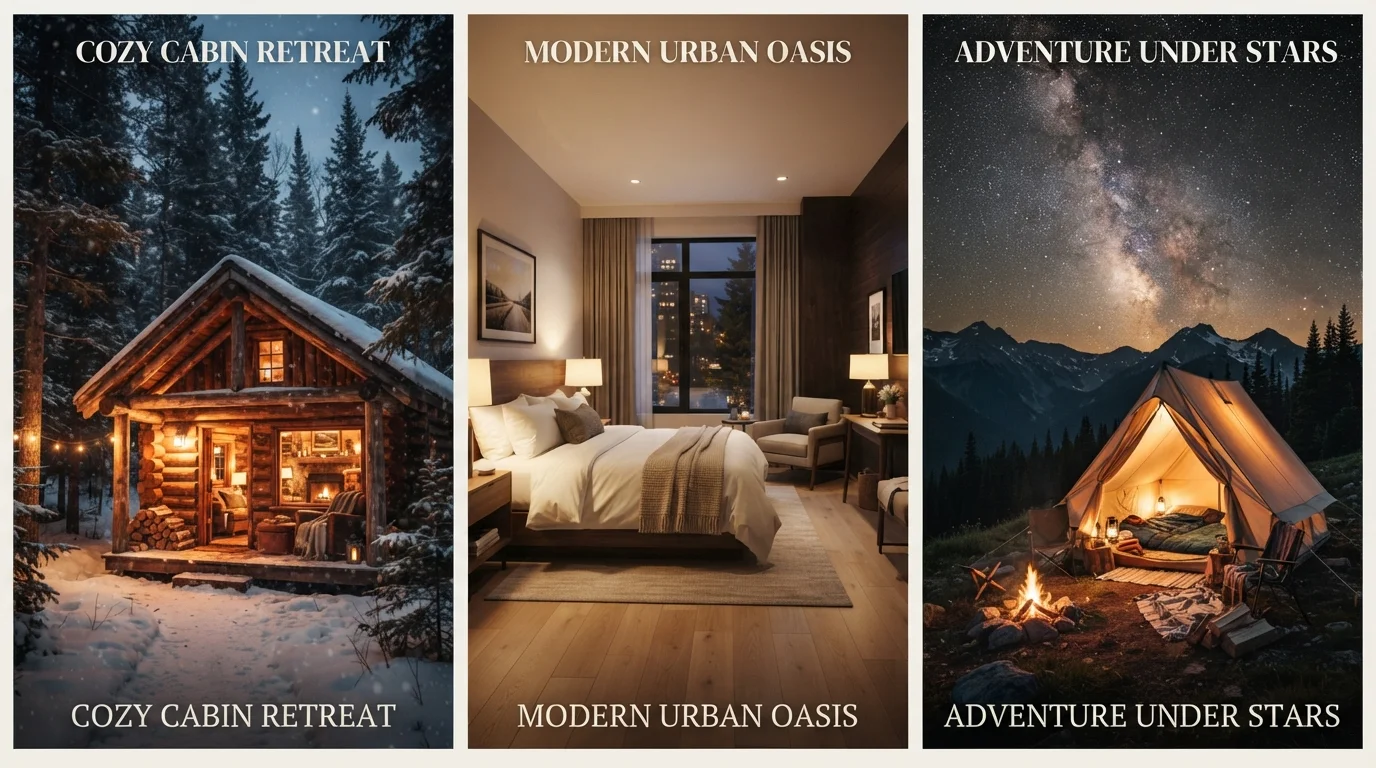
Most travelers pick lodging after they've already chosen a destination. That's backwards. Whether you wake up in a cabin loft, a hotel room with blackout curtains, or a tent with birdsong at 5 a.m. shapes what your trip actually feels like - the pace, the activities, the meals, and how rested you feel driving home.
This matters especially on short getaways. A two-night trip doesn't give you time to adjust. If your accommodation doesn't match your energy and expectations going in, the whole weekend can feel off. Think about what you want to do - and more importantly, what you want to feel - before you search for somewhere to stay. See our guide to weekend getaway types for a broader framework on planning short-stay travel.
Cabin Rentals: Comfort With a Natural Edge
Cabin rentals have grown significantly as a lodging category. They range from bare-bones A-frames near state parks to fully furnished mountain homes with hot tubs and fiber internet. That range is both a strength and a potential source of confusion.
The core appeal: a cabin typically gives you a private kitchen, more square footage than a hotel room, and a setting removed from dense population - without requiring you to sleep on the ground. For families with kids or groups splitting costs, cabins often pencil out more favorably per person than booking multiple hotel rooms.
The trade-offs are real, though. Cabin rentals are rarely last-minute friendly, cleaning fees can add substantially to the advertised rate, and you're usually responsible for your own meals and entertainment planning. If you're pairing a cabin with a specific landscape, comparing mountain vs. coastal settings can help you narrow your search area first.
Check the Cleaning Fee Before You Commit
Cabin rental platforms often list attractive nightly rates that balloon once fees are added at checkout. Always look at the total cost for your entire stay - including cleaning fees, service charges, and any required deposits - before comparing against hotel or campground rates. A cabin that appears cheaper per night may end up costing more for a two-night trip.
Hotels: The Friction-Free Standard
Hotels remain the default for good reason. Check-in is simple, amenities are predictable, and if something breaks or bothers you, there's a front desk. For weekend trips where the destination itself - a city, a theme park, a coastline - is the point, a hotel keeps logistics out of the way.
Business-adjacent travel, solo trips, and short urban getaways almost always favor hotel stays. You're not cooking, you're not coordinating supplies, and you're typically closer to restaurants, transit, and whatever brought you there in the first place.
The cost per night is often higher than camping and comparable to mid-range cabin rentals, but the predictability has real value. Budget hotel options exist in nearly every market; the trade-off is typically smaller rooms and fewer amenities rather than a meaningfully worse experience. See how budget motels compare to camping on a road trip if cost is your primary driver.
| Cabin Rental | Hotel | Camping | |
|---|---|---|---|
| Typical cost per night (group) | Moderate to high; splits well | Moderate per room | Low, plus gear costs |
| Booking lead time needed | Weeks to months ahead | Days to last-minute | Days to weeks; permits vary |
| Meal preparation | Kitchen usually included | Dining out or room service | Cook your own or pack in |
| Privacy and space | High; private property | Low to moderate | Variable; campground density varies |
| Weather dependency | Low | Very low | High |
| Best group size | 4-10 people | 1-4 people | 2-6 people with gear |
| Setup effort on arrival | Minimal | None | Significant |
Camping: The Outdoors as the Point
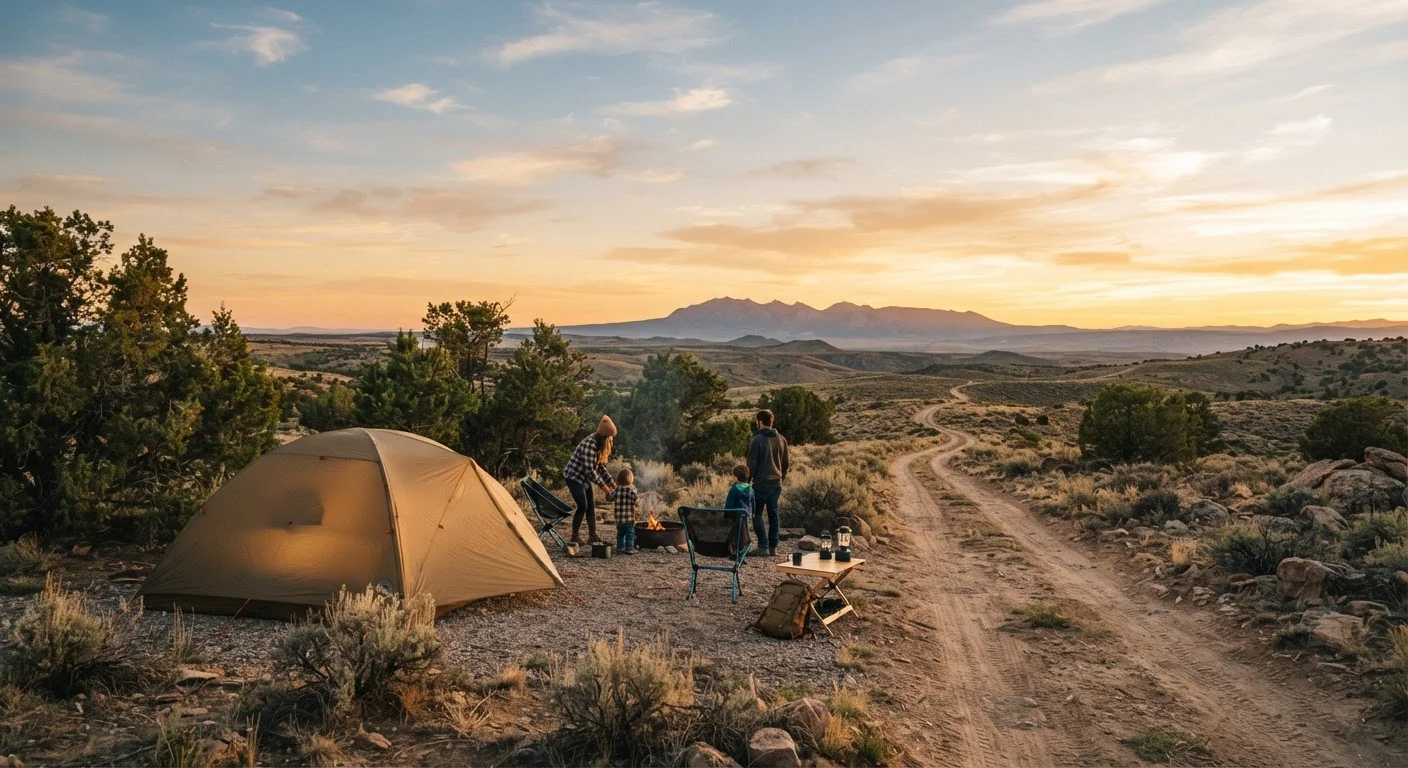
Camping is the only accommodation type that is itself an activity. You're not just sleeping somewhere - you're building a temporary home, managing your own food and comfort systems, and opting into the full sensory experience of wherever you are. That's a profound thing for some travelers and an exhausting overcomplication for others.
Tent camping at established campgrounds can be genuinely affordable, but it's rarely as cheap as it looks once you factor in gear, food prep, and any permit or reservation fees. Families new to camping should weigh those startup costs honestly. Family-friendly destinations worth visiting often have campgrounds with accessible facilities that reduce some of that friction for first-timers.
Glamping (furnished tent or yurt camping with amenities) sits between camping and cabin-rental in both cost and comfort. It's worth considering if the outdoor setting appeals but sleeping on a mat doesn't.
Weather, seasonality, and physical preparation all matter more with camping than with any other accommodation type. For terrain-specific considerations, beach vs. mountain settings for families covers how each environment affects trip planning.
How to Match Lodging to Your Actual Trip Goals
Ask yourself three questions before booking anything:
- What do I want to do most? If hiking, fishing, or stargazing is the point, a cabin or campsite keeps you close to it. If museums, dining, or a concert drove the trip, a hotel makes more sense.
- Who's coming? Larger groups and families with kids typically benefit from cabin kitchens and shared living space. Solo travelers and couples often do better in a hotel with fewer logistics.
- How much energy do I want to spend on logistics? Hotels require almost none. Cabins require some planning. Camping requires meaningful preparation, especially for multi-night stays.
Getting to your destination is a separate question - driving vs. flying for a weekend away covers that decision in detail, which can also influence which accommodation types are practically accessible from your starting point.
62%
Americans who camped at least once in recent years
According to the Outdoor Foundation's Outdoor Participation Trends Report, over 60% of Americans participated in some form of camping, reflecting broad mainstream interest.
2-3x
More square footage in a cabin vs. hotel room
Industry lodging data consistently shows that even modest cabin rentals offer significantly more living space than standard hotel rooms.