
What Sets the Gulf Coast Apart for Families
When families picture a beach vacation, the Gulf Coast rarely tops the list. Florida's theme park corridor, the Carolinas, and even Hawaii tend to steal the spotlight. But for families with young children especially, the Gulf has a quiet argument that's hard to dismiss: the water itself.
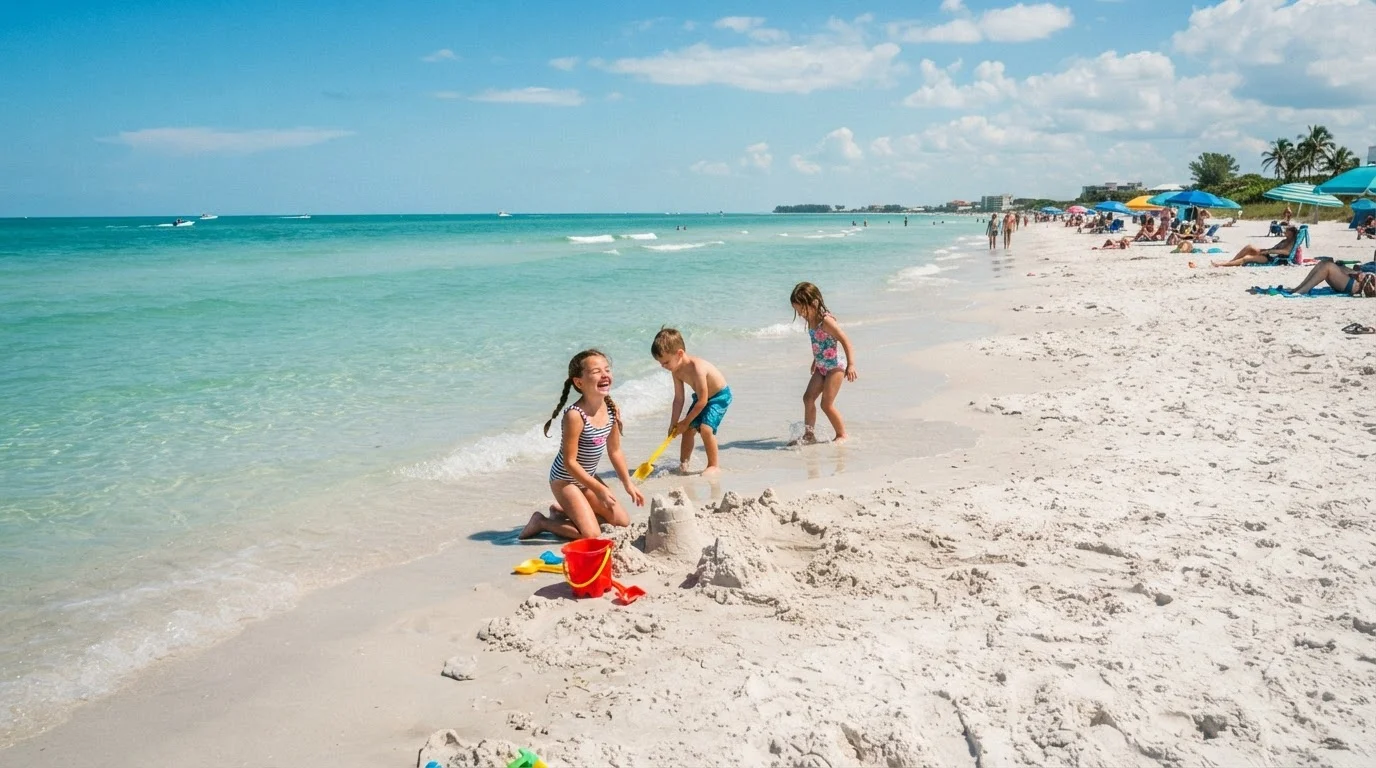
Gulf of Mexico water is typically calmer, warmer, and shallower close to shore than beaches on the Atlantic or Pacific. That means toddlers can wade without getting knocked over, parents spend less time in rescue mode, and everyone has more fun. The seafloor near many Gulf beaches slopes gradually, so kids can walk out surprisingly far while still in safe, manageable depth.
The region also stretches across five states-Florida's Panhandle, Alabama, Mississippi, Louisiana, and Texas-each with its own personality. Pensacola and Destin offer sugar-white sand and clear water. Gulf Shores, Alabama remains genuinely low-key. Galveston, Texas pairs beach access with a compact historic district and family-friendly attractions. If you want to understand how Gulf Coast travel compares more broadly to mountain or Atlantic alternatives, this breakdown of beach towns vs. mountain retreats lays out the tradeoffs clearly.
Calm, shallow water safer for young children
The Gulf's gradual seafloor slope and typically gentle wave action make shoreline play far more manageable for toddlers and early swimmers than the Atlantic or Pacific coasts.
Warmer water temperatures extend the swim season
Gulf water temperatures frequently reach the low-to-mid 80s°F in summer, and remain comfortable into October along many stretches-longer than most East Coast beaches.
Generally lower cost than competing coastal destinations
Many Gulf Coast towns-particularly in Alabama and Mississippi-offer lodging and dining at price points noticeably below equivalent East Coast beach resorts, though this varies by location and season.
Diverse experiences across five states
From the emerald-clear Panhandle to the culture-rich Texas Gulf, families can find meaningfully different experiences along the same general coastline without crossing a single state line twice.
Relaxed, uncrowded pace at many destinations
Outside of peak summer holidays, Gulf Coast beach towns tend to feel noticeably less congested than comparable spots in Florida's Atlantic corridor or the Outer Banks.
The Real Drawbacks Worth Knowing
No destination earns a fair assessment without honest downsides, and the Gulf Coast has several that families should take seriously.
The most significant is timing. Gulf Coast hurricane season runs June through November, overlapping directly with peak summer vacation windows. Storms can cancel trips with little notice. Families who plan Gulf trips during this stretch should understand their cancellation policies and consider whether travel insurance makes sense for their situation-though that's a decision worth discussing based on your own circumstances.
Summer heat is also intense. Temperatures and humidity levels along the Gulf in July and August can genuinely limit outdoor activity to early morning and late afternoon hours. For families with young children who overheat quickly, this deserves real consideration.
Jellyfish blooms appear periodically, particularly in late summer, and can turn a perfect beach morning into an uncomfortable retreat. Seagrass washes ashore seasonally at certain stretches, affecting the look and feel of the water. And some Gulf beaches-particularly in Louisiana and parts of Texas-have murkier water than the postcard-clear scenes associated with Florida's Panhandle.
Hurricane season overlaps with peak summer travel
The Atlantic hurricane season (June-November) creates real disruption risk for Gulf trips. Storms can develop rapidly, and families should understand their options before committing to non-refundable bookings.
Extreme summer heat limits outdoor activity windows
Gulf Coast humidity and heat in July and August can make midday beach time genuinely uncomfortable, particularly for young children. Families may find themselves restricted to early morning and evening hours.
Jellyfish and seagrass seasonally affect water quality
Jellyfish blooms-most common in late summer-and periodic seagrass washups can interrupt beach days without warning. Conditions vary significantly by location and year.
Water clarity varies widely by location
While Florida's Panhandle is known for its clear turquoise water, stretches of the Texas and Louisiana Gulf Coast can have considerably murkier conditions, which may disappoint families with high visual expectations.
For guidance on evaluating whether any destination actually fits your family's specific needs, this piece on what 'family-friendly' really means offers a useful framework.
Planning a Gulf Coast Trip That Actually Works
Timing is the single biggest lever families can pull. Late April through early June offers warm water, lower humidity, smaller crowds, and no hurricane threat. September and October can also work well if you monitor forecasts and book flexible accommodations-water is still warm, and summer crowds have thinned considerably.
Check Conditions Before You Book
Beach conditions on the Gulf Coast-including jellyfish activity, seagrass levels, and water clarity-can vary significantly from week to week and between stretches of coast just miles apart. Many Gulf Coast county and state park websites post current beach condition reports. Checking these resources closer to your travel dates helps set realistic expectations and avoids unpleasant surprises.
When choosing a stretch of Gulf Coast, match your priorities to the destination. If clear water and white sand are non-negotiable, focus on Florida's Panhandle or Alabama's Gulf Shores. If you want a destination with more urban amenities and cultural depth nearby, Galveston's proximity to Houston opens options. Louisiana's Grand Isle is remote and rugged-rewarding for families who want solitude over services.
Families doing shorter trips can make the Gulf work efficiently. The relatively low-key pace of most Gulf towns means you don't need a packed itinerary to have a good visit. For practical ideas on maximizing shorter family escapes, this guide to short family getaways is worth a read before you start booking.
5 states
States with Gulf Coast beachfront access
Florida, Alabama, Mississippi, Louisiana, and Texas each offer distinct Gulf Coast experiences, giving families meaningful variety within a single travel region.
~84°F
Average Gulf water temp in peak summer
NOAA data indicates Gulf of Mexico surface temperatures commonly reach the low-to-mid 80s°F along the northern Gulf Coast during July and August, warmer than most Atlantic beaches.
The Gulf Coast won't dazzle everyone. If your family craves dramatic scenery, surf culture, or theme-park density, other regions may serve you better-compare notes with this look at Florida versus California for context. But for families who want calm water, warm temperatures, and a beach trip that doesn't feel like a logistics marathon, the Gulf delivers more than its modest reputation suggests.