Start with the Right Distance
The biggest planning mistake families make is treating a weekend trip like a scaled-down vacation. With kids, travel time isn't neutral - it consumes patience, energy, and goodwill before you've even arrived. For a Friday-to-Sunday window, a destination within 90 to 150 miles of home is a practical sweet spot for most families. That range keeps the drive under two and a half hours, leaves Saturday morning free, and doesn't require anyone to skip Friday school or work.
If flying feels tempting, weigh the full time cost honestly. Check-in, security, boarding, and baggage claim can eat three to four hours round-trip even on short regional routes. Our comparison of road trips versus flying walks through how to make that call based on your family's specific situation. For many families with toddlers or early elementary-age kids, driving simply offers more flexibility and fewer pressure points.
Look at your regional map and identify state parks, small cities, lakefront towns, or historic areas within your target radius. Our Family Destinations hub highlights US options worth considering across different regions. Proximity also means you can leave earlier or later than planned without the trip unraveling entirely.
2 hrs
Recommended maximum drive time for young children
Child development and family travel researchers generally suggest keeping single driving legs under two hours to minimize fatigue and restlessness in children under age 10.
1 in 3
Families who report post-trip exhaustion from over-scheduling
Travel behavior surveys consistently find that families who pack too many activities into short trips report feeling more tired after returning than before they left.
Build an Itinerary with Room to Breathe
A schedule that looks sensible on paper often collapses by 10 a.m. on Saturday. Kids need transition time, snack breaks, and occasional do-nothing stretches that adults rarely plan for. The most effective family weekend itineraries identify one or two anchor activities per day - a nature trail, a children's museum, a beach morning - and treat everything else as optional.
This approach requires letting go of the idea that more activities equal a better trip. Overpacking a short trip is one of the fastest routes to exhaustion, which is the opposite of what any parent wants to bring home Sunday night. For a deeper look at structuring two-day getaways around actual recovery, our article on how to actually decompress on a short trip offers a practical framework.
Build in meal timing that matches your children's hunger rhythms, not restaurant wait times. Eating 30 minutes before kids get visibly hungry prevents a predictable cascade of complaints. Always identify a nearby backup lunch spot so you aren't scrambling when the first choice has a 45-minute wait.
The "One Anchor Activity" Rule
Resist the urge to schedule back-to-back attractions on a weekend trip with kids. Identify one meaningful activity per day - a hike, a museum, a beach morning - and let the rest of the day flow naturally. Children (and adults) often remember the unplanned moments most vividly: the ice cream stop, the unexpected playground, the long conversation in the car.
Pack Smart, Not Extensively
Overpacking is its own form of stress - heavy bags, forgotten items buried under too much gear, and the mental load of managing it all. A useful rule: lay out everything you plan to bring, then remove one-third of it. For a two-night trip, kids generally need two outfits plus one backup, sleepwear, and weather-appropriate layers. Extras can almost always be washed or purchased locally.
What does deserve dedicated space is a small activity kit for transit: a few small toys, a coloring book, downloaded shows or audiobooks, and a simple snack pouch. These items reduce parent stress during the journey itself far more than extra clothing does. Our family packing checklist covers the categories worth thinking through before you zip the bag.
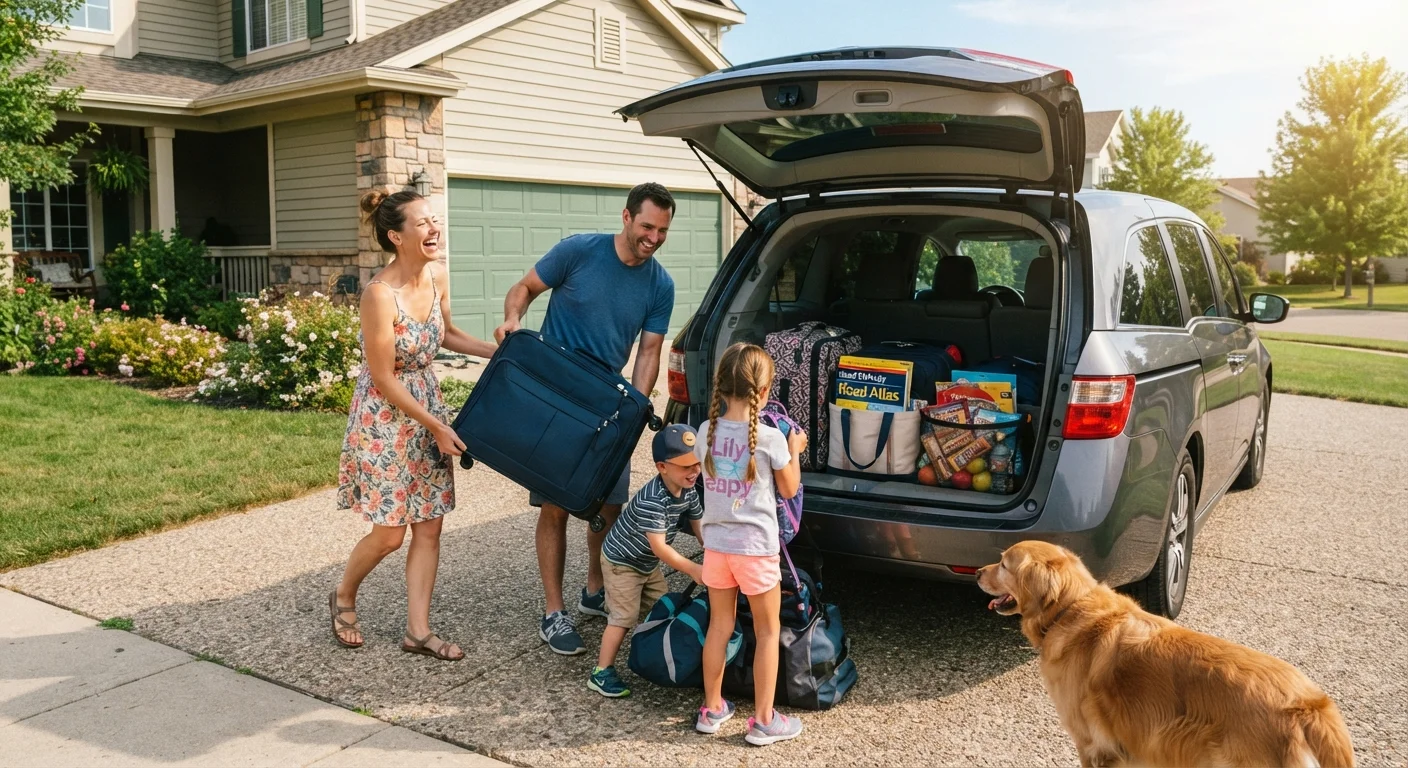
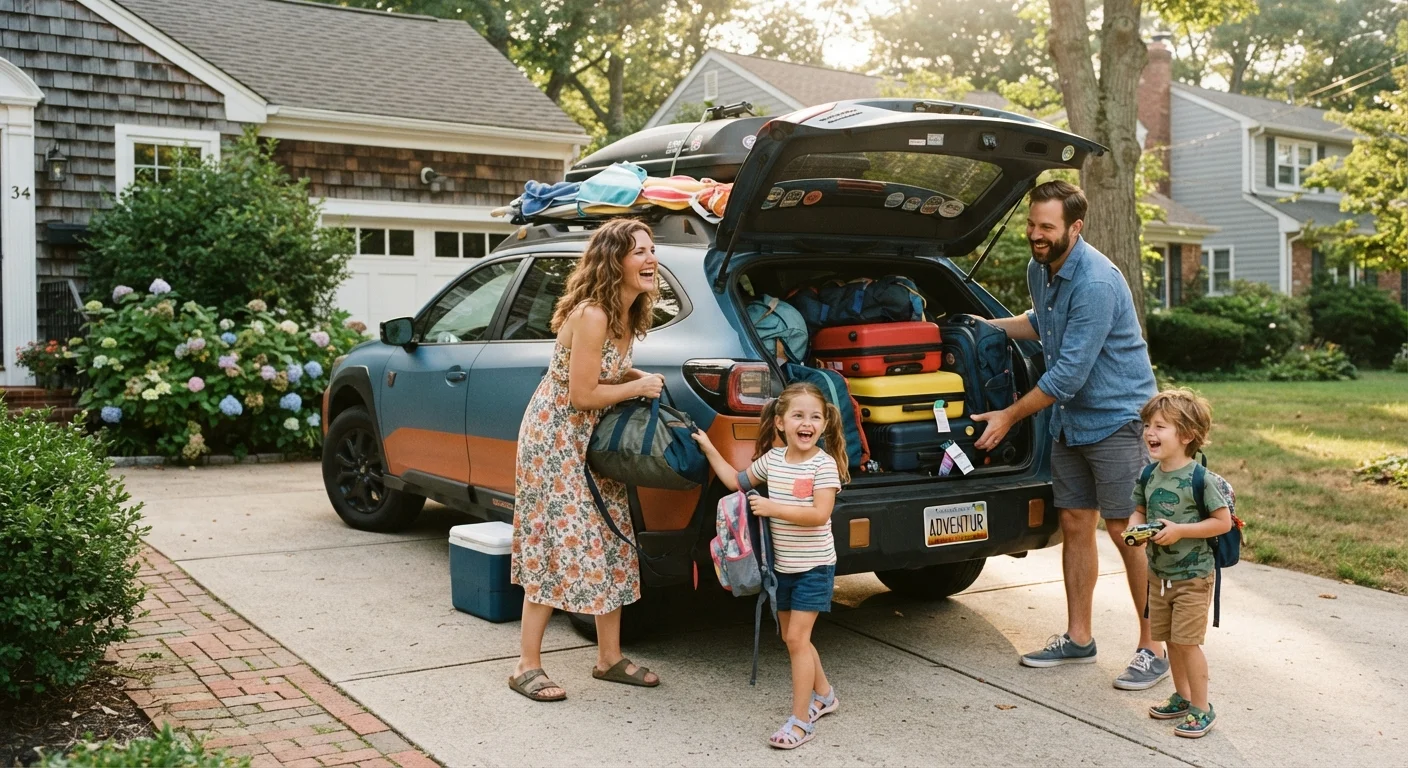
If you're driving, organize the car the night before so Friday's departure doesn't start with a frantic loading session. A calm, on-time start sets the emotional tone for the whole weekend.
Choose accommodations with a kitchen or kitchenette whenever possible.
Having space to prepare simple meals - especially breakfast - reduces the logistical load significantly. Restaurant meals with young children three times a day drain time, money, and patience fast.
Set a firm departure time and prep the night before.
Delayed starts compress the whole trip and create pressure that carries into the first hours of travel. Packing the car and laying out clothing the evening before removes the chaos of morning loading.
Build a 30-minute buffer into every transit leg.
Unexpected stops - bathroom breaks, a crying toddler, wrong turns - are near-certain on family trips. Planning for them prevents lateness from compounding into frustration.
Identify a quiet fallback activity in case a planned outing doesn't work.
Attractions close unexpectedly, weather changes, and kids sometimes simply aren't in the right headspace. Having a low-key backup - a park, a pool, a local bakery - keeps the day from feeling derailed.
Involve Kids Without Handing Over the Wheel
Children who feel included in a trip are measurably easier travel companions. That doesn't mean kids choose the destination or set the schedule - it means giving them meaningful but bounded choices. Ask a seven-year-old whether they'd rather visit the nature center or the playground on Saturday afternoon. Let an older child pick Saturday's dinner spot from two pre-approved options. These small decisions create ownership without ceding control over the parts that actually matter.
Before the trip, share a simple version of the plan. Show kids a map, name the destination, describe one activity they'll enjoy. Anticipation is its own form of engagement and often reduces the "are we there yet" spiral. If your kids are old enough, a small trip journal or photo challenge can give them a personal stake in the experience.
For families considering longer or more complex family trips, our multi-stop US family road trip guide applies similar principles at greater scale. And if you're weighing the tradeoffs of traveling during quieter times of year, our piece on off-season family travel offers an honest look at what you gain - and what you give up. Weekend trips don't need to be elaborate to be restorative. With the right structure, even 48 hours away can genuinely reset a family's energy.