Why Tyre Pressure and Fuel Economy Are Directly Linked
Every time an under-inflated tyre rolls, it flexes more than it should. That extra flexing generates heat and internal friction - energy that comes straight from your fuel tank instead of moving the vehicle forward. The relationship is straightforward: lower pressure, higher rolling resistance, more fuel burned per mile.
The U.S. Department of Energy has published estimates suggesting that for every 1 PSI (pound per square inch) drop below the recommended level across all four tyres, fuel economy decreases by roughly 0.2%. That sounds small in isolation. But consider that the average driver runs their tyres several PSI low without realising it, across tens of thousands of miles per year.
This is one of the most overlooked factors covered in Everything That Quietly Drains Your Fuel Economy - because the loss is gradual and invisible until you're staring at a gas receipt and wondering where it went.
~0.2%
Fuel economy lost per 1 PSI under-inflation
Estimated by the U.S. Department of Energy based on rolling resistance data across tyre types.
1 PSI/month
Natural tyre pressure loss rate
Tyres lose approximately 1 PSI per month under normal conditions, independent of punctures or damage.
25%
Pressure deficit before TPMS alert triggers
Most factory-installed Tyre Pressure Monitoring Systems only warn drivers when pressure falls 25% below the recommended spec.
Reading the Numbers Correctly
One of the most common mistakes drivers make is inflating their tyres to the pressure number printed on the tyre's sidewall. That figure - often around 50-51 PSI - is the maximum structural pressure the tyre can hold, not the operating target. Running at that level will actually cause problems of its own: accelerated centre tread wear, a rougher ride, and reduced wet-weather grip.
The correct pressure for your vehicle is found in two places: the sticker on the inside edge of the driver's door jamb, or the owner's manual. Front and rear tyres sometimes have different recommended pressures, so check both. For more context on how pressure fits into the broader picture of tyre care, see Tyre Pressure, Tread, and Rotation: What Every Driver Should Know.
Match Pressure to the Door Sticker, Not the Tyre
The number moulded into your tyre's sidewall is the maximum the tyre can safely hold - not your target. Always inflate to the pressure specified on the driver's door jamb sticker or in the owner's manual. Front and rear axles sometimes call for different pressures, so verify both before adding air.
How to Check Pressure and When to Do It
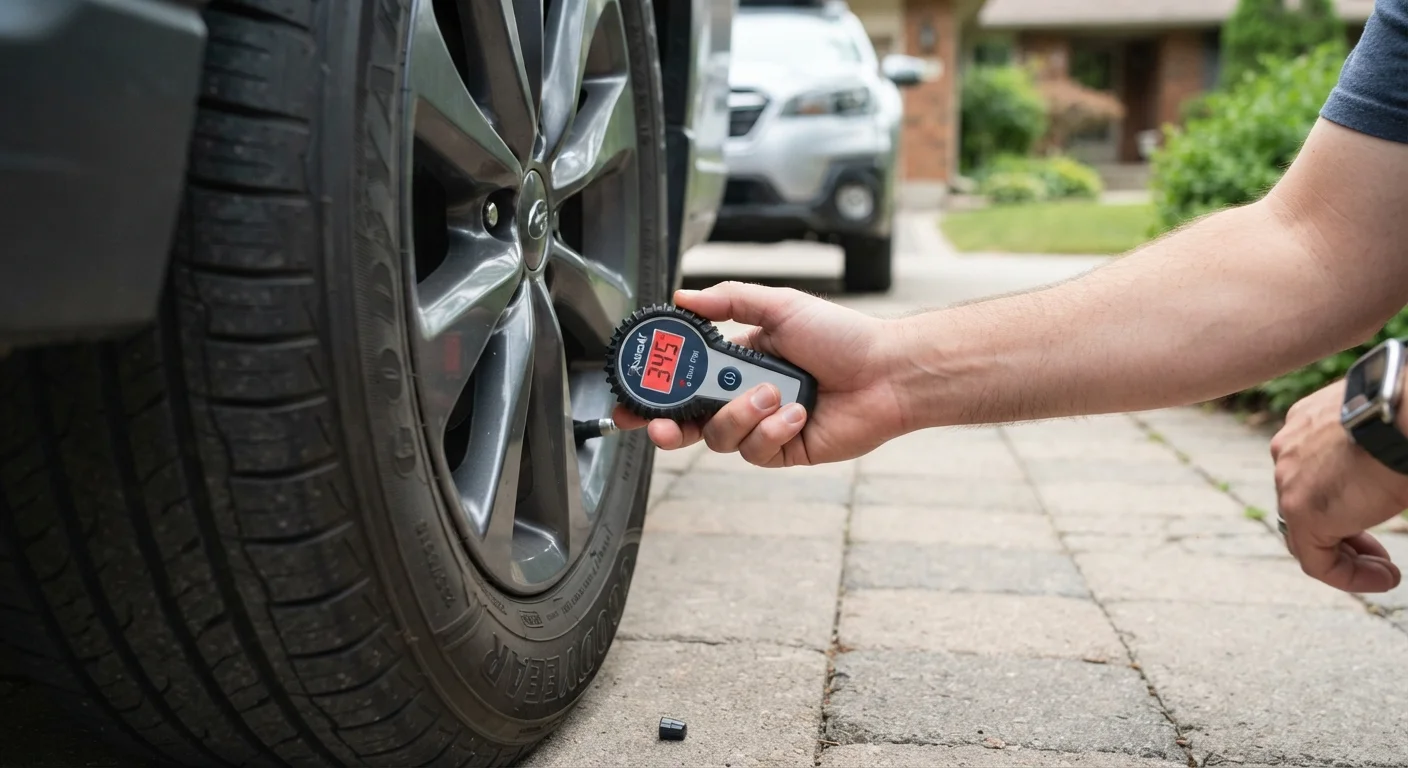
Tyre pressure should be checked when tyres are cold - meaning the car has been parked for at least three hours, or driven fewer than a mile at low speed. Driving heats the air inside tyres, temporarily raising the pressure reading and giving you a falsely optimistic number.
Use a quality manual or digital gauge rather than relying solely on your vehicle's TPMS dashboard warning. Most TPMS alerts don't trigger until pressure is already 25% below the recommended level - a point where fuel economy and safety are both compromised. A basic gauge is inexpensive and accurate enough for regular use.
Check all four tyres, and don't forget the spare if your vehicle carries a full-size one. Record the readings and compare them to the door-jamb specification. Add air at a gas station pump or home compressor in small increments, rechecking as you go.
Making this part of a monthly routine - alongside the pre-trip checks outlined in Before You Hit the Road: A Driver's Efficiency Check - keeps your vehicle in its efficient range without any guesswork.
Seasonal Pressure Drops and the Cold Weather Factor
Tyre pressure isn't static. Tyres naturally lose approximately 1 PSI per month under normal conditions. Cold weather compounds this: pressure drops roughly 1 PSI for every 10°F fall in ambient temperature. Tyres that were correctly inflated at 60°F can read 4-5 PSI low on a 20°F winter morning - without any leak or damage involved.
This seasonal drift means autumn is the most important time to establish a checking habit. Drivers who inflate correctly in September and don't check again until spring may be running significantly under-inflated through the coldest, fuel-intensive months of the year.
The compound effect of low pressure on both fuel costs and tyre longevity is part of why Tyre Costs Are Higher Than Most Drivers Expect - uneven wear from chronic under-inflation shortens tyre life and pushes replacement costs forward on the calendar.