The Gap Between What Drivers Budget and What They Actually Pay
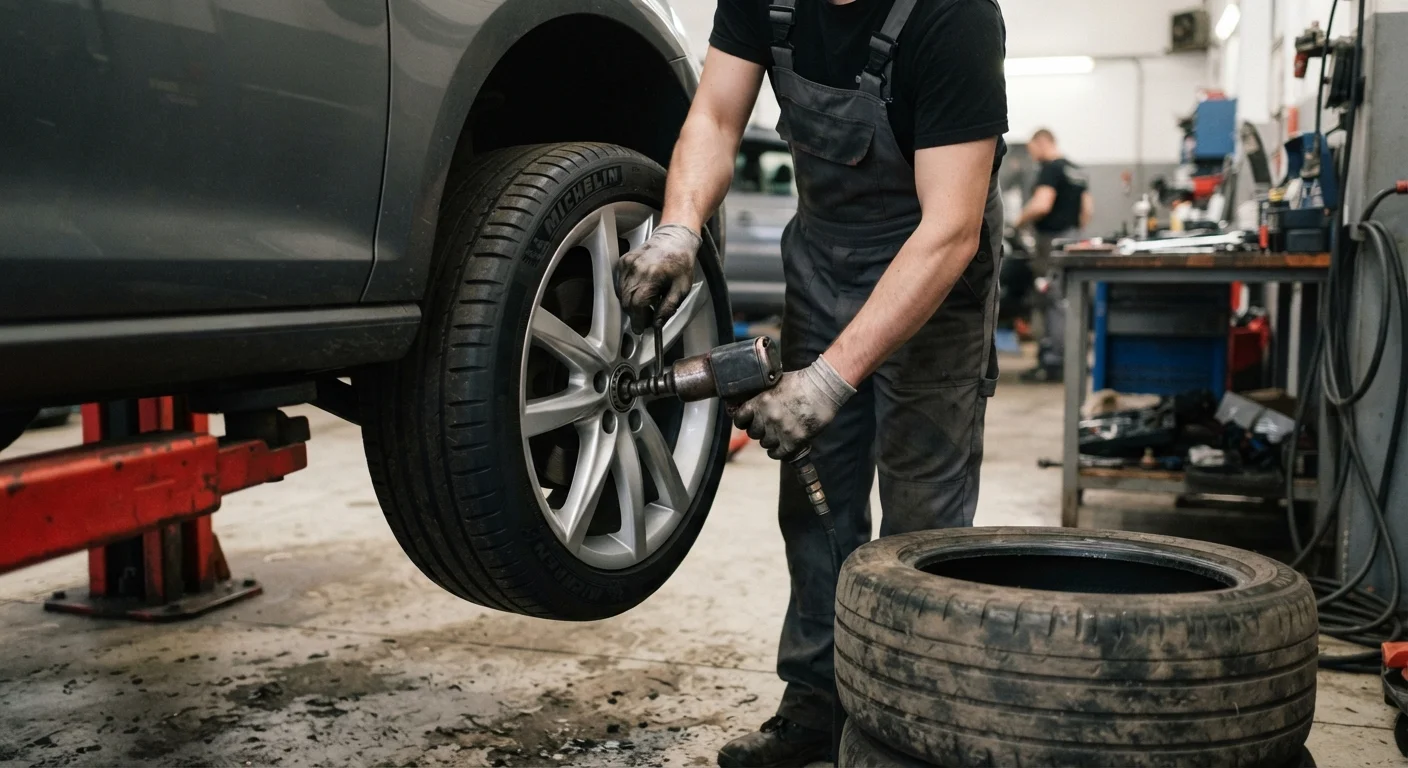
Ask most drivers what a tyre costs and they'll quote you the shelf price - somewhere between $80 and $200 per tyre depending on size and type. What they rarely factor in is everything else that shows up on the final invoice: mounting and balancing ($10-$20 per tyre), valve stem replacement ($3-$10 each), tyre disposal fees ($2-$5 per tyre), and TPMS sensor resets when required. On a full set of four, those line items routinely add $60-$120 before you've driven off the lot.
This gap between expected and actual cost is one of the most consistent patterns in household vehicle budgeting. Drivers treat tyre replacement as a one-line expense when it's closer to a small project. Common car ownership misconceptions like this one are precisely what turns a manageable maintenance schedule into a budget blowout.
$600-$1,000+
Typical cost to replace a full set of four passenger tyres
This range reflects mid-grade tyres plus installation fees; SUV and truck sizes frequently exceed this range.
25%
Potential tyre life reduction from chronic underinflation
Industry estimates suggest running tyres consistently underinflated can reduce usable tread life by roughly 25% or more depending on severity.
$60-$120
Typical add-on fees per full tyre set replacement
Mounting, balancing, valve stems, and disposal fees combined - costs that are often not reflected in advertised per-tyre pricing.
Why Tyres Wear Out Faster Than the Mileage Rating Suggests
Tyre manufacturers publish mileage ratings under controlled test conditions - steady speeds, even loads, and properly inflated tyres on well-aligned vehicles. Real-world driving rarely matches those conditions. Underinflation alone increases rolling resistance and heat buildup, both of which degrade rubber faster. Even being 5-6 PSI low - which is easy to miss without a gauge - measurably shortens tread life.
Alignment is another silent tyre killer. When a vehicle's wheels are even slightly out of spec, one edge of the tyre scrubs against the road disproportionately. Drivers often don't notice until the wear is severe enough to require early replacement. An alignment check after a significant pothole or curb strike can pay for itself several times over in tyre longevity.
Driving style matters too. Frequent hard braking and aggressive cornering both accelerate wear. Urban stop-and-go patterns are harder on front tyres than steady highway driving, which is part of why rotation - moving tyres between positions to equalize wear - is a legitimate maintenance task, not a dealer upsell.
For a detailed breakdown of how pressure, tread, and rotation interact, see our guide to tyre fundamentals.
Check Tyre Pressure Monthly, Not Just Visually
A tyre can lose 1-2 PSI per month under normal conditions - and up to 1 PSI for every 10°F drop in temperature. Visual inspection almost never catches underinflation until it's severe. A basic digital tyre gauge costs a few dollars and takes under two minutes to use on all four tyres. Making it a monthly habit is one of the simplest ways to protect your tyre investment.
The Costs That Don't Show Up Until Something Goes Wrong
Beyond routine replacement, tyre-related expenses can spike unexpectedly. Road hazard damage - nails, potholes, debris - accounts for a significant share of unplanned tyre spending. Many drivers carry no road hazard coverage and absorb the full cost of a sidewall puncture that can't be patched, which means replacing a tyre that may have had thousands of miles left.
TPMS sensor failure is another expense that tends to catch drivers off guard. The battery-powered sensors inside each wheel typically last 5-10 years. When they fail - often right around the time you're buying new tyres - replacement runs $50-$100 per sensor. On a four-wheel vehicle, that's a potential $200-$400 addition to an already costly service visit.
There's also the indirect cost of poor tyre condition on fuel economy. Under-inflated tyres increase rolling resistance, meaning your engine works harder and burns more fuel for every mile driven. The connection between tyre pressure and fuel efficiency is often underappreciated as an ongoing cost factor.
Taken together, these compounding expenses are why skipping routine tyre maintenance rarely saves money in practice - it typically shifts costs forward and amplifies them.
How to Budget Realistically for Tyre Costs
A practical starting point for most passenger vehicle owners is to set aside $150-$200 per year specifically for tyre-related expenses. This covers the amortized cost of a replacement set every 40,000-50,000 miles, plus rotation services every 5,000-7,500 miles, an annual alignment check, and a small buffer for road hazard events.
Drivers with trucks, SUVs, or performance vehicles should budget at the higher end - larger tyres carry higher per-unit costs, and heavier vehicles wear rubber more quickly. Those in regions with harsh winters who run a dedicated set of winter tyres are effectively managing two tyre lifecycles simultaneously and should plan accordingly.
The most effective cost-reduction strategy isn't finding the cheapest tyre - it's extending the life of whatever tyres you have. Keeping inflation at the manufacturer's recommended PSI, rotating on schedule, and addressing alignment early are low-cost habits that reliably delay the next replacement cycle. For a broader look at where vehicle ownership spending tends to go sideways, see where car owners commonly overspend.
This article provides general vehicle ownership information for educational purposes. Actual costs vary by vehicle type, region, driving conditions, and service provider. Consult a qualified mechanic for advice specific to your situation.