Depreciation: Where the Biggest Gap Opens Up
Depreciation is the single largest cost most drivers never see on a bill. A new vehicle typically loses roughly 20% of its value in the first year and can shed 40-50% over three years, according to broad industry estimates. That loss is unavoidable - it happens whether you drive 5,000 miles or 25,000.
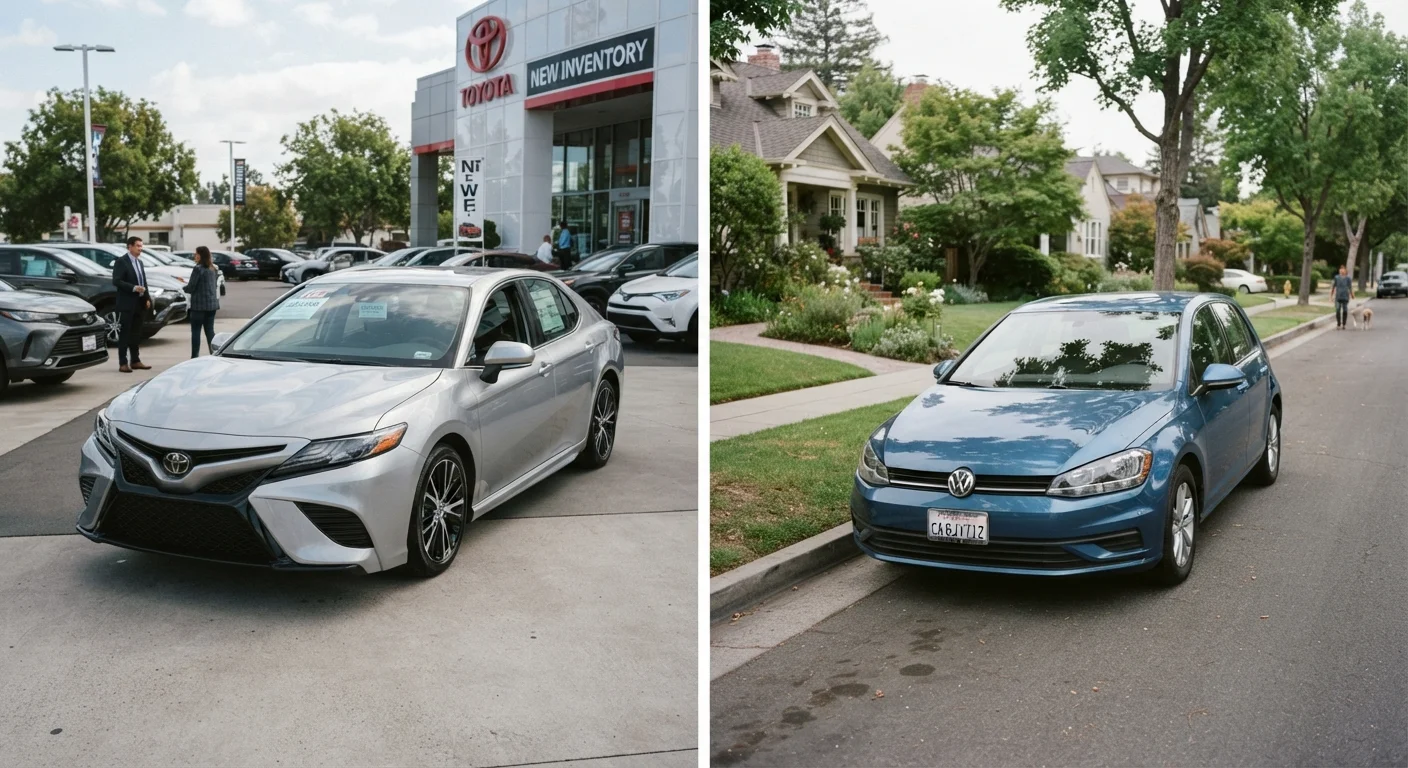
A used car that's already three to five years old has already absorbed the steepest part of that curve. When you buy it, the remaining depreciation is shallower, which means you're not subsidizing the original owner's first-year value collapse. That's the core financial argument for buying used.
However, depreciation cuts both ways at resale. If you sell a used car after two years, the remaining depreciation is smaller but still real. If you're planning to drive the vehicle into high mileage - think 150,000 miles or beyond - the depreciation math for a new car can actually work in your favor, because the per-year cost of that initial value loss spreads across many more years of use. For a full breakdown of all cost layers beyond the window sticker, see the true cost of owning a car.
Financing, Insurance, and Monthly Cash Flow
New cars almost always qualify for lower interest rates. Manufacturer-backed financing programs routinely offer rates that used-car buyers - especially those financing privately or through third-party lenders - cannot access. A one to two percentage point difference on a $25,000 loan held for 60 months adds up to several hundred dollars in extra interest for the used-car buyer.
Insurance follows a similar pattern but in reverse: new vehicles cost more to insure because lenders typically require comprehensive and collision coverage, and replacement values are higher. A three-year-old vehicle with a lower market value will generally carry a lower premium - though exact figures vary by driver profile, location, and coverage level.
| Cost Factor | New Car | Used Car (3-5 yrs old) | |
|---|---|---|---|
| Purchase Price | Higher upfront | Lower upfront | |
| Depreciation Exposure | Steep in years 1-3 | Shallower, already absorbed | |
| Financing Rate | Generally lower | Generally higher | |
| Insurance Premium | Higher (full coverage required) | Typically lower | |
| Warranty Coverage | Full manufacturer warranty | Limited or none | |
| Repair Risk | Low in first 3-5 years | Moderate to higher | |
| Fuel Efficiency | Likely current-gen tech | May lag newer models | |
| Best Ownership Horizon | 7-10+ years | 3-7 years |
If you've never mapped out these layered costs before, budgeting for car ownership offers a practical framework for first-time or independent buyers.
Maintenance, Repairs, and the Warranty Factor
New cars come with manufacturer warranties - typically a 3-year/36,000-mile bumper-to-bumper and a 5-year/60,000-mile powertrain warranty. During that window, most mechanical failures are covered at no out-of-pocket cost. That's a meaningful hedge against unpredictable repair bills in the early years.
Used cars rarely carry meaningful remaining warranty unless they're certified pre-owned (CPO) or the original powertrain warranty hasn't expired. Outside warranty coverage, repair costs fall entirely on the owner. A used vehicle with 60,000-80,000 miles is entering the age range where water pumps, timing belts, and suspension components may need attention - costs that can run into the hundreds or low thousands of dollars.
Get a Pre-Purchase Inspection on Any Used Vehicle
Before finalizing a used car purchase, have an independent, ASE-certified mechanic inspect the vehicle - not the dealership's service department. A $100-$150 inspection can surface transmission wear, rust, or pending repairs that would cost far more to fix. It's one of the highest-return steps a used-car buyer can take.
It's worth noting that a new car isn't maintenance-free - routine service costs are similar regardless of age, and oil changes, tires, and brake pads apply to both. The difference is the exposure to unexpected repairs, not scheduled maintenance. Common assumptions about new cars always being cheaper to maintain don't always hold - myths about car ownership costs addresses this and other frequent missteps.
Long-Term Ownership: Running the Full Numbers
The question of which option costs less over the vehicle's life hinges on your ownership timeline. If you buy new, keep the car past the point where depreciation levels off, and avoid financing at high interest rates, the total cost per year can be competitive with - or even lower than - buying used and replacing every few years.
If you buy a used car that's already past peak depreciation and hold it for another five to seven years, you generally minimize both purchase price and ongoing depreciation losses. The risk is repair uncertainty. The financial trade-offs of keeping vs. replacing a vehicle cover this in detail and are worth reviewing before committing to either path.
Fuel is another lever. A newer vehicle is more likely to carry efficiency improvements over a model that's five or more years old. Across 100,000 miles of driving, even a three-mpg difference can translate to $1,500-$3,000 in fuel savings at average US gas prices. Fuel costs over a car's lifetime illustrates exactly how driving habits and efficiency interact over time.
This article provides general financial information for educational purposes only and is not personalized financial or purchasing advice. Consult a qualified financial professional for guidance suited to your individual situation.