Why Small Kitchens Feel More Chaotic Than They Are
Most small kitchen storage problems aren't actually about square footage - they're about how the existing space is being used. Factory-installed cabinets are built to a generic standard, not to your specific combination of cookware, pantry goods, and daily habits. The result is shelves that don't align with what you store, drawers that swallow everything, and deep cabinets where half the contents are permanently lost in back.
The good news: nearly every common small-kitchen pain point has a straightforward, low-cost fix that doesn't require a renovation. Before you consider knocking out walls or investing in a full cabinet replacement, it's worth running through an organized approach to what you already have. Pair this effort with a broader room-by-room decluttering plan and you may find the kitchen problem solves itself faster than you expected.
Don't Skip the Purge First
No organizing system can compensate for too much stuff. Before buying a single bin or shelf riser, remove everything from your cabinets and evaluate honestly. Duplicates, rarely used gadgets, and expired pantry items are the hidden reason most small kitchens feel impossible to organize. Editing your inventory first makes every subsequent step more effective.
Here's what you'll need before getting started:
What you will need
And the tools that make the biggest difference:
Shelf risers or cabinet plate racks
Create a second level of storage inside a single cabinet shelf, effectively doubling capacity for dishes or dry goods.
Drawer dividers
Subdivide deep or wide drawers so utensils, tools, and small items stay sorted and accessible.
Over-door organizers
Hang on the inside of cabinet doors to hold spices, foil, wrap, lids, or cleaning supplies without using shelf space.
Pull-out cabinet bins or turntables (lazy Susans)
Make deep or corner cabinet contents accessible without emptying the entire shelf to reach items in back.
Stackable airtight containers
Consolidate loose pantry items into uniform shapes that stack cleanly, reclaiming irregular dead space.
Tension rods
Installed vertically inside cabinets to create dividers for baking sheets, cutting boards, and pan lids.
Step-by-Step: Reorganizing Your Kitchen Cabinets
Think in Zones, Not Categories
Organize your kitchen around what you do, not what things are. Keep coffee mugs near the coffee maker, cutting boards near the prep area, and spices within arm's reach of the stove. This reduces steps and opens up storage space you may have been wasting on convenience.
Remove everything and do a hard edit
Pull every item out of your cabinets and drawers and place them on a table or countertop. Sort into three groups: keep, donate/discard, and relocate (items that belong somewhere else in the home). Be deliberate - if you haven't used something in over a year and it serves no special-occasion purpose, consider letting it go.
This step also gives you a clear look at your actual cabinet dimensions so you can measure accurately for organizers.
Measure interior cabinet and drawer dimensions
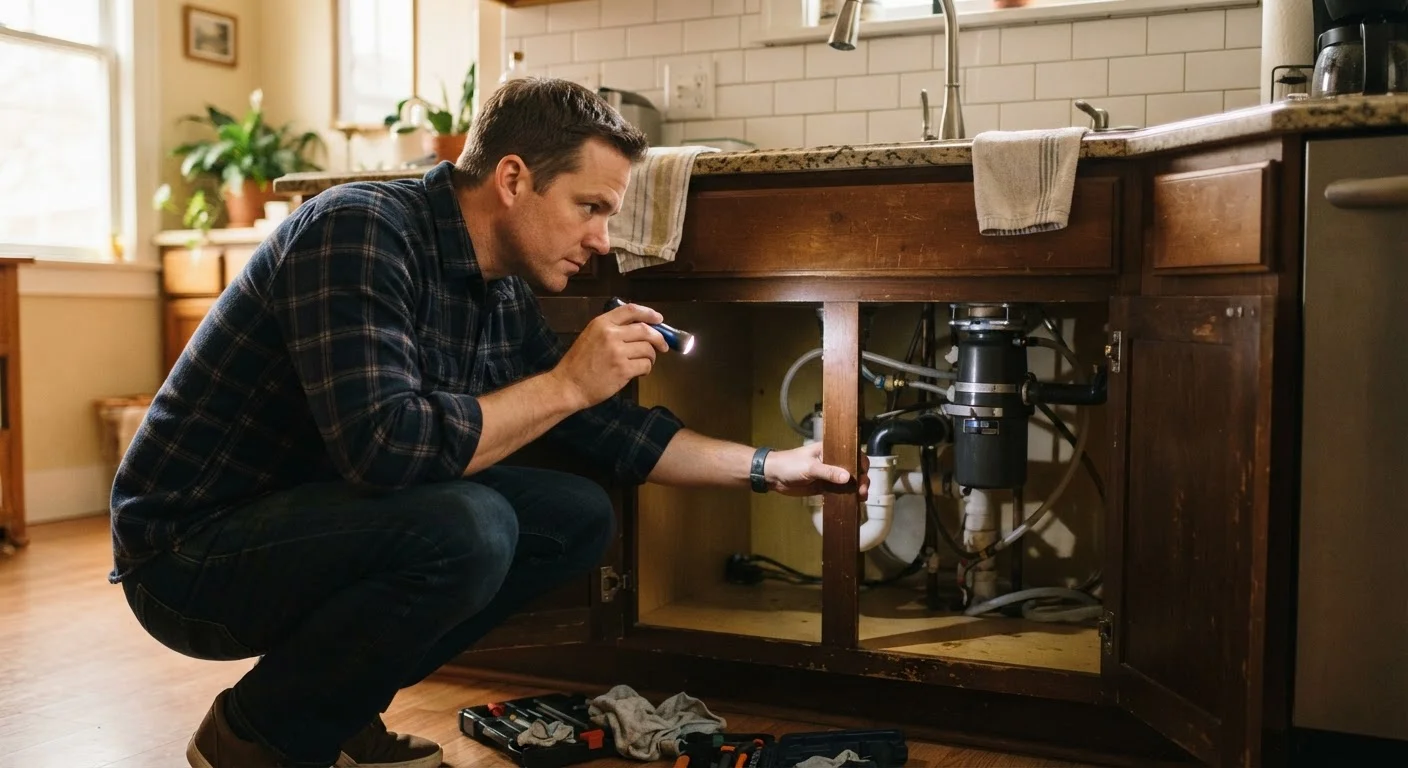
Use a tape measure to record the interior width, depth, and height of each cabinet and drawer. Note where hinges, pipes, or other obstructions reduce usable space. These measurements are essential before purchasing any organizer - a shelf riser or pull-out bin that doesn't fit is wasted money.
Add shelf risers to double vertical capacity
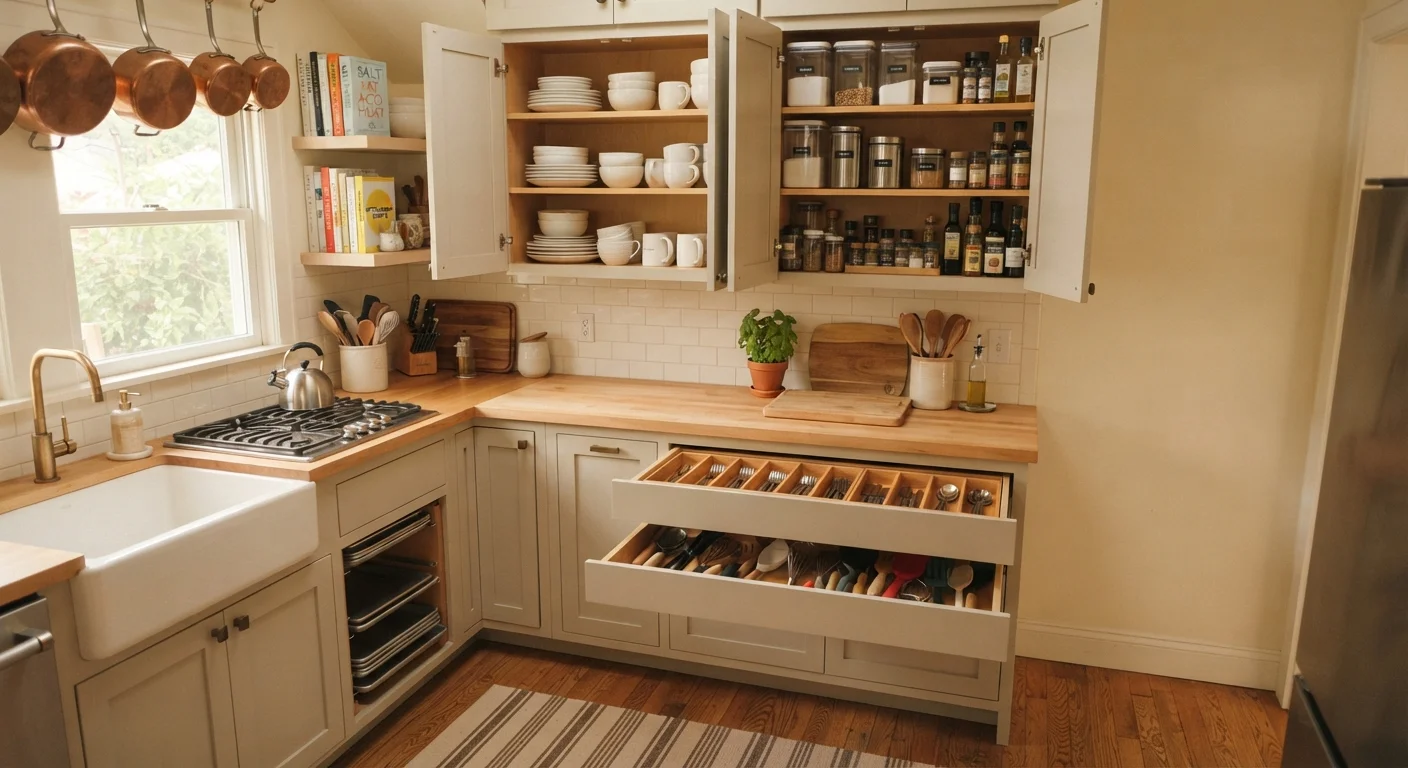
Most cabinets ship with fixed or widely spaced shelves that leave a large gap of unused air above stacked items. Shelf risers - small platforms that sit inside the cabinet - create a second storage tier. Use them for plates, bowls, mugs, or dry goods. Adjustable wire shelf risers work in most cabinet depths without any installation.
If your cabinets have adjustable shelf pins, experiment with repositioning shelves to better match what you're storing - a shelf set three inches lower can be the difference between fitting one row of glasses and fitting two.
Tame deep shelves with pull-outs and turntables
Deep cabinets are notorious for swallowing items. A turntable (sometimes called a lazy Susan) placed on a shelf lets you spin items to the front rather than reaching to the back. For narrow cabinets, a small pull-out bin or sliding basket mounted on the shelf accomplishes the same thing and works well for canned goods or cleaning supplies stored under the sink.
Use drawer dividers to end the utensil tangle
Deep or wide drawers without dividers become a jumbled mess quickly. Adjustable or modular dividers let you create compartments sized to your actual utensils and tools. Dedicate separate zones for cooking tools, prep tools, and small gadgets. If a drawer is too shallow for deep dividers, simple rubber-lined tray inserts maintain order without adding bulk.
Mount organizers on the inside of cabinet doors
The inside surface of a cabinet door is often completely empty - and it's genuinely useful real estate. Over-door organizers can hold spice jars, aluminum foil and plastic wrap boxes, small cutting boards, or cleaning spray bottles. Most require no drilling; they hang from the door edge or attach with adhesive strips appropriate for the door material.
For more ideas on reclaiming vertical surfaces throughout the home, see our guide to vertical storage.
Reload cabinets using a task-based zone system
Return items to cabinets based on where they'll be used, not just what they are. Pots and pans near the stove, prep tools near the cutting area, glasses and plates near the dishwasher or sink. This reduces how many items need to live in premium accessible space, naturally freeing up room for less-used items to migrate to harder-to-reach spots.
For guidance on extending this logic to a whole household - especially in shared living situations - the organizing guide for homes with multiple adults offers practical frameworks.
Avoid Overloading Cabinet Shelves
Stacking heavy items - cast iron pans, large appliances, full canned goods - too high or on shelves not designed for the weight can cause damage over time. Distribute heavier items to lower shelves and closer to cabinet walls where structural support is strongest. If a shelf wobbles or sags, stop loading it and reposition or reinforce it before continuing.
Once you've worked through these steps, maintenance is straightforward: every item has a defined home, so returning things after use takes no extra thought. If you find yourself struggling with consistency - especially in a household where multiple people cook - the shared household organizing guide has practical strategies for building systems everyone will actually use.
Keeping It Manageable Long-Term
An organized kitchen only stays that way if the system is simple enough to maintain without effort. The single best habit: a quick monthly reset. Spend ten minutes returning misplaced items, checking if pantry containers need refilling, and removing anything that's accumulated without a designated home. Small kitchens are vulnerable to gradual creep - one extra appliance or bag of groceries left on the counter can cascade into disorder quickly.
If counter space is still feeling tight even after the cabinet work, consider whether any appliances could live elsewhere in the home between uses. For a broader perspective on how storage can be distributed across a house rather than concentrated in one spot, this comparison of centralized versus distributed storage is worth a read. Small changes compound - a kitchen that's 80% organized and easy to maintain will serve you better than one that's 100% perfect for one week and then falls apart.