
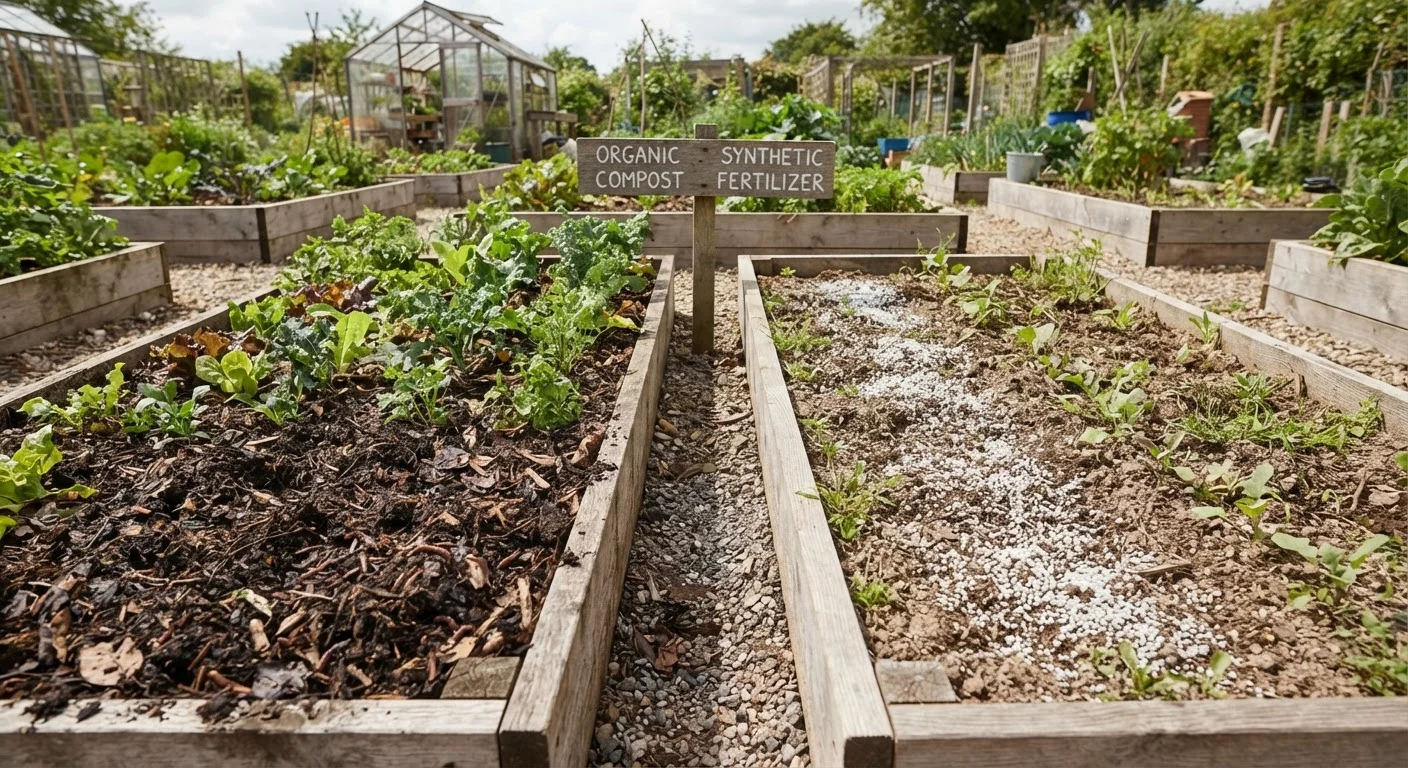
What Each Type Actually Is
Organic fertilisers come from natural sources - compost, aged manure, bone meal, blood meal, kelp, and worm castings are common examples. They contain nutrients bound up in organic matter that must be broken down by soil microbes before plants can absorb them. That biological process is slower, but it has meaningful side effects: it feeds the microbial community that makes soil productive. For a deeper look at why that matters, see why healthy soil underpins every successful garden.
Synthetic fertilisers, sometimes called chemical or manufactured fertilisers, are produced through industrial processes. They typically deliver nutrients - nitrogen, phosphorus, and potassium - in water-soluble forms that plant roots can take up almost immediately. The trade-off is that they bypass the soil food web entirely, feeding the plant directly without improving the soil around it.
Key Differences at a Glance
The practical differences between these two approaches touch on speed, cost, environmental impact, and ease of use. Understanding each factor helps you match the right tool to what your garden actually needs.
| Criterion | Organic Fertiliser | Synthetic Fertiliser |
|---|---|---|
| Nutrient release speed | Slow (weeks to months) | Fast (days to a week) |
| Soil health impact | Improves microbial life and structure | Neutral to negative over long-term |
| Risk of plant burn | Low | Higher if over-applied |
| Upfront cost per application | Generally higher | Generally lower |
| Nutrient precision | Variable, lower concentrations | Precise, consistent ratios |
| Environmental runoff risk | Lower | Higher if misapplied |
| Ease of application | Bulkier, may require more volume | Compact, easy to measure |
One important nuance: nutrient concentrations listed on fertiliser bags (the N-P-K ratio - nitrogen, phosphorus, potassium) tend to be higher and more precise on synthetic products. Organic labels often show lower numbers because much of the nutrient content is locked in organic compounds that release gradually.
Soil Health Over Time
This is where the two approaches diverge most sharply. Organic fertilisers act as a food source for soil microorganisms - bacteria, fungi, and earthworms that break down matter, aerate soil, and cycle nutrients. Over multiple seasons, consistent use of organic inputs can genuinely improve soil texture, water retention, and biological activity.
Synthetic fertilisers, used in isolation and over many years, can have the opposite effect. They do not add organic matter, and repeated heavy use can reduce microbial diversity and, in some cases, lead to salt buildup in the soil - a condition that makes it harder for roots to absorb water. This does not mean synthetics are harmful when used correctly and in moderation, but it does mean leaning on them exclusively carries compounding risks.
A Note on the Word 'Natural'
The terms 'natural' and 'organic' are often used interchangeably in garden centres, but they are not identical. In a fertiliser context, 'organic' means the nutrients are derived from once-living material; 'natural' has no standardised regulatory definition for fertilisers in the US. When reading product labels, look for the specific ingredient list rather than relying on front-of-bag marketing language to understand what you are actually buying.
Pairing either fertiliser type with good mulching practices helps retain moisture and support soil structure. See how different mulch types affect your soil for practical guidance on that layer of the equation.
Practical Considerations for Homeowners
For most homeowners, the decision comes down to timeline and goals. If you are establishing a new lawn or garden bed, consider whether seed or sod makes sense for your setup alongside your fertiliser strategy - the two decisions interact.
30-50%
Nitrogen lost to runoff from synthetic fertilisers
Research from land-grant university extension programs suggests a significant share of applied synthetic nitrogen can leach away before plants use it, particularly on sandy or sloped soils.
2-6 weeks
Typical wait for organic fertiliser results
Because organic nutrients depend on microbial breakdown, visible plant response generally takes longer than with soluble synthetic products.
A middle-ground approach that many experienced gardeners use: apply organic matter (compost or aged manure) as a soil amendment at the start of each season, then use a modest, targeted application of synthetic fertiliser only when a specific deficiency appears - yellowing leaves, stunted growth, or poor flowering. This way, you are building the soil foundation organically while still having a fast-acting tool available when needed.
Always follow application rates on the product label. Over-applying either type - especially synthetic - can burn plant roots or contribute to nutrient runoff into local waterways, which is both wasteful and environmentally harmful. When in doubt, a soil test through your local cooperative extension service can tell you exactly what your soil needs before you add anything at all.