Why Mulch Type Matters
Walk into any garden center and you will find mulch in a dozen forms - bags of shredded hardwood, bales of straw, bins of rubber, piles of stone. The instinct is to grab whatever is cheap or looks good. But each mulch type behaves differently once it is on the ground, and choosing the wrong one for a given situation can work against your garden rather than for it.
The core question is whether you need a mulch that improves your soil over time or simply one that covers and protects it. Understanding that distinction is the clearest way to make a confident choice. For a deeper look at why the soil itself matters so much, see why healthy soil is the foundation of every successful garden.
2-4 inches
Recommended mulch depth for most garden beds
Widely cited by university cooperative extension services as the effective range for moisture retention and weed suppression without smothering roots.
25-50%
Estimated reduction in soil moisture loss with mulch
Research from multiple land-grant university extension programs suggests mulched soil can retain meaningfully more moisture compared to bare soil, though results vary by mulch type and climate.
1-3 years
Typical lifespan of organic mulch before replenishment
Decomposition rate varies by material, climate, and soil biology; finer materials like shredded leaves break down fastest, while coarse wood chips last longest.
Organic Mulches: What They Bring to the Soil
Organic mulches are derived from plant material. They all share one key trait: they decompose and, in doing so, feed the soil biology beneath them. The rate and character of that decomposition varies by material.
Wood Chips and Shredded Bark
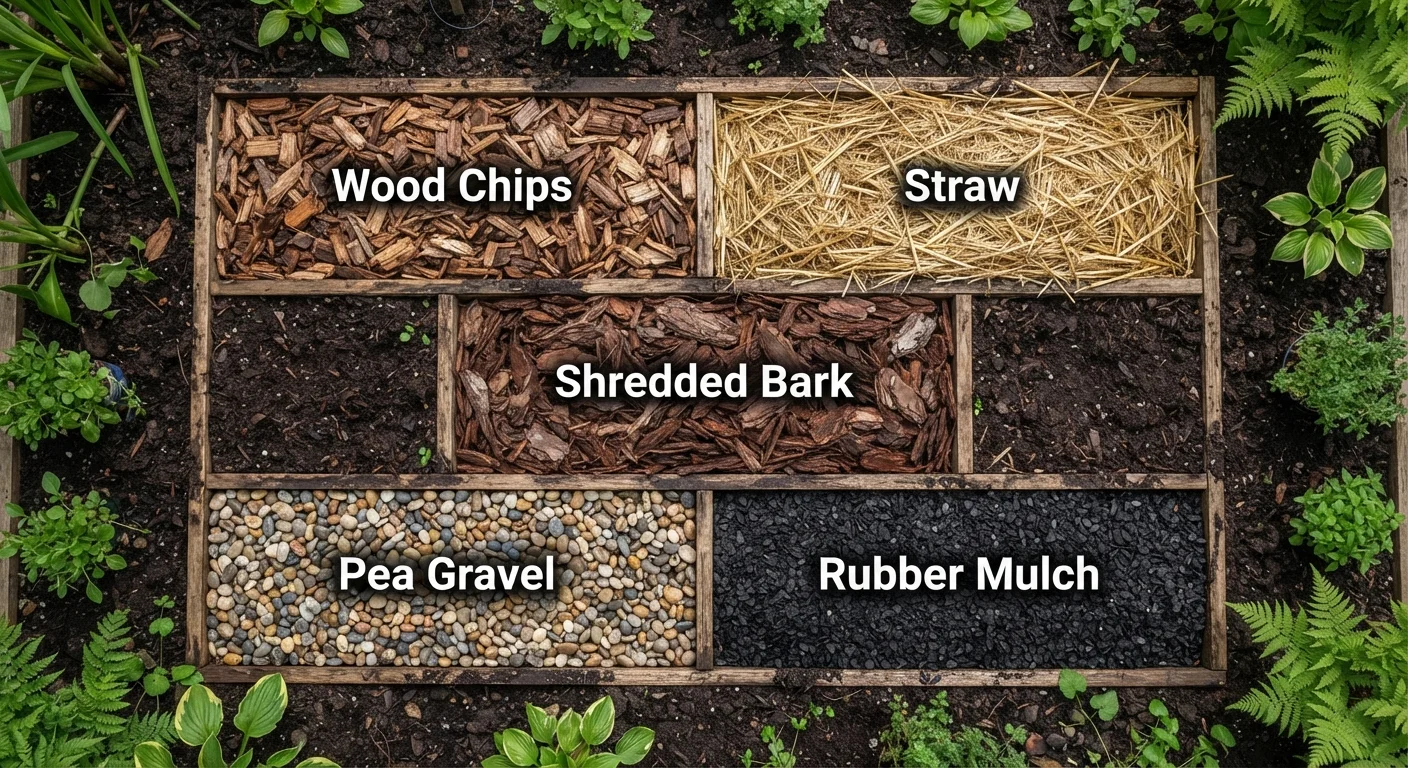
These are among the most popular choices for landscape beds. Wood chips are coarser and decompose more slowly - a good fit for permanent plantings like shrubs, trees, and perennial borders. Shredded bark is finer and breaks down faster, releasing nutrients sooner. Both suppress weeds well and hold moisture effectively. Avoid mounding either type against trunks.
Straw
Straw (not hay, which carries weed seeds) is lightweight, inexpensive, and excellent in vegetable gardens. It breaks down within a season in warm climates, adding organic matter to the soil. It is easy to pull back for planting and push back around seedlings as they establish. Its main drawback is that it can mat when wet and may harbor slugs in humid conditions.
Compost as Mulch
A 1-2 inch layer of finished compost spread over beds acts as both mulch and slow-release fertilizer. It is the most soil-improving option of all, though it suppresses weeds less effectively than thicker materials. Combining compost under a layer of wood chips gives you both benefits. Learn more about producing your own compost in our guide to composting at home.
Shredded Leaves
Often free and abundant in fall, shredded leaves decompose quickly and are particularly beneficial in vegetable and annual flower beds. Whole leaves can mat and repel water; running a mower over them first solves this problem.
Freshen Mulch Each Spring
Rather than removing old organic mulch before adding new material, simply rake the existing layer loose to break up any compaction, then top it up to restore the 2-4 inch depth. The partially decomposed material underneath is already doing good work for your soil - no need to discard it.
Inorganic Mulches: Longevity Over Soil Improvement
Inorganic mulches do not break down (or do so extremely slowly). They provide surface protection without contributing to soil biology - a meaningful trade-off depending on your goals.
Gravel and River Rock
Stone mulches last indefinitely and are low-maintenance once placed. They work well in drought-tolerant or Mediterranean-style plantings, around ornamental grasses, or in areas where you want a clean, permanent look. The significant downside is heat retention: rock and gravel absorb and radiate warmth, which can stress plants sensitive to high soil temperatures and accelerate moisture loss in summer. They are generally a poor choice for woodland plantings or moisture-loving perennials.
Rubber Mulch
Made from recycled tires, rubber mulch is durable and does not blow away easily. It is sometimes used in playgrounds for its cushioning properties. In garden beds, however, it offers no soil benefit, may leach compounds over time, and should be avoided in edible gardens. It also becomes extremely hot in direct sun. If longevity is the priority for a purely decorative bed, it has a role - but its limitations are real and worth weighing honestly. See also common garden myths that can quietly damage your plants for other widely misunderstood material choices.
Landscape Fabric
Technically a weed barrier rather than a traditional mulch, landscape fabric is often used under stone. It can reduce weed pressure initially, but over several years organic debris accumulates on top, allowing weeds to root in that surface layer. It also impedes water and organic matter from reaching the soil below, gradually degrading soil structure.
Choosing the Right Mulch for Your Situation
No single mulch is right for every use. A practical framework helps narrow the choice quickly.
- Vegetable and annual beds: Straw, shredded leaves, or compost. These decompose fast and are easy to incorporate at the end of the season.
- Perennial borders and shrub beds: Shredded bark or wood chips, 2-3 inches deep. Long-lasting and weed-suppressing.
- Trees (especially newly planted): Wood chips in a wide ring (not a volcano pile). Maintains moisture and moderates temperature at the root zone.
- Dry or low-water landscapes: Gravel or decomposed granite suits drought-tolerant plantings and reduces irrigation needs.
- High-traffic decorative areas: Rubber mulch or stone if longevity matters most and soil improvement is not a goal.
If you are exploring alternatives to mulch for open ground, low-maintenance ground covers can serve some of the same functions while adding living texture to the landscape.