
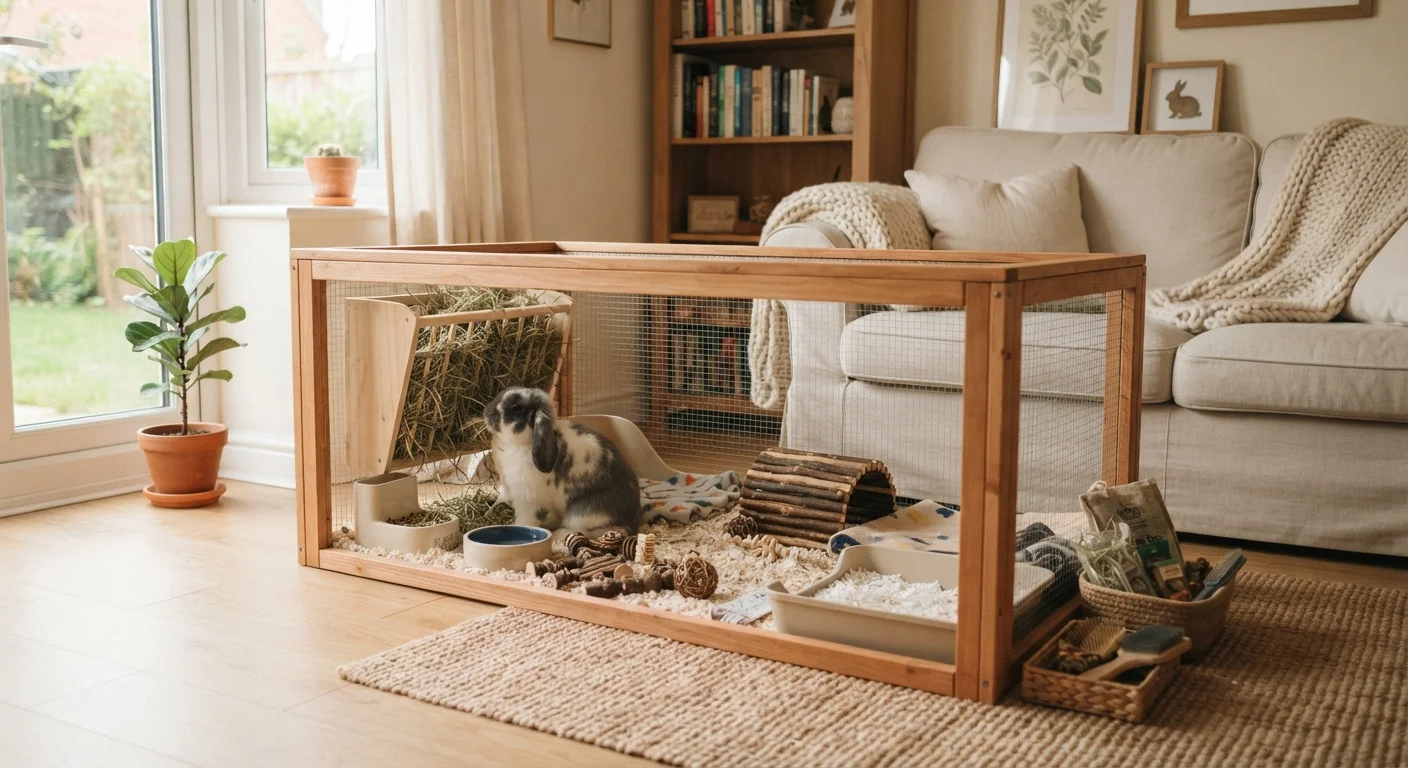
Why Preparation Matters More Than You'd Expect
Rabbits are often assumed to be low-maintenance starter pets, but they are among the most commonly surrendered animals to shelters - frequently because owners weren't prepared for what caring for one actually involves. A domestic rabbit can live 8-12 years, requires a specialized diet, needs veterinary care from a specialist, and demands far more space and social interaction than a cage in a corner provides.
This checklist is designed to close that preparation gap. Work through it before your rabbit comes home, not after. If you're also considering how rabbit care differs from other small pet setups, our guide on managing multiple small pets in one household covers how to balance care across different species.
Hay Is Not Optional
Unlimited grass hay must make up roughly 80% of a rabbit's daily diet. It provides the fiber needed to keep the digestive tract moving and wears down continuously growing teeth. A diet based primarily on pellets or fresh vegetables - without adequate hay - significantly increases the risk of dental disease and digestive problems. Keep hay available at all times, every day.
What You'll Need
Before you start checking off items below, make sure you have the right supplies in place. Improvising after your rabbit arrives creates unnecessary stress for both of you.
Grass Hay (Timothy or Orchard Grass)
Forms the bulk of a rabbit's daily diet and supports healthy digestion.
Paper-Based Litter
Provides safe, absorbent litter box material that won't harm your rabbit's respiratory system.
Heavy Ceramic Food & Water Bowls
Sturdy dishes that resist tipping and are easy to clean daily.
Hay Rack or Hay Feeder
Keeps hay off the litter area and encourages steady hay consumption throughout the day.
Cable Management Sleeves
Protect electrical cords from chewing and prevent serious injury to your rabbit.
Wooden Chew Toys / Cardboard Tunnels
Provide mental stimulation and a safe outlet for natural chewing behavior.
Playpen Panels or Exercise Pen
Creates a secure, expandable free-roam area without permanent home modifications.
For a deeper look at why hay sits at the center of everything, see our companion article on rabbit digestion and why hay is non-negotiable.
The Full Preparation Checklist
Work through each group in order. The must items are non-negotiable for your rabbit's basic safety and health. Should items represent strong best practices. Nice-to-have items will improve quality of life as you settle in.
Living Space & Enclosure
Rabbit-Proofing
Diet & Nutrition Setup
Litter & Hygiene
Veterinary Care
Enrichment & Socialization
Not All Vets Treat Rabbits
Rabbits are classified as exotic animals in most veterinary practices, meaning a standard dog-and-cat clinic may not have the training or equipment to treat them. Failing to identify a qualified exotic or small mammal vet in advance can result in a dangerous delay if your rabbit becomes ill. Search for an ABVP-certified exotic specialist or ask your local rabbit rescue for referrals before your rabbit arrives.
Rabbit Digestion Is Easily Disrupted
A rabbit's gastrointestinal system is unusually sensitive - even a 12-hour disruption to normal eating patterns can escalate into a life-threatening condition called GI stasis. Avoid switching foods abruptly, and monitor your rabbit's droppings daily. Any sudden reduction in droppings, appetite, or activity warrants a prompt call to your vet.
After the Checklist: First Days at Home
Once everything is in place, give your rabbit time to adjust. Rabbits are prey animals - sudden movements, unfamiliar sounds, and too much handling in the first days can cause significant stress. Let your rabbit explore the enclosure on its own terms and resist the urge to pick it up constantly while trust is still being established.
If you have dogs or cats at home, introductions need to be carefully managed. Our guide on introducing a new small pet to a home with other animals provides a structured approach. Once your rabbit is settled, explore enrichment ideas for indoor rabbits to keep them mentally active and engaged long-term.
This article provides general educational information about rabbit care and is not a substitute for advice from a qualified exotic animal veterinarian. Always consult a licensed vet for questions specific to your rabbit's health and needs.