
Why the First Trip Feels So Overwhelming
For most new parents, the idea of travelling with a toddler lands somewhere between exciting and terrifying. You're picturing meltdowns at airport security, missed naps, and the judging glances of fellow travelers. That anxiety is understandable - but it's also largely a product of imagining the worst-case scenario rather than the realistic one.
The truth is that first family trips go sideways not because toddlers are impossible travel companions, but because parents often plan as though the child doesn't exist. Ambitious itineraries, long transit days, and adult-paced sightseeing are the real culprits. Reframe the goal - from "seeing everything" to "having a manageable, enjoyable experience" - and you've solved most of the problem before you've even packed.
Short Trips Build Long-Term Travel Confidence
There's no rule that a first family trip needs to be ambitious. A one-night stay two hours from home is a completely valid starting point. Each trip - even a brief one - teaches you something about how your child handles new environments, transit, and disrupted routines. That knowledge compounds quickly and makes subsequent trips meaningfully easier.
Choosing the Right Destination Type
For a first trip, the destination's type matters far more than its prestige. A toddler doesn't care whether they're at a famous national park or a local state beach - they care about space to move, things to touch, and access to familiar food. With that in mind, a few destination categories tend to perform consistently well:
- Beach towns and lake destinations: Open space, water play, and flexible pacing make these perennial favorites. Toddlers can spend hours at the water's edge, and the lack of a rigid schedule relieves pressure on parents.
- State and national parks with easy trails: Short, paved, or well-maintained paths let little legs participate without exhaustion. Many parks also offer ranger programs aimed at young children.
- Small cities with children's museums: Contrary to what some parents assume, compact urban destinations can work beautifully. Check our family travel myths guide for a fuller breakdown of this counterintuitive truth.
For a matched list of US destinations by age group, the age-by-age destination reference is a useful planning tool.
Planning Around Toddler Rhythms
Toddlers run on internal clocks that don't negotiate. Nap time is non-negotiable. Hunger doesn't wait for a convenient restaurant. The most functional family travel itineraries are built around the child's rhythm, not bolted onto it as an afterthought.
A practical approach: identify your toddler's two or three most predictable daily windows - typically mid-morning and mid-afternoon for activity, with a midday rest. Schedule travel, transit, and active outings during alert windows. Use nap time for a leisurely lunch, a rest at the accommodation, or a scenic drive where the movement helps them sleep.
Match Activity Windows to Alert Times
Try scheduling your most stimulating outings - a beach visit, a short hike, a children's museum - in the 90-minute window after your toddler wakes from their morning nap. Energy and mood are typically at their peak then. Saving passive activities like a scenic drive for post-lunch helps the transition to an afternoon rest feel more natural.
If you're planning a road trip as your mode of travel, the first budget road trip guide covers how to align driving segments with kids' energy patterns specifically.
What to Pack - and What to Leave Home
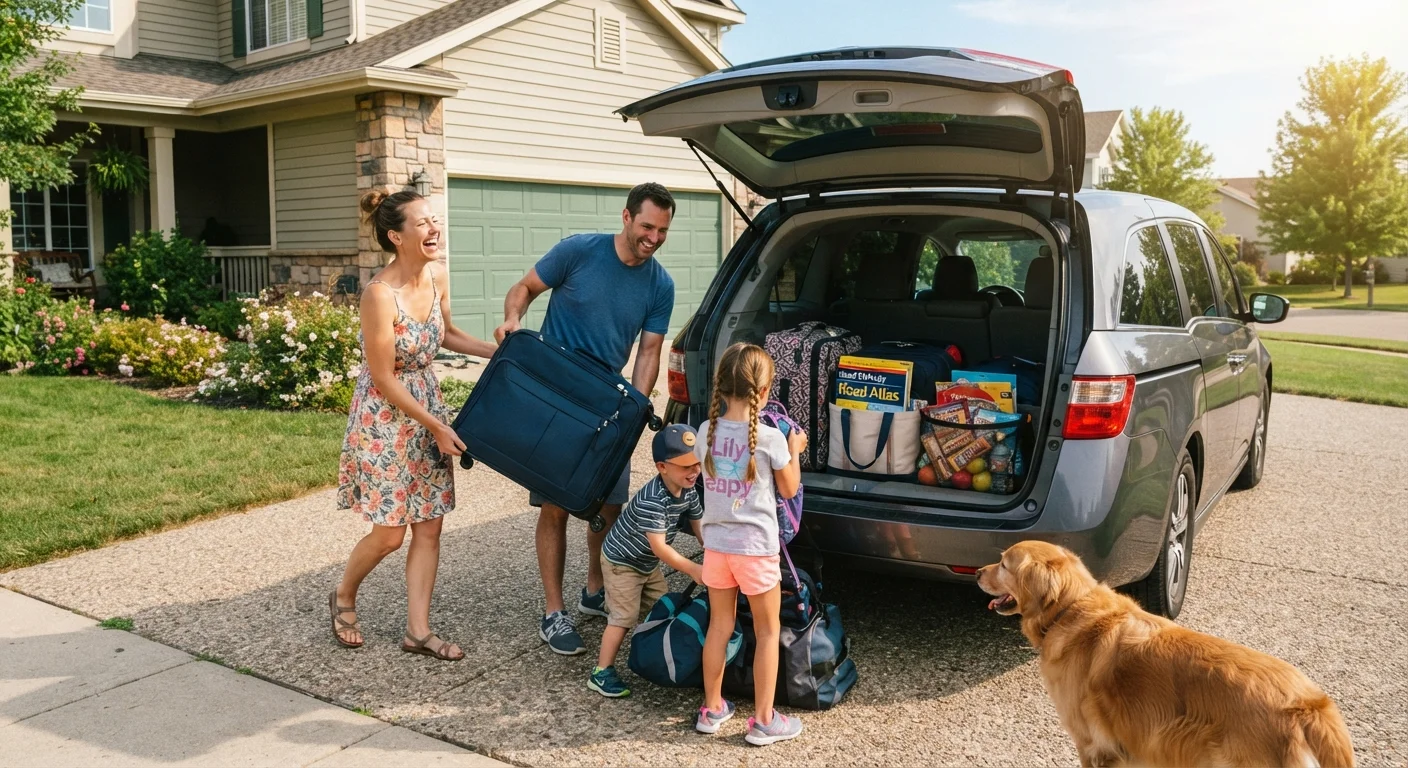
Overpacking is arguably the most universal mistake first-time traveling parents make. The instinct to prepare for every conceivable scenario produces a luggage situation that becomes its own obstacle. The key is to distinguish between safety essentials, comfort anchors, and nice-to-haves - and to be ruthless about the third category.
Safety essentials include items like your car seat (required if driving at your destination), any prescription medications, sunscreen, and a basic first-aid kit. Comfort anchors - the items that genuinely help toddlers feel secure in unfamiliar places - might include one beloved stuffed animal, a familiar sleep blanket, and a few preferred snacks. Everything else warrants a hard look.
Our family packing checklist walks through every category in detail, including clothing counts, documents, and entertainment items worth the bag space.
Managing Expectations on the Ground
Even the best-planned trip will have a chaotic moment or two - a refused meal, an overtired meltdown, or a nap that happens in the car at the wrong time. The parents who report the most satisfying first trips are usually those who made peace with imperfection before departure.
Set a daily rhythm rather than a rigid schedule. Build buffer time between activities. Identify a nearby playground or open green space at your destination in advance - these become invaluable release valves when energy runs high and patience runs low.
Also give yourself permission to do less. A toddler exploring a tide pool for forty-five minutes is not "wasted" travel time - it's often the memory that sticks. For more structured approaches to keeping short trips manageable, see our weekend trips with kids guide.
This article is for general travel planning purposes only. Always verify entry requirements, health and safety guidelines, and car seat regulations with official sources before traveling.