What Sets These Two Approaches Apart
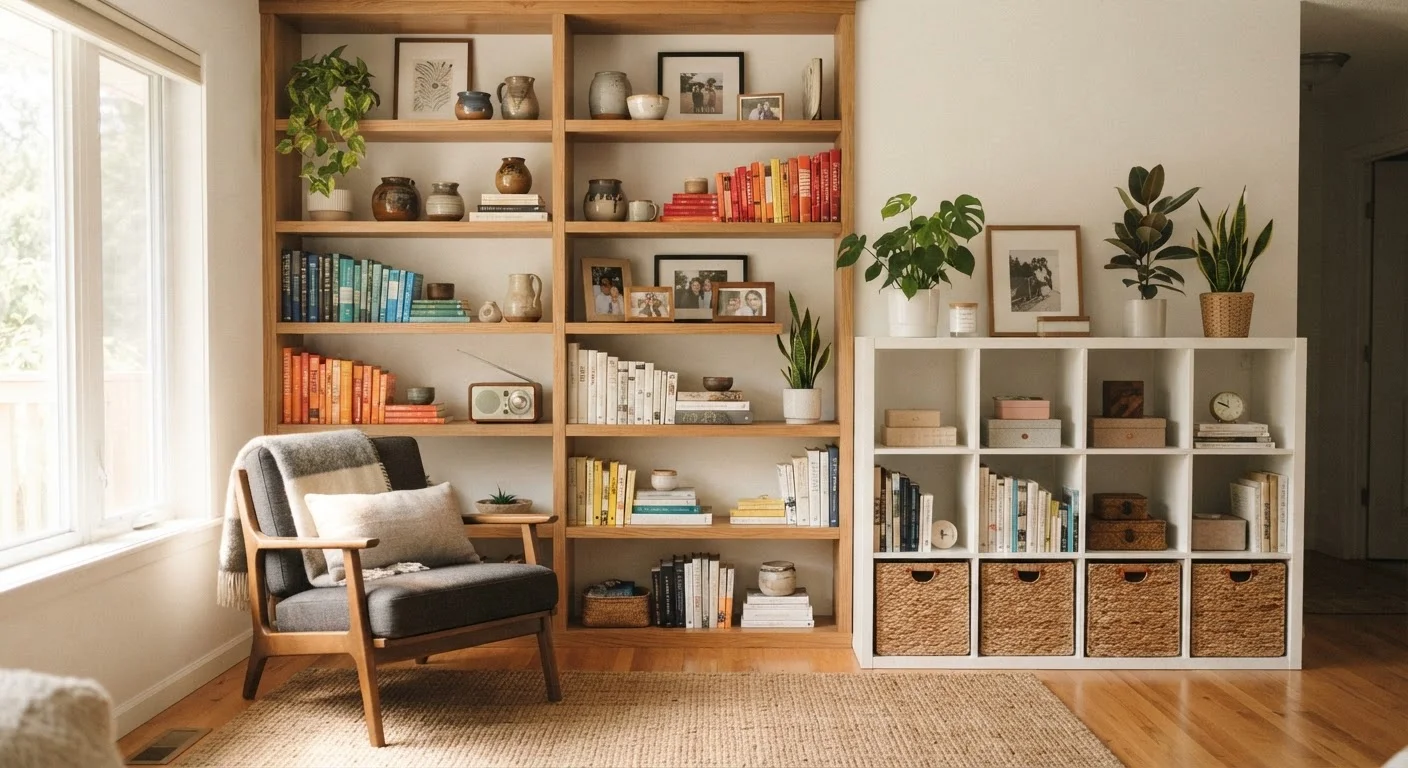
Fixed shelving refers to shelves that are permanently anchored to walls or built into a room's structure - think floor-to-ceiling bookcases, garage wall systems bolted into studs, or linen closet shelves attached to cleats. Modular storage, by contrast, is made up of interchangeable units - cubes, drawers, bins, or towers - that stack, connect, or stand independently without structural attachment.
The core trade-off is stability versus flexibility. Fixed shelving is immovable by design, which makes it exceptionally strong and space-efficient. Modular systems trade some of that rigidity for the ability to reconfigure, relocate, or expand without a single screw going into a wall stud.
For a deeper look at how vertical space figures into both choices, see our guide on using vertical space effectively - a principle that applies regardless of which system you choose.
| Criterion | Fixed Shelving | Modular Storage |
|---|---|---|
| Installation | Requires wall anchoring or carpentry | Minimal or no wall attachment needed |
| Load capacity | High - suited for books, tools, bulk items | Moderate - varies by unit and connection type |
| Flexibility | Low - permanent once installed | High - reconfigurable and relocatable |
| Upfront cost | Higher - materials plus labor | Lower - start small, expand over time |
| Renter-friendly | No - may affect security deposit | Yes - moves with you |
| Aesthetic integration | Seamless - looks built into the room | Freestanding look, varies by style |
| Longevity | Decades with proper installation | 5-15 years depending on materials |
Cost, Installation, and Long-Term Value
Fixed shelving generally requires a higher upfront investment. Materials range from basic melamine boards to solid wood, and professional installation adds labor costs on top. However, well-executed built-ins can increase a home's appeal and, in some cases, its appraised value - though this varies significantly by market and quality of workmanship.
Modular systems typically cost less to get started. You can buy a single unit and add components over time, which helps spread the expense. The catch is that mid-range modular furniture can wear or wobble over years of heavy use in ways that properly installed fixed shelving does not.
~$200-$500
Typical DIY fixed shelf installation cost per wall
General contractor and home improvement estimates suggest simple wall-mounted shelving in a single room commonly falls in this range, excluding specialty materials or labor.
60%+
US households reporting insufficient storage space
National Association of Home Builders surveys have consistently found that storage tops the list of features homeowners wish they had more of.
Permits are rarely required for simple shelf installation, but any work that involves electrical outlets, load-bearing walls, or significant structural changes should be reviewed by a qualified contractor and may require local permits. Always verify your local building codes before starting a project.
Which Rooms Favor Each System
Room context matters enormously. In a home office or library where heavy books and equipment are stored long-term, fixed shelving's load capacity and clean aesthetic often win. In a garage or utility room, anchored wall-mounted systems keep the floor clear and handle bulk weight more safely than freestanding alternatives.
Modular storage shines in spaces that serve multiple purposes or evolve over time - a guest room that doubles as a hobby space, a child's room that needs to grow with them, or a shared household where different residents have different organizational habits. Our article on organizing homes with multiple adults explores how adaptable systems reduce friction in shared spaces.
In kitchens, both approaches appear: fixed cabinetry is standard, but modular pantry inserts, pull-out organizers, and freestanding carts extend what built-ins can't reach. For small kitchens specifically, see smart storage strategies for limited cabinet space.
Making the Final Call
Before deciding, ask yourself four questions: Do you own or rent? How stable are your storage needs? What weight will the shelves carry? And what matters more - aesthetics or adaptability?
Renters should lean toward modular systems that can be removed cleanly. Owners with established households and predictable storage loads are usually well served by fixed shelving in key areas. Many homeowners find the smartest answer is a hybrid: fixed shelving in permanent, high-use zones like closets and garages, and modular units in rooms that shift purpose over time.
Whatever system you choose, pairing it with the right containers makes a significant difference. Our guide to bins, baskets, and drawer dividers can help you match the right organizers to your shelves once the structure is in place.