Why Most Homes Leave Storage Potential Untouched
Walk into the average living room, bedroom, or kitchen and you'll notice something: storage tends to stop at about four feet off the ground. Dressers, cabinets, and bins crowd the floor, while several feet of wall space above them sit completely empty. This isn't a design choice - it's a habit.
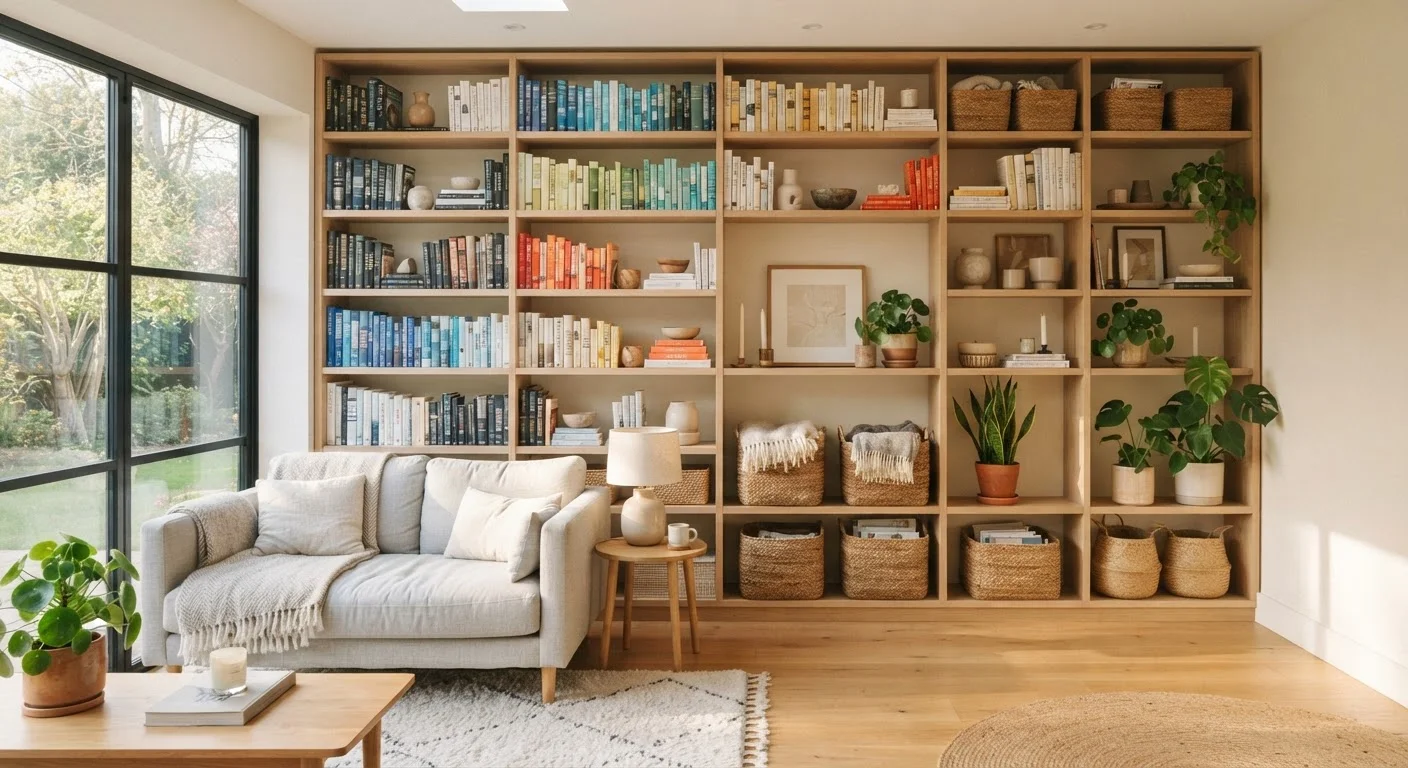
Most people think about storage horizontally: adding another bin, buying a bigger dresser, or clearing out a closet. But the ceiling in a standard US home sits at eight to nine feet, and the space between your furniture tops and that ceiling represents real, usable capacity. Vertical storage is simply the practice of reclaiming it.
This matters especially in smaller homes or rooms where floor space is already tight. Adding more floor-level furniture only makes a room feel cramped. Going up instead keeps floor space open and can make a room feel larger, not smaller.
Renters: Check Your Lease First
Many landlords restrict wall modifications beyond small picture hooks. Before mounting any shelving system, review your lease agreement and, when in doubt, ask your landlord in writing. Freestanding and over-door solutions are almost always safe alternatives that leave no damage behind.
What Counts as Vertical Storage (and What Doesn't)
Vertical storage includes any system that mounts to, hangs from, or leans against a wall, door, or ceiling to store items above floor level. Common examples include:
- Wall-mounted shelving - fixed or floating shelves installed at varying heights
- Over-door organizers - fabric or wire racks that hang over a closed door without any hardware
- Pegboards - perforated panels that accept hooks, bins, and holders for tools, kitchen utensils, or craft supplies
- Tall freestanding shelving units - bookcases or wire racks that reach close to the ceiling without requiring wall anchors
- Ceiling-mounted storage - overhead racks common in garages for bins and sports equipment
What vertical storage is not: simply stacking items on top of each other on the floor. Stacking creates instability and usually makes things harder to access, not easier. True vertical storage is intentional, stable, and accessible.
If you're weighing permanent versus flexible systems, see our guide to fixed shelving vs. modular storage for a deeper look at the trade-offs.
Start With One Wall Before Committing
Before purchasing a full shelving system, use painter's tape to mock up shelf positions on your wall. Live with the layout for a day or two to make sure the heights feel right and the placement doesn't interfere with doors, light switches, or traffic flow. This low-cost test can save you from remounting hardware multiple times.
Room-by-Room Opportunities
Every room in a home has vertical potential, though the right approach varies by space.
Kitchen
Cabinet space runs out fast in smaller kitchens. Wall-mounted magnetic knife strips, open shelving above the counter, and hooks for mugs or utensils all reclaim vertical inches. For a fuller picture of small-kitchen organization, our small kitchen storage guide covers practical strategies without requiring renovation.
Bathroom
The wall above the toilet is one of the most consistently wasted spaces in American homes. A simple over-toilet shelving unit - no drilling required on many models - adds three to four shelves of storage for toiletries, towels, and cleaning supplies.
Entryway
Hooks mounted at multiple heights handle coats, bags, hats, and dog leashes without consuming floor space. A narrow wall-mounted shelf above the hooks can hold keys, mail, and small everyday items.
Garage and Utility Areas
Garages benefit most from vertical thinking. Wall-mounted track systems with adjustable hooks, ceiling-hung racks for seasonal bins, and pegboard panels for hand tools can transform a cluttered garage into a functional workspace without changing the footprint.
8-9 ft
Standard US ceiling height
The average American home has ceilings between eight and nine feet tall, leaving several feet of wall space above typical furniture unused in most rooms.
~30%
Closet space typically unused
Organization researchers and professional organizers commonly estimate that roughly a third of closet space goes unused because items stack on the floor rather than using the full vertical height.
Over-door
Most renter-friendly vertical solution
Over-door organizers are widely cited by rental housing advisors as the most accessible no-damage vertical storage option because they require zero hardware installation.
Making Vertical Storage Actually Work
Adding shelves is only the first step. How you load them determines whether vertical storage solves your problem or just moves it upward.
Zone by frequency of use. Keep items you reach for daily at shoulder-to-waist height. Seasonal decorations, backup supplies, and rarely used items belong on higher shelves. This rule alone prevents the most common vertical storage frustration: needing a step stool to grab something you use every day.
Group related items. Vertical storage works best when it follows the same logic as any good organization system - similar things live together. A kitchen wall shelf dedicated to spices stays useful; one that mixes spices, phone chargers, and candles quickly becomes a dumping ground.
Account for weight. Wall anchors and adhesive hooks have published weight limits. Exceed them and you risk damage or injury. When mounting shelves to hold heavy items - cookbooks, tools, full jars - always locate wall studs with a stud finder and fasten into them directly. If you're unsure about a structural question, consult a licensed contractor.
For households where multiple people need to access the same storage, clear labeling and consistent placement reduce friction. Our article on organizing homes with multiple adults addresses how to build systems everyone can maintain.
Vertical storage also pairs naturally with dedicated activity zones. If you're carving out a home fitness space, for instance, wall-mounted hooks and shelving can keep equipment off the floor - see our guide to setting up a workout corner for ideas on combining both approaches.