What Is Composting and Why Should Homeowners Do It?
Composting is the controlled decomposition of organic matter - food scraps, yard trimmings, and similar materials - into a dark, crumbly substance that improves garden soil. Microorganisms, worms, and other organisms break down the raw materials over time, releasing nutrients plants can readily absorb.
For homeowners trying to grow a productive garden without a large budget, compost is one of the most practical tools available. It improves soil structure, helps sandy soils retain moisture, loosens compacted clay, and adds slow-release nutrients - all without the cost of bagged fertilizers. It also reduces the volume of kitchen and yard waste that ends up in the trash. Understanding why healthy soil matters will help you appreciate exactly what finished compost contributes to your garden beds.
Browns
Carbon-rich compost ingredients such as dry leaves, cardboard, and straw. They provide structure and airflow within the pile.
Greens
Nitrogen-rich compost ingredients such as vegetable scraps, coffee grounds, and fresh grass clippings. They fuel microbial activity.
Aerobic decomposition
The breakdown of organic matter by microorganisms that require oxygen. This is the process a well-turned, moist pile relies on, and it is faster and less odorous than oxygen-free decomposition.
Finished compost
Fully decomposed organic material that is dark, crumbly, and smells like soil. It is ready to add to garden beds as a soil amendment.
Vermicomposting
Composting using worms, typically red wigglers, to break down food scraps. It works in small spaces and produces a particularly nutrient-dense end product called worm castings.
What to Add (and What to Keep Out)
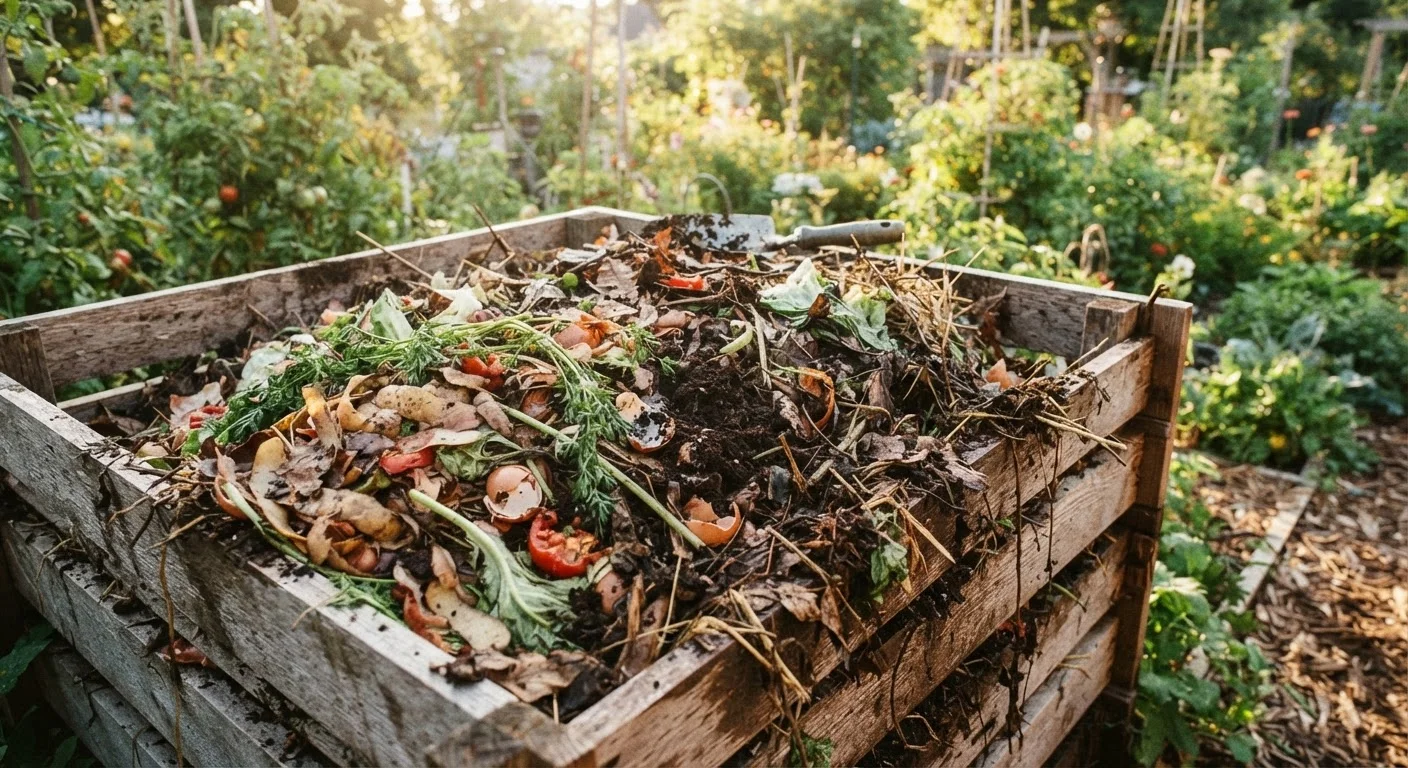
A compost pile needs two broad categories of ingredients, commonly called browns and greens.
- Browns (carbon-rich): Dry leaves, cardboard torn into pieces, paper bags, straw, wood chips, and newspaper. These provide carbon and create airflow within the pile.
- Greens (nitrogen-rich): Vegetable and fruit scraps, coffee grounds, fresh grass clippings, and plant trimmings. These provide the nitrogen microorganisms need to reproduce and work efficiently.
A rough starting guide is three parts browns to one part greens by volume. Too many greens and the pile becomes slimy and odorous; too many browns and decomposition stalls.
Keep Meat and Dairy Out of Backyard Piles
Meat, fish, dairy products, and oily foods should not go into a standard open compost pile. They decompose slowly, attract rodents and other pests, and can produce persistent odors. If you want to compost cooked foods or animal products, look into bokashi fermentation systems, which are specifically designed to handle those materials safely.
Keep these materials out of a standard backyard pile: meat, fish, dairy, oily foods, pet waste, and diseased plants. These can attract pests, create odors, or introduce pathogens the pile cannot reliably neutralize.
Setting Up Your Compost System
Choose a location that is convenient to your kitchen and garden - you are more likely to use a compost system that is easy to access. A spot with partial shade helps prevent the pile from drying out too quickly in summer.
You do not need to purchase specialized equipment. Options range from a simple open pile to a DIY wire cylinder, stacked wooden pallets, or a purchased tumbler. A pile at least 3 feet wide and 3 feet tall generates enough internal heat to speed decomposition. Smaller piles decompose more slowly but still work.
Start by layering browns on the bottom to allow drainage and airflow, then alternate layers of greens and browns as you add material. Chop or shred ingredients into smaller pieces to speed the process - a smaller surface area means microorganisms can work faster. If you grow vegetables, composting pairs directly with your garden goals; see our guide to starting a vegetable garden from scratch for ideas on where finished compost fits into planting preparation.
Maintaining Your Pile: Moisture, Aeration, and Balance
Three factors control how quickly a pile decomposes: moisture, oxygen, and the carbon-to-nitrogen balance. The pile should feel like a wrung-out sponge - damp but not dripping. In dry weather, water it lightly. In heavy rain, cover it with a tarp to prevent waterlogging.
Turning the pile - using a fork or shovel to mix and flip the contents - introduces oxygen that aerobic microorganisms need. Turning once a week can dramatically speed decomposition. Even turning once a month makes a meaningful difference compared to leaving the pile undisturbed.
Speed Things Up With Small Pieces
Shredding leaves, tearing cardboard, and chopping vegetable scraps into smaller pieces significantly speeds decomposition. Smaller pieces expose more surface area to microorganisms, reducing breakdown time noticeably. A simple garden shredder, a lawnmower run over a pile of leaves, or even kitchen scissors can make a real difference.
If your pile seems stalled, check the basics: add more greens if it is dry and won't heat up, add more browns and turn if it smells, and chop materials smaller if decomposition looks uneven.
How Long Does Composting Take?
Timeline varies widely based on method and effort. An actively managed pile that is turned frequently and maintained at proper moisture can produce finished compost in two to three months. A passive pile that is built and left largely alone may take six months to a year or longer.
Seasonal temperature affects speed too. Microbial activity slows in cold weather, so winter piles decompose more slowly but do not stop entirely. A well-insulated pile - one large enough to retain heat - continues working even in cooler climates. Patience is a genuine part of the process for most backyard composters.
Using Finished Compost in Your Garden
Finished compost is dark, crumbly, and smells like rich earth. You should not be able to identify the original ingredients. Spread 1 to 3 inches across garden beds and work it into the top few inches of soil before planting, or use it as a top dressing around established plants during the growing season.
Compost works well in vegetable beds, flower borders, and container gardens. For container growing, mix it into potting soil rather than using it as a standalone medium, since compost alone does not drain well enough for pots. Our guide to container gardening on a small budget explains how to blend amendments for potted plants. Pairing compost with smart garden watering practices helps your soil hold moisture longer and reduces how often you need to irrigate.
EPA Composting at Home Guide
The U.S. Environmental Protection Agency publishes a plain-language overview of home composting methods, acceptable materials, and troubleshooting tips at no cost.
Healthy Soil Fundamentals
Understanding what makes soil biologically active helps you use compost more effectively. Our companion article explains soil structure, microbial life, and why amendments matter.