Why Most Watering Habits Work Against Your Garden
Most homeowners water on a schedule - every other day, a set number of minutes, same time every week. It feels responsible. The problem is that plants don't follow calendars. Their water needs shift with temperature, rainfall, soil type, and growth stage, and a fixed routine rarely accounts for any of those variables.
The most common result is overwatering. Soggy soil cuts off oxygen to roots, invites root rot, and weakens plants over time. Paradoxically, overwatered plants often look a lot like underwatered ones - wilting, yellowing, dropping leaves - which leads gardeners to add even more water. Understanding what's actually happening underground changes the whole approach.
Efficient watering isn't about doing less. It's about delivering moisture where it's needed, when it's needed, in a way that builds stronger, more self-sufficient plants. That means your soil health matters just as much as how you water - good structure holds moisture without becoming waterlogged.
Core Principles of Efficient Garden Watering
These practices apply to most home gardens across different climates and plant types. Container growers will find some differences - if that's your situation, see our guide to container gardening basics.
Water deeply and infrequently rather than shallowly and often.
Shallow watering keeps moisture near the surface, which is where it evaporates fastest. It also trains roots to stay shallow, making plants more vulnerable to heat and drought. Deep watering - enough to penetrate 6-8 inches into the soil - pulls roots downward where conditions are cooler and more stable.
Always check soil moisture before turning on the hose.
Visual cues from plants are often misleading - many plants wilt midday in heat and recover by evening without needing water. The only reliable test is the soil itself. Sticking a finger 2 inches into the soil takes seconds and gives you a direct read on whether watering is actually needed.
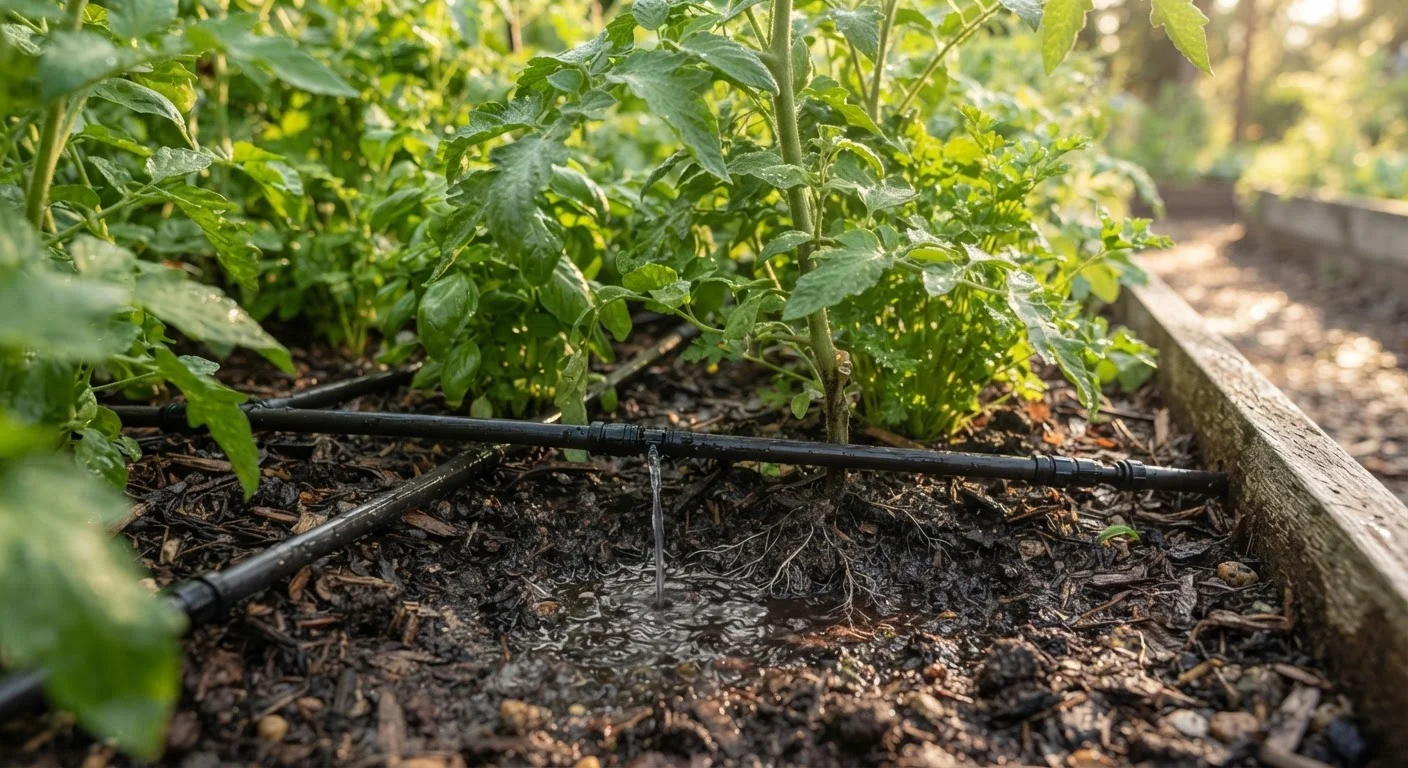
Water at the base of plants, not over the foliage.
Overhead watering gets leaves wet, which creates ideal conditions for fungal diseases like powdery mildew and black spot. Water directed at the root zone is also far less prone to evaporation losses than spray that drifts through the air.
Water in the early morning, not midday or evening.
Morning watering gives plants a moisture supply before the heat of the day, while allowing any wet foliage to dry off quickly once the sun rises. Evening watering leaves foliage damp overnight, which significantly increases fungal disease risk. Midday watering loses more water to evaporation.
Apply mulch to garden beds to slow moisture loss from the soil surface.
Bare soil loses moisture rapidly through evaporation, especially in warm weather. A 2-3 inch layer of organic mulch acts as insulation for the soil surface, dramatically reducing how quickly water disappears between rainfall events or watering sessions.
Quick Actions You Can Take This Week
You don't need a full irrigation overhaul to start watering smarter. A few small habit shifts can make a meaningful difference in plant health and water use.
For a broader look at where water bills hide unnecessary costs at home, the water bill myths homeowners believe is worth a read alongside these garden habits.
What Good Watering Looks Like Over Time
Shifting to smarter watering isn't an overnight transformation - it's a habit that pays off across seasons. Plants that receive deep, infrequent water develop longer root systems that can access moisture reserves further down in the soil, making them far more resilient during dry spells.
50%
Outdoor water lost to inefficient watering
The U.S. Environmental Protection Agency (EPA) estimates that roughly half of all outdoor water use is wasted due to inefficient methods like overwatering and evaporation.
9 billion gallons
Daily water used for landscaping in the U.S.
According to the EPA's WaterSense program, Americans use approximately 9 billion gallons of water per day for landscape irrigation.
Mulching is one of the highest-leverage changes most gardeners overlook. A 2-3 inch layer of organic mulch (shredded bark, straw, or compost) significantly slows surface evaporation, moderates soil temperature, and feeds soil biology as it breaks down. It works whether you're hand-watering or running drip lines. Our guide to composting at home covers how to create free mulching material from kitchen and yard waste.
If you're also considering plants that are naturally well-suited to your region's rainfall patterns, native plants can reduce your irrigation needs substantially once established.