How Each System Actually Works
Understanding the mechanics helps clarify where each system shines - and where it struggles.
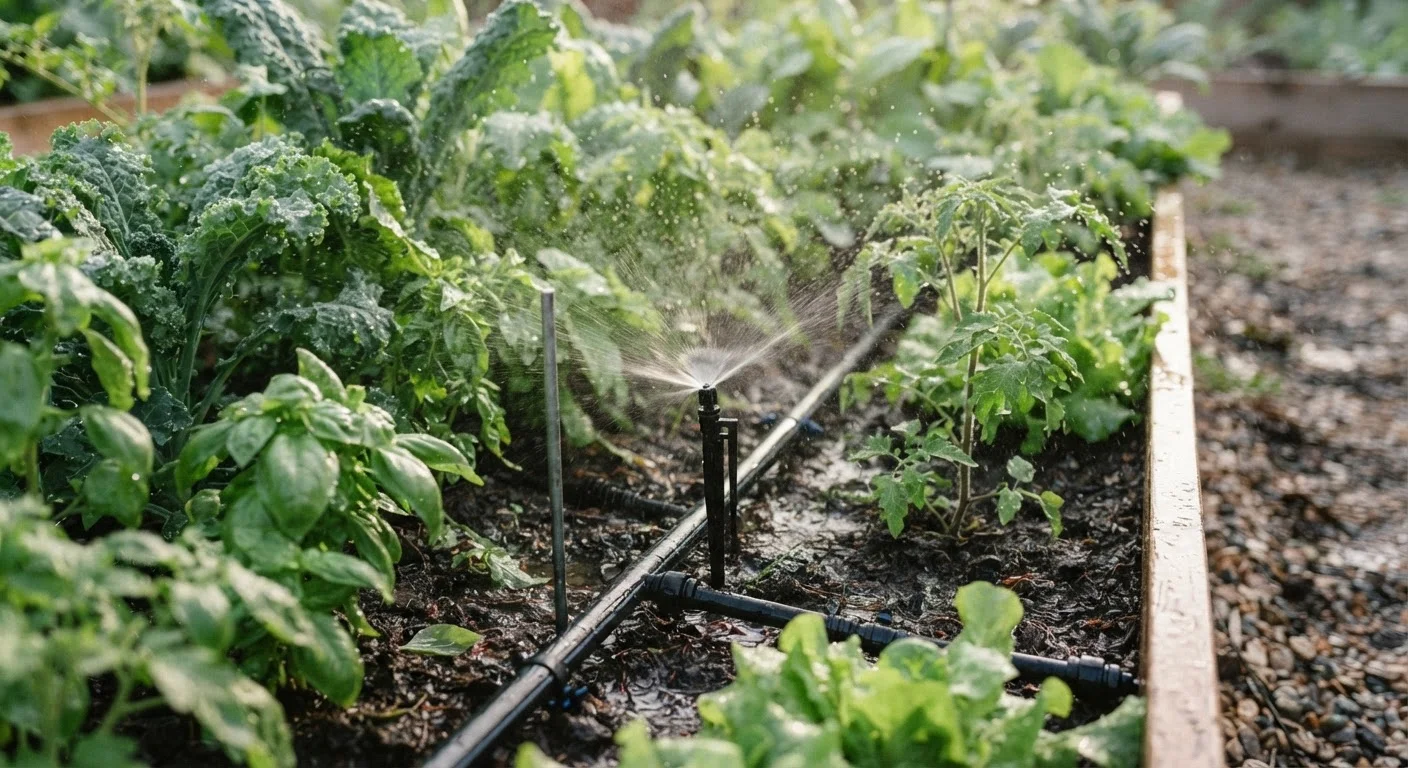
Drip irrigation runs water through a network of flexible tubing and emitters (small devices that release water slowly) placed at or near the base of individual plants. Water seeps directly into the root zone at a slow, controlled rate - typically measured in gallons per hour rather than per minute. This targeted delivery limits surface evaporation and keeps water off foliage, which can reduce fungal disease risk.
Sprinkler systems distribute water through spray heads or rotating nozzles mounted above ground or flush with the lawn. They mimic rainfall by covering a wide arc and are well-suited to open, uniform spaces like turf grass. Because water travels through the air before reaching the soil, evaporation losses and wind drift are more significant factors - especially in warmer or windier climates.
For a broader look at how watering strategy affects plant health overall, see our guide to smarter garden watering.
Cost to Install and Maintain
Initial investment and ongoing upkeep are often the deciding factors for budget-conscious homeowners.
Drip irrigation kits for a standard raised bed or small planting area are widely available and relatively inexpensive. Expanding the system as your garden grows is straightforward - you add tubing and emitters without overhauling the whole layout. However, emitters can clog over time, particularly with hard water, so periodic flushing or replacement is part of the routine. Mulching over drip lines also helps protect tubing from UV degradation and physical damage.
Sprinkler systems - especially in-ground versions - involve higher installation costs and often require professional help to trench lines, set head placement, and connect to your home's water supply. Repairs, such as replacing broken heads or fixing pressure imbalances across zones, can add up. Above-ground oscillating sprinklers are cheaper but require manual repositioning and offer less precision.
| Drip Irrigation | Sprinkler System | |
|---|---|---|
| Best suited for | Beds, vegetables, shrubs | Lawns, large open areas |
| Water efficiency | High - minimal evaporation | Moderate - wind and heat loss |
| Upfront cost (small area) | Generally lower | Generally higher for in-ground |
| Installation complexity | DIY-friendly for most setups | Often requires professional help |
| Maintenance | Emitter flushing, UV protection | Head replacement, pressure checks |
| Automation compatibility | Yes, with timer and valve | Yes, with controller/timer |
| Foliage wetting | Minimal - root-zone delivery | Significant - overhead spray |
If managing household utility costs is part of your planning, our resource hub on saving on bills covers related strategies beyond the garden.
Water Efficiency and Plant Suitability
How you use water - and which plants you're growing - significantly shapes the comparison.
Time Your Irrigation Wisely
Regardless of which system you use, watering in the early morning reduces evaporation losses and gives foliage time to dry before evening - which lowers the risk of fungal problems. Avoid watering during the heat of the afternoon when more water evaporates before reaching roots. Both drip and sprinkler systems benefit equally from good timing.
Drip systems consistently outperform sprinklers on efficiency metrics. Because water goes straight to the root zone with minimal surface spread, less is lost to evaporation. This matters especially in regions with water restrictions or where homeowners are actively trying to reduce consumption. Vegetables, perennials, and shrubs in defined beds are natural fits for drip.
Sprinklers are harder to beat for turf grass. Lawns need relatively uniform moisture across a large surface area - something drip lines aren't designed to deliver economically. If your landscape includes both a lawn and planting beds, many homeowners run both systems on separate zones.
It's also worth questioning some assumptions about lawn watering and water use. Our article on water bill myths homeowners tend to believe examines some common misconceptions worth knowing before you invest in either system.
If you're reconsidering lawn coverage altogether, low-maintenance ground covers can reduce your irrigation needs significantly.
Making the Decision for Your Garden
A few practical questions can help narrow down the right fit.
- What are you watering? Defined beds, containers, and vegetable plots favor drip. Open turf favors sprinklers.
- How large is the area? Drip becomes less practical as coverage area grows without defined plant spacing. Sprinklers scale more efficiently for broad spaces.
- What's your water pressure? Drip systems typically require a pressure regulator to avoid blowing out emitters. Sprinklers need adequate pressure to reach their rated radius. Check your home's supply before purchasing either.
- Do you want automation? Both systems pair with irrigation timers to run on a schedule. This is one of the easiest ways to avoid overwatering - a more common mistake than most gardeners realize.
If you're growing in a small outdoor space, our container gardening guide outlines what a modest setup actually requires - and drip emitters designed for pots are among the most efficient options available for that context.
The most practical approach for many homeowners is a hybrid: drip for planted beds and borders, sprinklers for lawn areas - each on its own automated zone. This avoids the common mistake of applying the same watering schedule to plants with very different needs.