Not All Cracks Are Created Equal
The moment you spot a crack in your wall, the natural instinct is to grab a putty knife and cover it up. But that impulse, while understandable, can lead you to paper over something that deserves a real look. Before patching any wall damage, take five minutes to understand what you're actually looking at.
Cracks fall into three broad categories: cosmetic, moisture-related, and structural. Each has a different cause, a different fix, and a different level of urgency. The good news is that the visual clues are often readable without any special tools - just your eyes and a bit of context.
Document Before You Patch
Before doing anything to a crack, photograph it next to a ruler or a coin for scale and note the date. Check back every two to three weeks. A crack that stays the same size is much less concerning than one that's actively growing. This simple habit gives you - and any professional you consult - a clear record of what the crack is doing over time.
Start by photographing the crack next to a ruler or coin for scale. If the crack grows over the following weeks, you'll have a baseline to show a contractor. If it stays the same, you can proceed with more confidence that it's stable.
Reading the Shape and Direction of a Crack
Orientation is one of the most informative things a crack can tell you. Here's how to interpret what you're seeing:
- Vertical cracks along drywall seams are usually the result of normal settling or the tape underneath separating. These are generally cosmetic and straightforward to repair.
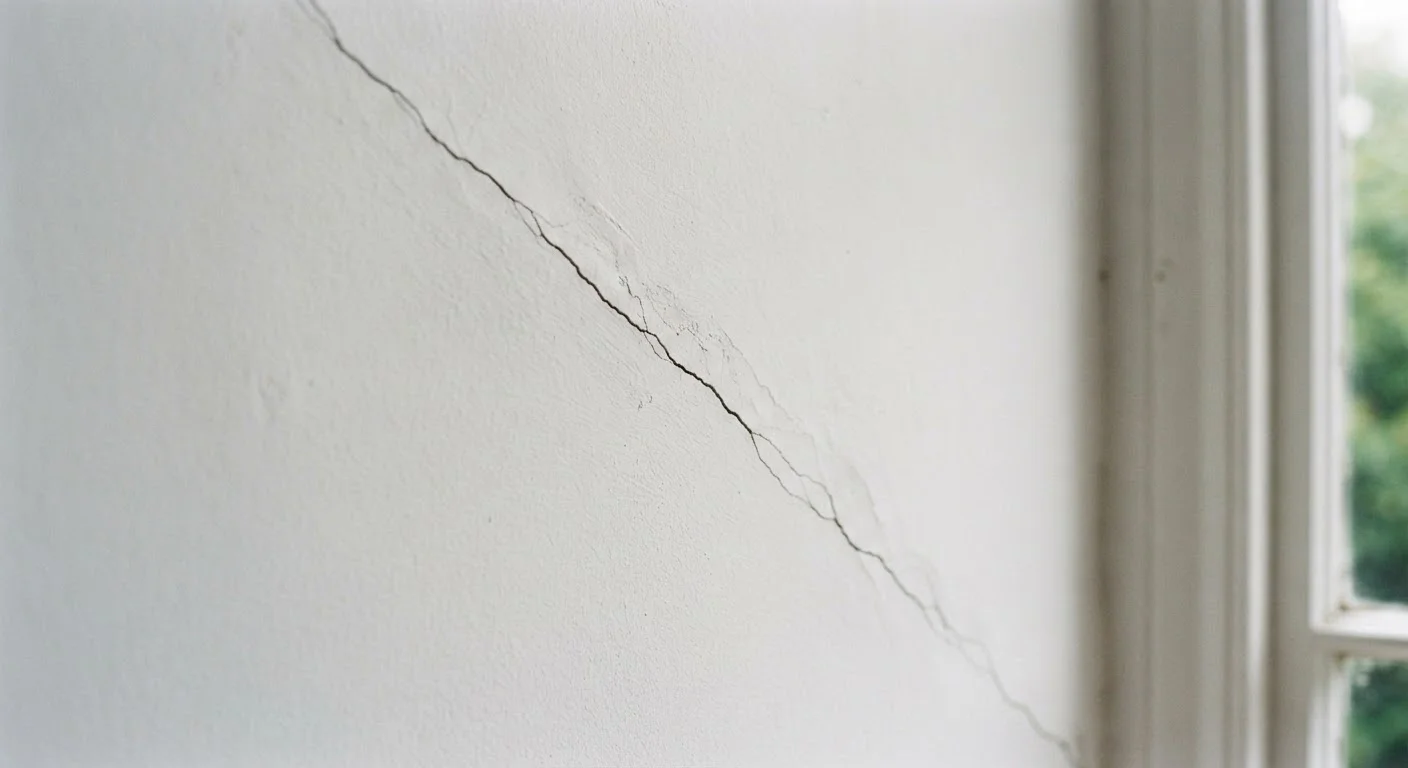
- Diagonal cracks radiating from the corners of doors or windows are classic signs of differential settling - meaning one part of the structure has shifted relative to another. Minor diagonal cracks in an older home may be stable, but fresh or widening ones merit attention.
- Horizontal cracks are the most concerning, especially in basement walls or exterior-facing walls. They can indicate lateral pressure from soil or water pushing against a foundation. This is rarely cosmetic.
- Step cracks in brick or block - stair-step patterns along mortar joints - typically point to foundation movement and should be professionally evaluated.
Width matters too. A crack you can barely fit a credit card edge into is very different from one wide enough to feel a draft through. As a general rule, anything approaching 1/4 inch or wider should be inspected by a licensed professional before you do anything else.
It also helps to understand which walls carry structural load in your home before assuming a crack is cosmetic.
Moisture, Settlement, and Structural Movement
Cracks that appear with water staining, soft or bubbling drywall, or a musty smell are telling you a moisture problem exists - not just a surface blemish. Moisture can enter through roof leaks, plumbing issues, or foundation seepage, and the resulting wall damage will return no matter how many times you spackle it. Some plumbing issues are within a homeowner's reach to address, but if you suspect a leak inside a wall cavity, professional diagnosis is the safer path.
Normal settling - especially in homes less than ten years old - produces minor cracking as lumber dries and the structure adjusts. These cracks tend to be fine, stable, and confined to non-structural surfaces like drywall seams and corners. They don't grow, they don't recur after repair, and they're not accompanied by other symptoms.
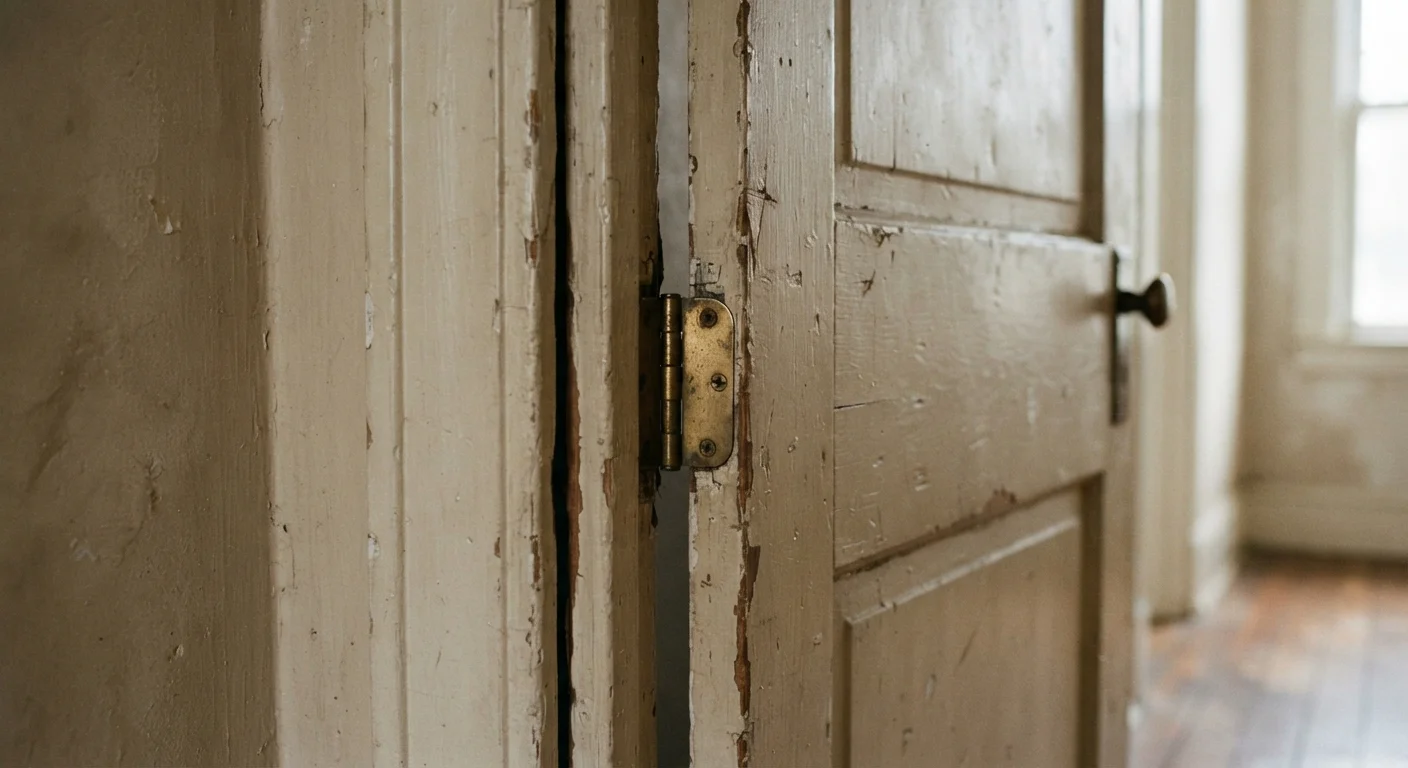
Structural movement is different. It's often accompanied by sticking doors or windows, sloping floors, or visible gaps between walls and ceilings. If you're noticing more than one of these signs, a proper assessment before touching anything is the right first step.
When Moisture and Cracks Appear Together
Water staining around a crack, soft or spongy drywall nearby, or a persistent musty smell are signs that moisture is involved - not just normal settling. In these cases, identifying and stopping the water source must come before any wall repair. Patching over active moisture damage will almost always result in the problem returning, often with mold present.
When to Patch, When to Wait, and When to Call Someone
A stable, superficial crack in a non-structural wall that hasn't changed in several weeks is generally a reasonable DIY candidate. Even so, be aware that a quick patch can become a permanent problem if applied over an active issue.
Consider calling a licensed contractor or structural engineer when:
- The crack is horizontal, especially in a basement or foundation wall.
- The crack is wider than 1/4 inch or has noticeable depth.
- The crack appeared suddenly, particularly after heavy rain, a nearby excavation, or an earthquake.
- The same crack keeps coming back after repair.
- The crack is accompanied by sticking doors, uneven floors, or visible separation at joints.
Permits and professional inspections may be required before any structural repair, depending on your local building codes. Always verify requirements with your municipality before beginning work that goes beyond cosmetic patching.
This article is for general informational purposes only and does not constitute professional structural, engineering, or construction advice. Consult a licensed contractor or structural engineer for evaluation of any crack you believe may indicate a structural concern.