What 'Native' Actually Means
A native plant is one that occurred naturally in a specific region before European colonization - not just somewhere in North America, but ideally within your particular ecoregion. This distinction matters more than most gardeners realize. A plant native to the Mid-Atlantic coast may be poorly adapted to the drier soils of the Midwest, even though both are technically within the U.S.
When shopping for natives, look for plants sourced from local seed stock or grown by regional nurseries. The label 'native' without geographic context can be misleading. Your local cooperative extension office is a reliable, free resource for region-specific plant lists.
Understanding your soil before selecting plants is equally important. See why healthy soil underpins every garden decision before you commit to a planting plan.
The Real Advantages of Going Native
The case for native plants is grounded in ecology and practical experience. Here's what the evidence consistently supports:
Lower water needs after establishment
Once their root systems are developed - typically after one to three growing seasons - most native plants can survive on natural rainfall in their adapted region, reducing irrigation demands substantially.
Supports local pollinators and wildlife
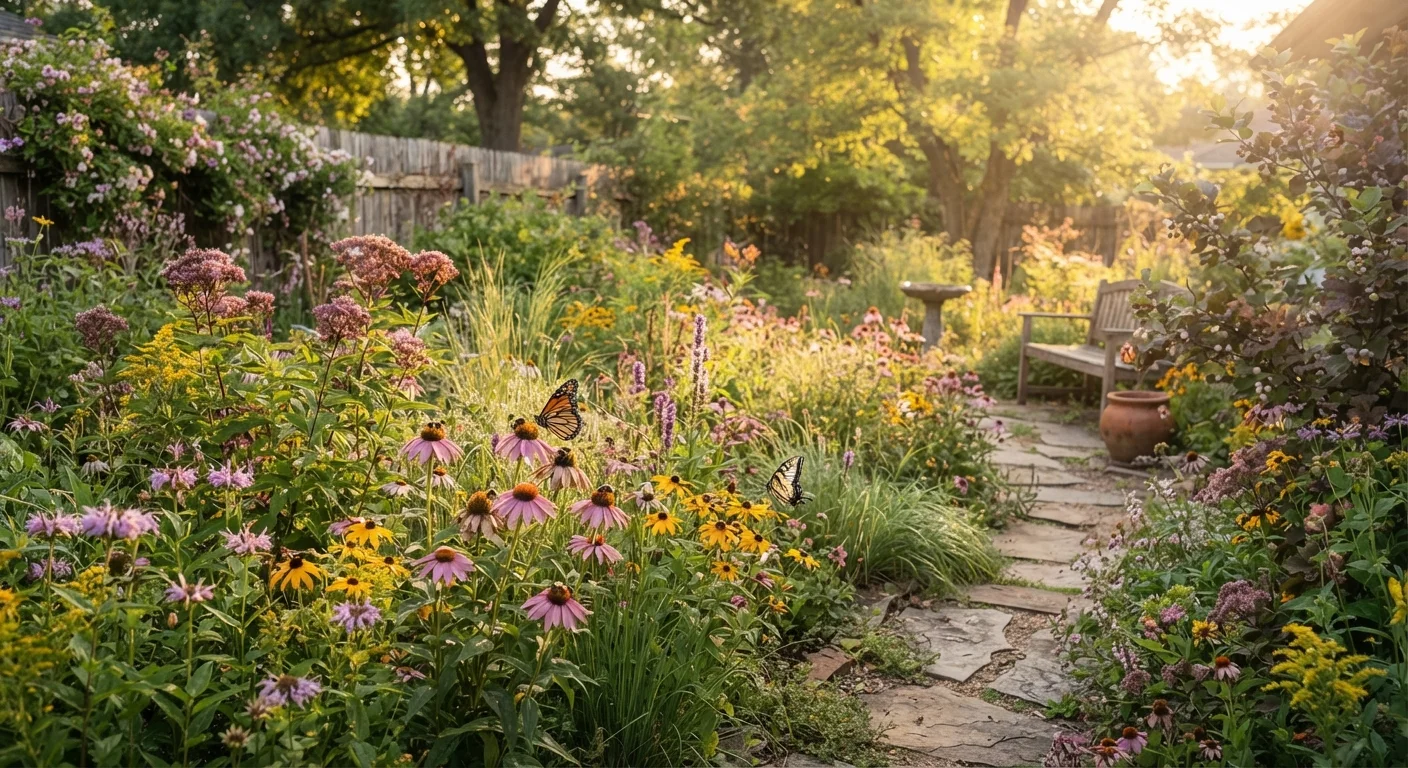
Native plants have co-evolved with local bees, butterflies, birds, and other insects. Research from entomologists including Doug Tallamy has shown that native oaks alone support hundreds of caterpillar species, compared to just a handful for most exotic ornamentals.
Reduced need for fertilizers and pesticides
Adapted to local soil chemistry and pest pressures, native plants generally require fewer chemical inputs than exotic species, which can lower ongoing maintenance costs and reduce chemical runoff into waterways.
Greater resilience to local weather extremes
Plants native to your region have adapted to its frost patterns, drought cycles, and humidity levels over thousands of years, making them more likely to recover from local weather events than many introduced species.
Contributes to habitat connectivity
Even small residential plantings of native species add stepping-stone habitat for pollinators and birds moving through increasingly fragmented suburban landscapes.
~70%
Water reduction potential vs. conventional lawns
The EPA estimates that conventional landscaping accounts for up to 30% of household water use, and water-smart native plantings can meaningfully cut that share once established.
4,000+
Native bee species in North America
According to the USDA, North America is home to over 4,000 native bee species, most of which depend on native flowering plants to complete their life cycles.
Beyond water savings, native root systems tend to be deep and extensive, which improves soil structure and reduces runoff - a genuine benefit for properties prone to erosion or compaction. For guidance on irrigation during and after establishment, smart watering principles can help you avoid overwatering, one of the most common causes of native plant failure.
Honest Limitations to Consider
Native gardening comes with tradeoffs that enthusiasts sometimes understate. Being realistic about these will save frustration and wasted money.
Establishment phase requires consistent care
Despite their reputation for low maintenance, native plants need regular watering and monitoring for the first one to three years until roots are established. Neglecting this phase is the most common reason native plantings fail.
Sourcing truly local natives can be difficult
Many garden centers stock plants broadly labeled 'native' that are not sourced from local seed stock. Plants from distant populations may be less well-adapted to your microclimate and soil conditions.
Upfront cost can be higher than annuals
Native perennials and shrubs often cost more at purchase than common annuals, and specialized regional nurseries may charge a premium. The savings come over time through reduced inputs, not immediately.
Limited aesthetic control in some styles
Naturalistic native plantings can appear informal or overgrown by conventional standards, which may conflict with HOA rules or neighbor expectations in more manicured neighborhoods.
Regional specificity demands research
There is no universal native plant list. What thrives in a Pacific Northwest garden may fail entirely in the Southeast. Every planting plan requires region-specific research, which takes time and effort.
One often-overlooked challenge is aesthetics. Native plantings - especially meadow-style gardens - can look unkempt by conventional standards. If your neighborhood has an HOA or strict local ordinances, check the rules before converting a front lawn. Some municipalities have begun updating codes to accommodate natives, but this varies widely.
Natives are also not immune to pests or disease. They are simply less susceptible under the right conditions - their performance depends heavily on correct plant placement and appropriate mulching to stabilize soil moisture and temperature.
Making Natives Work in a Practical Yard
A full lawn-to-meadow conversion is not the only option. Many homeowners start by replacing a single struggling garden bed with native perennials, then expand as they learn what thrives locally. This incremental approach reduces financial risk and builds knowledge gradually.
Start Small to Build Confidence
Converting an entire yard to native plants in one season is ambitious and risky, especially without prior experience. A more practical approach is to start with one dedicated bed - ideally a spot that already struggles with conventional plants - and observe how a handful of regionally appropriate natives perform over a full year. This lets you learn your soil, sun, and drainage conditions before scaling up.
If you have limited outdoor space, native plants can also do well in containers - though they'll need more attentive watering than in-ground plantings. Container gardening on a budget covers what's genuinely necessary versus optional for that setup.
For homeowners interested in reducing turf without going fully native, low-maintenance ground covers offer a useful middle ground that can blend conventional and ecological approaches.